
ISOURCE MARKETING

Ghost SEO: Don’t disappear in the era of AEO

Ghost SEO: Don’t disappear in the era of AEO

Share

AI

AR

Automation

B2B

blog

Content

Creativity

Customer

Design

Digital Marketing

Events

Hubspot

IA

Influencers

job

Lead Generation

marketing

Newsletter-en

PR

Sales

UI

UX

B2B digital marketing can no longer rely solely on traditional SEO methods. The rise of AI Search, also known as AEO (Answer Engine Optimization), is radically changing the way brands are found online. Now, search engines go beyond keywords. They combine social media data, dynamic content, and user signals to deliver precise, personalized answers.

Brands that cling to outdated tactics risk being left behind in the conversation and losing visibility in search results. This new era requires smart strategies, adapted to how users really search and consume information today.

In this blog, we’ll show you how brands must adapt, optimize their sites and content for AEO, and other new ways to drive traffic, ensuring they stay visible to the decision-makers in the B2B sector.

The dark side of traditional SEO: Will it disappear soon?

For years, brands have relied on traditional SEO formulas, using tactics based on volume, generic keywords, and superficial metrics. But today, those strategies are showing their limits: users are looking for quick, relevant, and personalized answers, while decision-makers expect content to provide real value.

In other words, SEO is moving to the “dark side” because if you don’t adapt your content strategy, your brand risks losing visibility, getting trapped in irrelevant results, and disappearing.

The rise of AEO (Answer Engine Optimization) is a response to this reality: more and more people are searching for answers through AI, and now even Google offers AI Mode or AI-generated responses, making traditional strategies insufficient.

So, the decision is clear: you need to adapt to the new era of smart search, where AI is redefining how users find information and how brands must position themselves to stay visible.

From Google ghosts to AI spirits: The evolution of online search

Now, brands must go beyond the surface; Google and traditional SEO are still key tools for being found, but their role is transforming.

It’s crucial to consider how AI tools like ChatGPT, Gemini, Perplexity, and Copilot integrate social media data, user behavior signals, and relevant, descriptive content within web pages to generate more precise and contextual results.

This shift forces brands to rethink their visibility strategy, ensuring that their content can connect with their target audience in the new era of smart search.

How to prepare your brand for the AEO era

To survive and thrive in the AI search era, brands must go beyond traditional SEO tweaks. Here are key recommendations to optimize your online presence and ensure your content is discoverable and relevant:

  • Restructure your website: Organize your content clearly and hierarchically to make it easier for AI engines to interpret it correctly. Ensure that each section has clear headings and relevant keywords.


  • Relevant and optimized content for AI + SEO: Focus on content that answers real user questions. Include keywords for voice search, such as natural phrases and full questions. This way, you maintain a balance between traditional SEO and AEO optimization, ensuring visibility on both fronts.


  • Structured data and schema: Use schema markup to help AI and search engines understand the context of your information. This positions your content as a reliable resource and source of information for AI Search.


  • Integration of external signals: Ensure that your content can be enriched by social media signals and user behavior. The more relevant and referenced it is, the more likely AI will prioritize it in search results.


  • User experience and accessibility: Make your content easy to read, quick to load, and well-structured. This not only benefits your users but also helps AI engines use it as a reliable source, improving your authority.


  • Constant updates and relevance: Keep your content fresh and aligned with industry trends. AI prioritizes recent and relevant information, so publishing regularly increases your traffic opportunities.


  • Combine SEO and AEO strategically: Optimize titles, meta descriptions, and content for both users and search engines. Ensure that each page is visible to Google and understandable to AI Search, maximizing your reach.


By applying these strategies, your brand will not only survive, but it will be prioritized in this new era of smart search. This is the difference between disappearing into the “dark side” of traditional SEO and being visible, relevant, and connected with your target audience.


Secret predictions: What to expect from SEO and visibility in the AI era

Online search is evolving at a rapid pace. What works in SEO and AEO today could be obsolete tomorrow. Here are some trends that will make a difference for B2B brands in this era:

  • Integration with generative AI: Models like ChatGPT, Gemini, and Copilot will continue to redefine how information is prioritized and presented.


  • Contextual and voice search: Users are increasingly using more natural and complete phrases; optimizing for these types of searches will be crucial.


  • Structured and reliable content: AI prioritizes clear, precise, and well-organized sources.


  • User experience: The combination of relevance, speed, and accessibility will remain a key factor for visibility.


These trends show that adapting isn’t optional: it’s the only way to stay relevant. Visibility in AI Search and traditional engines requires dynamic strategies, updated content, and a focus on the decision-makers who truly matter.

In Summary

In summary, the era of AEO is not a passing trend: it’s a radical shift that forces brands to rethink their online presence. Optimizing your website, content, and visibility strategy not only prevents you from disappearing from the digital radar but also positions you as a relevant, trustworthy, and visible brand for the decision-makers in your industry.

Stop being a ghost in the search results. In the age of AI Search, your brand needs to be visible, relevant, and well-positioned. At Isource, we help with SEO, AEO, and your entire web and content strategy to ensure your brand doesn’t disappear and stays on the radar of your users and future clients.
Newsletter September 2025

Newsletter September 2025

Share

AI

AR

Automation

B2B

blog

Content

Creativity

Customer

Design

Digital Marketing

Events

Hubspot

IA

Influencers

job

Lead Generation

marketing

Newsletter-en

PR

Sales

UI

UX

Reimagining B2B Marketing: The new era of ISM and what’s next for your brand

It’s time to do real marketing.

B2B marketing can’t follow the same old rules anymore. In our latest blog, we’re being honest about why your strategy may not be working and why it’s necessary to break the rules to achieve real results. Discover how at Isource, we’ve transformed our approach to marketing with a direct, authentic, and no-nonsense style. #NoBS

Artificial intelligence has transformed how search engines process and respond to queries. Searches are now more conversational and detailed, meaning that Google and other search engines are providing AI-generated, complete responses. Here are 3 quick tips to optimize your content and stay ahead:

Optimize for complex questions:
Answer detailed, complex queries that your audience is really searching for. Think conversational searches, not just generic keywords.

Use more detailed content:
Search engines now favor in-depth content. If you only focus on headlines, your brand will get lost.

Focus on the search experience:
Ensure your site is easy to navigate and quick to load. If the search engine considers it relevant, your ranking will improve.

YouTube is making a major shift in its ad platform, implementing new features that will change how B2B brands connect with their audience. Some of these features include:

More targeted ads: YouTube has improved its targeting capabilities, allowing brands to reach more specific audiences with more relevant ads.

Interactive ads: Video ads now include interactive options like surveys or real-time calls to action.

Better integration with Google Ads: With an improved connection between YouTube and Google Ads, you’ll be able to leverage advanced measurement tools to analyze your ad performance in more detail.

With these improvements, it’s now easier to generate qualified leads and increase the impact of your B2B campaigns.

At Isource, we’ve just launched the new version of our website, reflecting our #NoBS vision: no generic marketing, only B2B strategies that actually work.

Visit it and discover how we can help you with our new key solutions: Brand Experience, Pipeline Factory, Digital Machine, and HubSpot CRM.

We’re ready to deliver real ROI for your brand

Reimagining B2B Marketing: The new era of ISM and what’s next for your brand

Reimagining B2B Marketing: The new era of ISM and what’s next for your brand

Share

AI

AR

Automation

B2B

blog

Content

Creativity

Customer

Design

Digital Marketing

Events

Hubspot

IA

Influencers

job

Lead Generation

marketing

Newsletter-en

PR

Sales

UI

UX

It’s time to do things differently

B2B marketing can no longer follow the same old paths. The rules have changed, and brands that don’t adapt will fall behind. Isource Marketing has decided to break the rules and do things differently. In this blog, we’re being honest with you: we’re sharing why and how we’re challenging the status quo, adopting a more authentic approach that’s aligned with the new landscape of B2B marketing.

B2B Marketing needs a radical change

For years, companies have followed the same old recipes and strategies that no longer work, achieving empty results that don’t contribute to their growth. The old marketing formulas are outdated because the market is changing. Approaches that once worked are now obsolete: traditional marketing, superficial metrics, and tactics focused on volume instead of real results.

The global landscape teaches us that brands must respond to the immediacy of the market, especially in the B2B tech sector. The rapid pace of change and new consumer behavior forced us to rethink everything.

Artificial intelligence, new ways of interacting with customers, the shift in communication channels, and the evolving needs of consumers have shown us that we need to innovate and adapt to the future. At Isource, we decided to change our approach because we know the old recipes no longer work. It’s time to break the mold and do marketing in a radically different way so you can see real growth in your results.

Challenging the rules of B2B Marketing: We adapt to the now

The changes in the market are not only driven by technology but also by the way brands interact with their customers. Now more than ever, vanity metrics like clicks and impressions are losing their value. What matters now is

– Relevance of interaction: How brands connect with decision-makers.

– Personalization: Offering unique, tailored experiences to each customer.

– Authentic connection: Building genuine relationships with leads and potential clients.

Companies can no longer continue doing marketing the same way, thinking that results will come with outdated methods.

This radical change is what led us at Isource to rethink our strategy and adapt to the new market expectations. We know that brands must evolve, and the way B2B marketing is done has changed forever. From here, our mission was born: to help our clients—and future brands—grow authentically. We want to ensure their growth never stops, delivering what they really need: real results, not empty metrics.

The #NoBS approach at Isource: Direct, authentic, and no nonsense

At Isource, we’ve chosen to be different. Our #NoBS approach is not just about using a challenging tone; it’s about being authentic, transparent, and direct in everything we do. We’re tired of empty promises and superficial marketing. Our new style is without frills, no unnecessary jargon, and no selling false expectations.

What defines us now is our ability to connect genuinely with brands, understand their real needs, and provide solutions that truly generate ROI. We’re not here to talk about “vanity metrics” or fleeting trends. At Isource, we focus on what really matters: transforming marketing strategies, changing the game, and helping brands achieve their goals effectively and without fluff.

We’re ready to face the challenges that today’s B2B marketing brings, adopting innovative technologies and creating personalized strategies that reflect the true needs of each brand. Our goal is to be strategic partners, not just service providers.

We want to be part of the change your company needs to stay competitive in a market that’s evolving at full speed.

Now It’s your turn: Start doing real marketing

The question is simple: Are you ready to leave behind outdated strategies and adopt an approach that truly works? At Isource, we’re ready to transform your B2B marketing with innovative techniques that challenge the norms and guarantee maximum ROI.

Contact us, and let’s start changing the game. It’s time to do things differently, with a #NoBS approach that lets you get exactly what you need: measurable results.

We don’t want you to lose a single dollar on tactics that don’t deliver results.
Schedule a consultation with us to discover how we can help you maximize ROI by executing the right strategies for your brand.

Newsletter June 2025

Newsletter June 2025

Share

AI

AR

Automation

B2B

blog

Content

Creativity

Customer

Design

Digital Marketing

Events

Hubspot

IA

Influencers

job

Lead Generation

marketing

Newsletter-en

PR

Sales

UI

UX

AI agents are revolutionizing B2B marketing. In our latest blog, we explain what they are, how they work, and how they can help you scale your marketing, sales, and customer service processes without losing personalization. It’s time to take the next step!

In B2B, it’s not about getting more traffic; it’s about getting the right traffic. That’s why combining SEO strategies with a geographic (GEO) focus is crucial for capturing prospects in the markets you actually want to target.

Here are 4 tips you can apply:

  • Optimize for key markets: Create dedicated pages or content for each country or region you want to focus on.

  • Activate your local SEO: Even if you work in B2B, using Google Business Profile and local directories can strengthen your digital presence.

  • Blend global and local content: Success stories, news, and backlinks from local media will boost your positioning in each market.

  • Align SEO + GEO with your commercial strategy: Prioritize SEO efforts in countries or regions where you have active sales teams or local partners so the traffic you attract is convertible.

The goal isn’t to appear everywhere; it’s to appear where you can expand your business.

Google’s annual event made it clear that AI is redefining how we search, create content, and automate processes.

Here are three key announcements that directly impact B2B marketing:

AI Mode in Google Search
More conversational and in-depth searches. It’s crucial to optimize content to answer complex queries.

Gemini 2.5 Pro
Enhanced reasoning capabilities and code generation, useful for automating tasks and personalizing digital experiences.

Veo 3 and Flow
Tools to create realistic videos from text, which can enhance B2B content strategies.

What does this mean? These Google innovations mark a shift towards greater efficiency and personalization in marketing strategies. Your business must quickly adapt to these tools to stay competitive and relevant.

At Isource, we are official HubSpot partners, and we use it for what matters: helping you generate business. We assist with the implementation, customization, and automation of your marketing and sales processes, ensuring your CRM aligns with your commercial strategy and maximizes results.

If you’re looking for a CRM that powers your pipeline and streamlines your sales team’s operations, you’re in the right place.

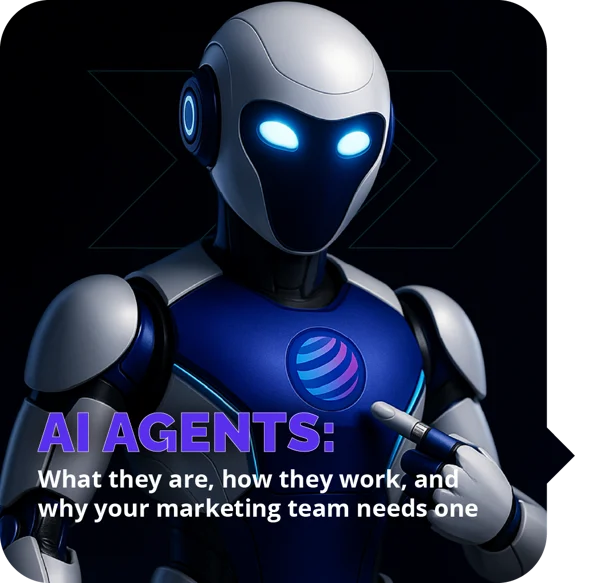
AI Agents: What they are, how they work, and why your Marketing Team needs one

AI Agents: What they are, how they work, and why your Marketing Team needs one

Share

AI

AR

Automation

B2B

blog

Content

Creativity

Customer

Design

Digital Marketing

Events

Hubspot

IA

Influencers

job

Lead Generation

marketing

Newsletter-en

PR

Sales

UI

UX

Artificial intelligence is no longer a future promise: it’s a real tool that’s transforming how marketing teams operate. But beyond chatbots and simple automations, a new player has taken center stage: AI agents.
In this article, you’ll discover what an AI agent is, how it differs from the tools you already know, and why it’s become a key asset for scaling your B2B strategy without losing control or personalization.

Why is Everyone Talking About AI Agents Now?

In recent years, artificial intelligence has gone from being a novelty to becoming a part of the daily routine in marketing: automating processes, reducing repetitive tasks, and improving efficiency. However, there’s a new tool ready to take the next step: AI agents.

These intelligent systems don’t just execute commands or answer questions. They learn, make decisions, connect to your platforms, and work autonomously to scale marketing, sales, and customer service processes—all while maintaining a human touch.

And the best part: you don’t need to be a multinational corporation to access this technology. There are now tools that have democratized the creation of AI agents. Today, any B2B team can have one up and running if they know how and why to implement it.

What is an AI Agent and What Makes It So Powerful?

An AI agent is an intelligent system that not only understands natural language but also reasons, makes decisions, and performs actions on behalf of your team. Unlike a chatbot or traditional automation, an AI agent can operate autonomously, with access to tools, memory, and well-defined business rules.

What differentiates it from a chatbot or an automation?

  • Automation: Follows fixed rules and always performs the same task. E.g., when someone fills out a form, it sends an email.

  • AI Assistant: Responds to queries but requires direct instructions. E.g., “Write a welcome email.”

  • AI Agent: Acts independently. It analyzes data, makes decisions, and executes actions as part of a broader process.

How does it work?

  • Understands natural language: Interprets questions or commands as a human would.
  • Has memory: Remembers past interactions so it doesn’t start from scratch every time.
  • Connects to your tools: Integrates with your CRM, campaign systems, knowledge base, communication channels (such as WhatsApp, social media, and email).

That’s why, more than just automation, it’s an active team member, working 24/7 without errors, breaks, and with the ability to adapt to results.

How to Determine Which Type of AI Agent Your Business Needs

  • Identifying which type of AI agent you need for your business is crucial to ensure that it’s truly aligned with your marketing, sales, or customer service goals. Below are some tips to help you decide which one is the right fit based on your team’s specific needs.

    1. Determine which area of your business would benefit the most from automation.

    • Marketing: If you want to improve content generation, automate campaign creation, or personalize communication with your leads, a content marketing AI agent is the way to go.
    • Sales: If you need an agent that qualifies leads, follows up, and assigns sales tasks, then a prospecting agent is what your team needs.
    • Customer Service: If you want to provide real-time support, answer frequently asked questions, and offer a personalized experience, a customer service agent is the tool you’re looking for.

    2. Assess the level of personalization required

    Does your business need an agent that simply executes repetitive, fixed tasks or one that can learn, adapt, and offer personalized responses based on customer interactions? If it’s the latter, you’ll need an AI agent with machine learning capabilities.

    3. Consider integration with your current tools

    Make sure that the AI agent you choose can integrate with the tools you’re already using, such as your CRM, campaign platform, database, or customer service system. Additionally, it’s essential that your agent is powered by a robust AI model, such as ChatGPT or Gemini, allowing it to provide accurate responses and make informed decisions. Solutions like HubSpot, and N8N are excellent for this integration ensuring smooth connections between all your platforms. 

    4. Think about the level of autonomy you desire

    If you prefer an agent that simply executes specific tasks under direct commands, an AI assistant might be enough. However, if you’re looking for a fully autonomous agent that can make decisions and handle complex processes continuously, then you need an advanced AI agent.

Interested in learning how HubSpot can help you create AI agents native to your CRM? Read our previous blog and discover everything you can do with HubSpot + AI 

Key Benefits and Recommendations Before Implementing an AI Agent

Using an AI agent is not just about having an intelligent tool but knowing how to harness its true potential to optimize your processes and achieve more ambitious business goals. Below are the key benefits of adopting an AI agent and recommendations to ensure its successful implementation.

Increased Efficiency:

Automate repetitive tasks, freeing up your team to focus on higher-impact activities, while operating 24/7 without errors.

When integrated with your CRM, AI agents can personalize the customer experience based on their history, without overloading your team.

AI agents learn from each interaction and continually improve in marketing, sales, and customer service.

Reduces manual intervention, optimizing time and operational resources.


As your business grows, the agent can handle more volume without the need to hire additional staff.


Recommendations Before Implementing an AI Agent

  • Define un objetivo claro: Establece un objetivo específico para guiar la implementación y selección de la herramienta.

  • Comienza con tareas simples: Empieza con tareas repetitivas como respuestas automáticas o calificación de leads, y avanza gradualmente.

  • Planifica la integración: Garantiza que el agente se integre adecuadamente no solo con tu CRM, sino también con tus fuentes de datos, canales de comunicación y otras plataformas clave que ya usas, como HubSpot.

  • Supervisión humana: Aunque autónomos, los agentes deben ser supervisados por humanos para asegurar resultados óptimos.

  • Mide y ajusta regularmente: Monitoriza su rendimiento y ajusta basándote en métricas como la tasa de conversión y la satisfacción del cliente.

¿Quieres aprender a implementar un agente de IA en tu negocio y sacar el máximo provecho de HubSpot?
Agenda aquí una consultoría gratuita con nosotros y empieza a optimizar tus procesos con IA. 

In Summary

If you’re ready to take the next step toward intelligent automation and personalization, a custom-built AI agent can transform your business. At ISM, we can help you create an AI agent that works 24/7, optimizing your marketing, sales, and customer service processes.

Are you ready to implement your own AI agent and scale your business without losing personalization?

Newsletter May 2025

Newsletter May 2025

Share

AI

AR

Automation

B2B

blog

Content

Creativity

Customer

Design

Digital Marketing

Events

Hubspot

IA

Influencers

job

Lead Generation

marketing

Newsletter-en

PR

Sales

UI

UX

We’ve got the system to power your marketing strategy.

HubSpot isn’t just a CRM—it’s a unified growth engine powered by AI. With Breeze, HubSpot’s embedded AI suite, tech companies can automate, scale, and convert smarter. In our latest blog, we explore how HubSpot connects the dots across your funnel and why it’s the ultimate tool for B2B growth.

Decisions are made faster—and lost just as fast. If your process is slow, they’ll go with someone else. Automate, but keep the human touch.

The customer needs to clearly understand the real impact of your solution: ROI, operational efficiency, and competitive advantage. Prove it with metrics and real business benefits.

They research before they buy. They need trustworthy content and a solid, consistent brand presence. Social proof weighs heavily on their decision.

They’re not just buying a product or service—they’re buying a relationship. Your content, emails, and support need to create real connection and trust.

As of May 5, Microsoft will officially retire Skype, its classic video calling tool, to focus on its more robust platform: Microsoft Teams. The key update is the launch of a free version of Teams, designed to ensure continuity for individual users and businesses that relied on Skype for communication.

This new version offers calls, video conferences, chats, calendar integration, and document collaboration—all in a single, unified environment.

What does this decision mean?

Teams has already become an essential tool in corporate environments. This move reinforces Microsoft’s commitment to centralizing business communications at no additional cost.

If your business still uses Skype, now is the perfect time to migrate and enhance your internal communications.

At Isource, we don’t play small. We stretch your budget, squeeze every click, and turn it into real, visible results.

What do we bring to the table?

Winning campaigns on Meta Ads (Facebook, Instagram, Messenger).

  • Big exposure through Google Ads and LinkedIn Ads.
  • Laser-focused segmentation and remarketing that actually converts.
  • Daily optimization—because your ROI deserves nothing less.

We know the game and exactly where to bet, so your brand stands out. You lead the way—we’ll make sure everyone’s watching

Explore all our services and discover how we can help grow your brand.

HubSpot in Action: Scale your B2B Marketing with CRM, AI, and Automation

HubSpot in Action:
Scale your B2B Marketing with CRM, AI, and Automation

Share

AI

AR

Automation

B2B

blog

Content

Creativity

Customer

Design

Digital Marketing

Events

Hubspot

IA

Influencers

job

Lead Generation

marketing

Newsletter-en

PR

Sales

UI

UX

Is your marketing strategy still relying on assumptions, manual processes, and scattered data?

When opportunities are measured in clicks and seconds, lacking tools that provide full control, efficiency, and visibility doesn’t just slow you down—it costs you sales.

HubSpot has evolved. Today, it combines intelligent automation, a robust CRM, and artificial intelligence to help you attract high-quality leads, streamline your team’s workflows, and accelerate every stage of your sales funnel.

As an official HubSpot partner, we at Isource understand the value of leveraging this platform’s full potential to optimize marketing, sales, and customer service operations.

In this article, we’ll explore how HubSpot’s advanced, AI-powered features can transform how your business scales, converts, and grows—with precision.

Why HubSpot is the missing piece to unlock your Business Growth?

When a tech company is ready to grow, it needs more than isolated tools or fragmented systems. It needs a unified solution that connects lead generation, sales, and long-term customer engagement. That’s exactly what HubSpot offers—a comprehensive platform designed to drive growth in a structured, measurable, and scalable way.

HubSpot integrates marketing, sales, customer service, and CRM into a single solution. This not only streamlines team collaboration but also provides complete visibility across the customer lifecycle—from the first click to post-sale engagement—all in one place.

Now, with artificial intelligence (AI) powering its features, the platform has become even smarter—helping you move faster, close more deals, and optimize every customer touchpoint.

CRM in motion: accelerate results with smart Sales Execution

Manually managing leads is no longer sustainable for businesses ready to scale.

Real growth happens when your CRM stores data, prioritizes opportunities, automates tasks, and empowers your team to act at the right moment.

HubSpot CRM provides a clear view of every contact, automates repetitive tasks, and centralizes all relevant customer information. With Breeze, HubSpot’s native AI, the CRM becomes truly proactive.

Breeze analyzes real-time data, identifies conversion patterns, and delivers intelligent recommendations, so your sales team can focus where it matters most.

Key features enhanced by Breeze:

  • Automated lead scoring based on user behavior and engagement.
  • Deal closure predictions to allocate resources to the most promising opportunities.
  • Actionable insights, such as the best time to contact a lead or which content to share.

Every sales decision is backed by real data and predictive insights—no more chasing cold leads or relying on guesswork.

Smarter Inbound Marketing: Content that puts the game in your favor

Winning at inbound marketing today requires both relevance and execution efficiency. With HubSpot, you can design and automate your entire content strategy blogs, emails, landing pages, forms, CTAs, and more.

Everything is built to attract qualified leads, convert them, and nurture them with the right content at the right moment.

What sets HubSpot apart is how it executes this through automation—especially with Breeze Copilot, its AI-powered assistant that enables:

  • Drafting blog posts and email campaigns with personalized suggestions.

  • Optimizing content for real-time SEO based on search intent and competitive data.

  • Automatically segmenting audiences and delivering dynamic content tailored to interests and behaviors.
  •  

The result is an inbound strategy that not only scales but improves with every interaction. Your leads receive meaningful, timely content while your team focuses on what truly matters—turning ideas into measurable results.

Still unsure how to improve your content strategy and achieve effective inbound marketing? Check out our Comprehensive Guide: Advanced Inbound Marketing Strategies for the Technology Sector

Automate, Scale, and Grow: Tools that seamlessly connect your marketing and sales

The gap between businesses that scale and those that stall comes down to execution. Having strategies is not enough—you must implement them quickly, with precision, and at scale.

HubSpot recognizes this challenge and goes far beyond CRM and inbound marketing.

With HubSpot, you can:

to nurture leads, assign tasks to your sales team, and trigger alerts based on user behavior.


to answer inquiries, qualify leads, and automatically schedule meetings.


tailored to each prospect’s past interactions.

All of this becomes even more powerful with Breeze Agents, HubSpot’s intelligent assistants that help:

  • Automate prospecting processes.

  • Schedule administrative tasks.

  • Personalize outreach based on lead intent.


Think of HubSpot’s AI as an extension of your team—managing repetitive tasks, analyzing real-time data, and providing recommendations to boost efficiency and drive results faster.

Conclusion: HubSpot takes your marketing to the next level

Today, scaling success depends on how smart, integrated, and agile your processes are. HubSpot is more than a CRM or a marketing tool—it’s the upgrade your strategy needs to grow in a structured, measurable, and sustainable way.

Whether you’re a fast-growing startup or an established tech business, HubSpot is the solution that supports your growth objectives.

Achieving real impact with HubSpot requires more than just access—it takes strategy, structure, and expert guidance.

At Isource, as official HubSpot partners, we transform the platform into a true growth engine for your business.

From CRM setup to full marketing and sales automation, we’ll support you every step of the way—helping you unlock HubSpot’s full potential and drive meaningful results.

Newsletter April 2025

Newsletter April 2025

Share

AI

AR

Automation

B2B

blog

Content

Creativity

Customer

Design

Digital Marketing

Events

Hubspot

IA

Influencers

job

Lead Generation

marketing

Newsletter-en

PR

Sales

UI

UX

Have you ever wondered why your ROI isn’t accelerating? The answer might lie in your use of artificial intelligence in your marketing strategy—or whether you’re using it effectively at all. In this month’s blog, discover how AI is helping tech companies run more efficient, personalized, and profitable campaigns.

With the rise of voice assistants like Siri, Alexa, and Google Assistant, voice search SEO has become essential. Here are five key tips to optimize your voice marketing strategy:

Think about how your customers speak, not how they type. Use natural phrases and common questions.

Voice searches often include location. Make sure your website reflects it, and keep your Google My Business profile fully optimized.

Make your content stand out to Google. Answer questions clearly, concisely, and in a structured format.

Add frequently asked questions to your site to capture common user queries and increase your chances of being featured.

Improve your site’s speed and mobile experience. If your website is slow, Google is unlikely to feature it in voice results.

The Mobile World Congress 2025 made it clear: the future of technology is already here, with a strong focus on AI, sustainability, and user experience.

Here are the most impactful product launches:

  • Lenovo Yoga Solar: A conceptual laptop with an integrated solar panel—efficient and environmentally conscious.

  • Amira, humanoid robot: Powered by OpenAI’s GPT-4, capable of generating natural language and realistic expressions.

  • Samsung Galaxy A Series: Brings mobile AI to the masses with accessible and functional models.

AI, 5G, and sustainability were central themes throughout the event. Experts also discussed the future of fintech and the ethical implications of artificial intelligence—making it clear that those leading digital transformation today will define the next decade.

Isource’s PR team is composed of experts who boost your brand through strategic public relations, free press management, and impactful influencer marketing campaigns.

We connect with the right media outlets and influencer profiles for your business—amplifying your message, generating real impact, and strengthening your reputation across the industry.

Discover how we can position your brand where it belongs.

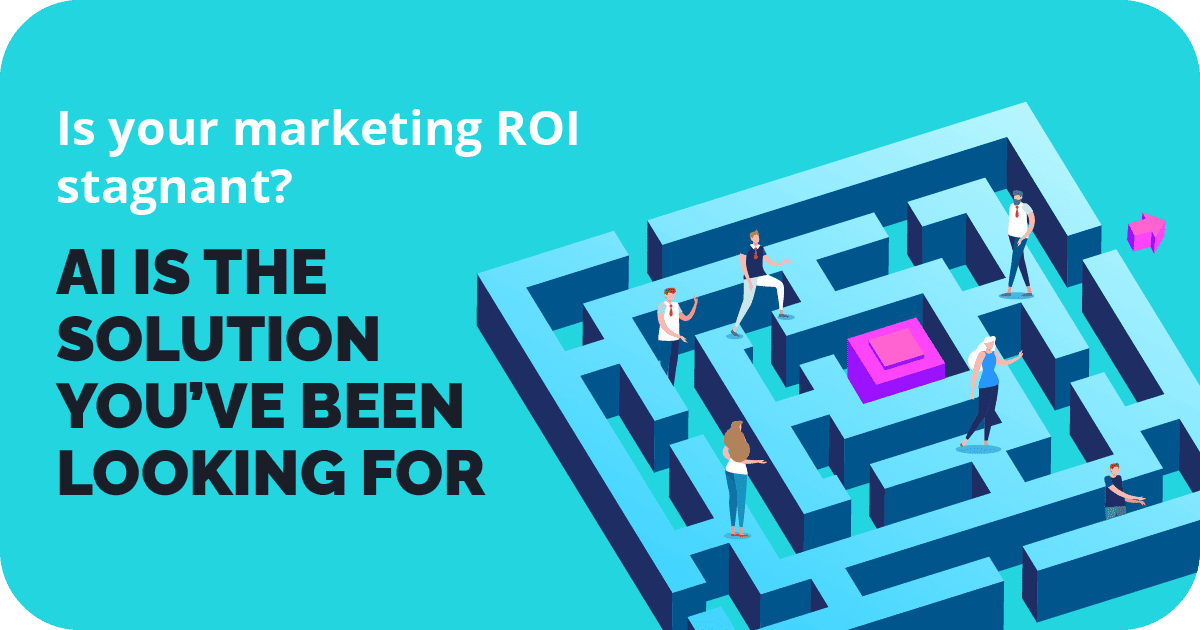
Is your marketing ROI stagnant? AI is the solution You’ve been looking for

Is your marketing ROI stagnant? AI is the solution You’ve been looking for

Share

AI

AR

Automation

B2B

blog

Content

Creativity

Customer

Design

Digital Marketing

Events

Hubspot

IA

Influencers

job

Lead Generation

marketing

Newsletter-en

PR

Sales

UI

UX

If your marketing team is investing in digital strategies but your return on investment (ROI) isn’t growing at the expected pace, you’re not alone. Many tech companies face this challenge—even with paid campaigns, automation, and optimized content in place.

The reason is simple: traditional marketing is no longer enough. Personalization, real-time responsiveness, and the ability to process large volumes of data are now essential to drive profitability.

This is where artificial intelligence (AI) comes into play. In this blog, we’ll explore how AI is boosting marketing ROI, the key trends shaping the future, and the steps you can take to implement it effectively in your strategy.

Artificial Intelligence in Marketing: The Key to Higher ROI

Artificial intelligence in digital marketing is transforming how tech companies design, execute, and optimize their strategies. With its ability to automate workflows, analyze data in real time, and personalize every customer touchpoint, AI has become a critical ally for driving acquisition, conversion, and long-term loyalty.

By 2025, AI’s impact is no longer a futuristic projection—it’s a measurable and proven reality. This is backed by HubSpot’s recent report “Is AI Really Driving ROI for Marketing Teams in 2025?”, based on a survey of 700 marketing professionals across Latin America and Spain.

The numbers speak for themselves:

Say AI has improved their marketing ROI.

0 %

Report a direct increase in revenue due to AI implementation.

0 %

Have reduced operational costs through more efficient processes.

0 %

Have improved both content quality and team productivity.

0 %

For tech companies and startups, this represents a unique opportunity to accelerate execution and make smarter, data-driven decisions in real time. AI is no longer optional—it’s the new standard for scaling marketing results with intelligence.

How Is AI Impacting Digital Marketing?

Tech companies are leveraging AI across three key areas to boost profitability and optimize their marketing strategies.

1. AI for Automation and Operational Efficiency

AI-driven marketing automation is one of the fastest-growing areas. In fact, 49.2% of marketers already use chatbots and virtual assistants to enhance user experience and accelerate lead conversion.


Many platforms have integrated AI into their CRM systems to streamline processes such as:


  • Automated audience segmentation for more precise targeting.

  • Email and workflow automation to improve conversion rates.

  • Virtual assistants that handle real-time inquiries and qualify prospects.


With tools like HubSpot Content Assistant and ChatSpot, marketing teams can generate SEO-optimized content, manage customer interactions, and launch campaigns—without manual intervention.

2. AI for Predictive Analysis and Campaign Optimization

In 2025, digital advertising is no longer about simply launching ads—it’s about analyzing real-time data to maximize ROI.

47.5% of marketers already use AI to predict customer behavior and adjust their campaigns across platforms like Google Ads, Meta, and LinkedIn.

With solutions like HubSpot Customer Journey Analytics, companies can:

  • Forecast buying trends and tailor their strategies accordingly.

  • Optimize ad spend in real time, maximizing every marketing dollar.

  • Eliminate underperforming audiences to cut campaign costs.

The result? Greater efficiency, higher-quality leads, and stronger conversions.

3. AI-Powered Content Personalization in Digital Marketing

AI-generated content is another major trend gaining traction. 41.3% of marketers are already using AI tools to create tailored content for different audience segments.

But it’s not just about producing more—it’s about creating highly personalized content based on user behavior. With AI, you can:


  • Generate SEO-optimized blog posts to drive organic traffic.

  • Automate personalized ad copy and email sequences.

  • Create AI-powered visual content, cutting down design and production costs.


Platforms like HubSpot AI Content Generator empower marketing teams to deliver high-impact content without sacrificing quality or strategy.

Challenges and Opportunities of AI in Marketing

While AI in marketing is having a positive impact on ROI, many companies still face implementation challenges.

According to HubSpot’s report:

  • 50% of marketers are not leveraging AI’s full potential due to lack of training.

  • 46.2% cite a shortage of technical knowledge as a barrier.

  • 38.3% experience internal resistance to change.


Despite these challenges, the outlook is promising:
80.3% of marketing professionals plan to increase their use of AI in 2025.

So, what’s on the horizon?

  • Real-time conversion optimization

  • Hyper-segmented personalization at scale

  • Advanced automation powered by AI agents


The strategic adoption of these technologies won’t just improve results—it will determine who leads and who gets left behind in the tech-driven market.

Integrating AI into your marketing strategy goes beyond task automation—it’s about delivering measurable, sustainable results. To achieve that, you must focus on tracking impact and optimizing in real time.

Define Your Key Metrics

Start by identifying clear indicators that help evaluate the ROI of your AI-driven initiatives:

  • Conversion rate

  • Customer acquisition cost (CAC)

  • Customer lifetime value (CLTV)

These metrics reveal how effective your personalized and automated campaigns truly are.

Optimize Continuously

AI enables real-time optimization throughout your campaigns:

  • Reallocate budgets toward high-performing channels.

  • Personalize messages based on user behavior and intent.

Enhance segmentation using up-to-date and predictive data.

How to Implement AI in Your Strategy to Drive ROI

Companies Already Seeing Results

Linkedin

Increased conversions with AI-personalized ad campaigns.

Deloitte

Achieved a 74% boost in customer satisfaction.

Amazon

Scaled sales through dynamic recommendations and pricing.

Implementing AI strategically doesn’t have to be complex—with the right tools and a data-driven approach, it’s entirely achievable.

Key Takeaways

AI is no longer just a trend—it’s a strategic tool, unlocking new opportunities to improve marketing ROI.
Teams that implement AI effectively are seeing higher conversion rates, lower operational costs, and highly personalized campaigns. If your ROI is stagnant, now you know how to reignite it through AI. This is the moment to evolve your strategy.

At Isource, as certified HubSpot partners, we help tech companies integrate AI into their marketing with tools that enable faster, smarter, and data-driven decision-making.

Contact us today and discover how to build an AI-powered marketing strategy that maximizes your ROI.

Newsletter March 2025

Newsletter March 2025

Share

AI

AR

Automation

B2B

blog

Content

Creativity

Customer

Design

Digital Marketing

Events

Hubspot

IA

Influencers

job

Lead Generation

marketing

Newsletter-en

PR

Sales

UI

UX

The customer journey has changed drastically. It is no longer a simple sales funnel but a dynamic, multichannel experience where potential clients research, compare, and validate options before making a purchase. Is your content strategy aligned with this new reality?

Discover how to enhance your content strategy.

Artificial intelligence is transforming marketing, but the overwhelming amount of information can be challenging to navigate. To focus on practical and effective applications, consider the 3A Strategy:

Delegate repetitive tasks like chatbot responses and audience segmentation to improve efficiency and free up time for strategic activities.

Use AI to personalize experiences and enhance your team’s creativity with intelligent insights and recommendations.

Turn vast amounts of data into strategic decisions and market opportunities based on trends and user behavior.

By applying the 3A Strategy, you can filter out the noise around AI and focus on solutions that drive real business impact.

The B2B tech buying process is no longer linear. Buyers access multiple sources of information and make decisions in a more complex way. The traditional model is outdated, making way for the “Consideration Cycle”.

Collective decision-making – Purchases involve multiple stakeholders with different needs and priorities.

Greater access to information – Buyers conduct independent research and enter the process at different stages.

Non-linear buying cycles – Decisions can be delayed or altered due to internal and external factors.

How to Adapt?

  • Develop flexible strategies that align with the evolving buyer journey.
  • Deliver valuable content at every stage of the process.
  • Leverage data and AI to personalize the buying experience.

At Isource, we transform ideas into impactful content. From copywriting and visual design to social media management, we craft content marketing strategies that capture attention and engage your audience.

We handle it all—creation, design, and publishing—ensuring your brand delivers the right message across every channel.

Let’s elevate your digital presence together.