
Newsletter
September 2025
June 2025
May 2025
April 2025
March 2025
February 2025
January 2025
Categories
AI
- AEO: The New Way to Get Found in the Age of AI
- 3 Things You Must Change in B2B Marketing to Increase Sales in 2026
- 3 Things You Must Change in B2B Marketing to Increase Sales in 2026
- Loop Marketing: The key strategy for your success in 2026
- Ghost SEO: Don’t disappear in the era of AEO
- AI Agents: What they are, how they work, and why your Marketing Team needs one
- HubSpot in Action: Scale your B2B Marketing with CRM, AI, and Automation
- Is your marketing ROI stagnant? AI is the solution You’ve been looking for
- What Digital Advertising Will Bring in 2025: Trends and Tools You Need to Know
- Intelligent Creativity: How AI Influences UX/UI Design
- Step into Evolution: Enhance Your CRM with AI
- How to write a good AI prompt to improve your work?
- The growing reach of ChatGPT in Marketing
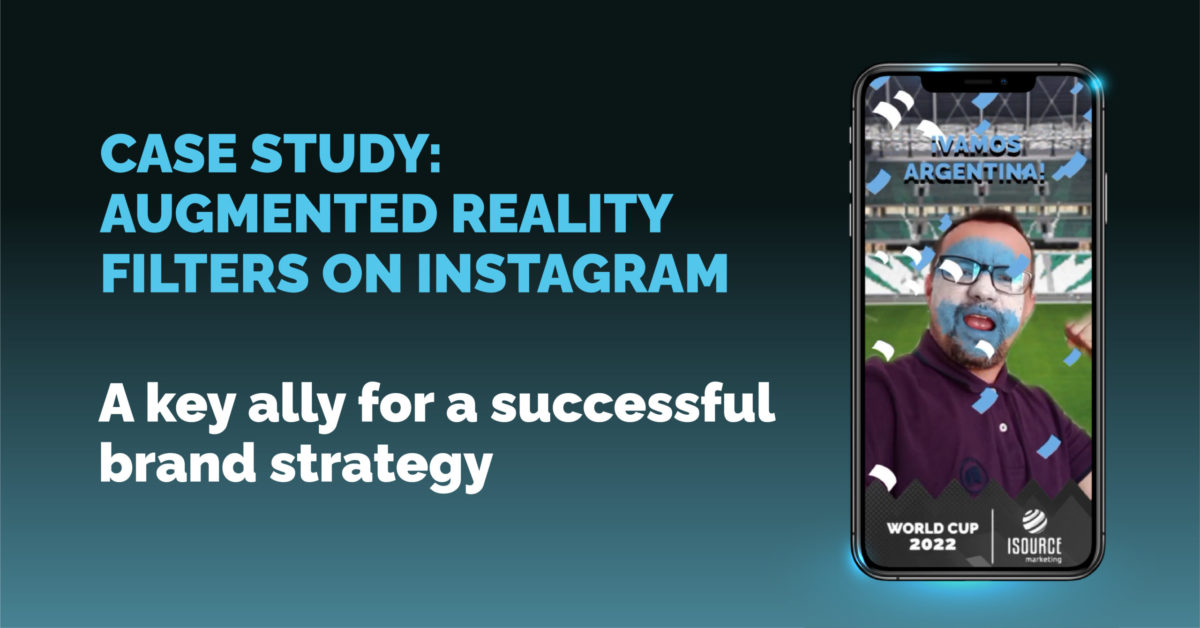
- Case Study: Augmented Reality Filters on INSTAGRAM: A key ally for a successful brand strategy
- Public Relations & Artificial Intelligence – A new Alliance
- More science and less fiction: Artificial Intelligence applied to Marketing
AR
- AEO: The New Way to Get Found in the Age of AI
- Case Study: Augmented Reality Filters on INSTAGRAM: A key ally for a successful brand strategy
- Augmented Reality in social media: the next step in your digital strategy
Automation
- AEO: The New Way to Get Found in the Age of AI
- 3 Things You Must Change in B2B Marketing to Increase Sales in 2026
- Loop Marketing: The key strategy for your success in 2026
- AI Agents: What they are, how they work, and why your Marketing Team needs one
- HubSpot in Action: Scale your B2B Marketing with CRM, AI, and Automation
- Is your marketing ROI stagnant? AI is the solution You’ve been looking for
- What Digital Advertising Will Bring in 2025: Trends and Tools You Need to Know
- Intelligent Creativity: How AI Influences UX/UI Design
- Step into Evolution: Enhance Your CRM with AI
- How to write a good AI prompt to improve your work?
- The growing reach of ChatGPT in Marketing
- Case Study: Augmented Reality Filters on INSTAGRAM: A key ally for a successful brand strategy
- Public Relations & Artificial Intelligence – A new Alliance
- More science and less fiction: Artificial Intelligence applied to Marketing
B2B
- Ghost SEO: Don’t disappear in the era of AEO
- Reimagining B2B Marketing: The new era of ISM and what’s next for your brand
- The evolution of content in the Customer Journey: From a linear funnel to a digital path
- The Secrets of LinkedIn’s Algorithm: Foolproof Tricks for Your Strategy
- Complete Guide to a Customer Experience-Based GTM Strategy
- Is BANT Still Relevant in 2024? Alternative Frameworks
- Why should TikTok be included in your B2B marketing plan?
- 7 tips to prospect clients in the B2B sector
- If your business wants to attract millennials, read this article. You may be surprised!
- Once upon a time… Storytelling in B2B
- Digital Marketing Strategies for Tech Startups
- 8 Ideas for B2B Lead Generation
blog
- AEO: The New Way to Get Found in the Age of AI
- 3 Things You Must Change in B2B Marketing to Increase Sales in 2026
- 3 Things You Must Change in B2B Marketing to Increase Sales in 2026
- Loop Marketing: The key strategy for your success in 2026
- Ghost SEO: Don’t disappear in the era of AEO
- Reimagining B2B Marketing: The new era of ISM and what’s next for your brand
- AI Agents: What they are, how they work, and why your Marketing Team needs one
- HubSpot in Action: Scale your B2B Marketing with CRM, AI, and Automation
- Is your marketing ROI stagnant? AI is the solution You’ve been looking for
- The evolution of content in the Customer Journey: From a linear funnel to a digital path
- Comprehensive Guide: Advanced Inbound Marketing Strategies for the Technology Sector
- Sales Funnel for Tech Companies: How to Capture Leads and Accelerate Your B2B Sales
- What Digital Advertising Will Bring in 2025: Trends and Tools You Need to Know
- The Secrets of LinkedIn’s Algorithm: Foolproof Tricks for Your Strategy
- Complete Guide to a Customer Experience-Based GTM Strategy
- Intelligent Creativity: How AI Influences UX/UI Design
- Step into Evolution: Enhance Your CRM with AI
- Is BANT Still Relevant in 2024? Alternative Frameworks
- What is Advergaming? Benefits and Examples
- How to write a good AI prompt to improve your work?
- The Future of Marketing: Predictions for 2024
- Inspire Your Brand Strategy with Taylor Swift’s Marketing Moves
- Tips and ideas to plan your end-of-year celebrations for work
- Viral Marketing: Strategy or luck?
- Micro-influencers and UGC content generators: Key elements in the marketing strategy
- The growing reach of ChatGPT in Marketing
- Why should TikTok be included in your B2B marketing plan?
- Case Study: Augmented Reality Filters on INSTAGRAM: A key ally for a successful brand strategy
- MQL and SQL: The Key to Increase Your Sales in 2022
- Public Relations & Artificial Intelligence – A new Alliance
- 7 tips to prospect clients in the B2B sector
- UX Writing: Creating Human-Centered Content
- More science and less fiction: Artificial Intelligence applied to Marketing
- Augmented Reality in social media: the next step in your digital strategy
- Design thinking: Think big to generate value for your business
- If your business wants to attract millennials, read this article. You may be surprised!
- Once upon a time… Storytelling in B2B
- Digital Marketing Strategies for Tech Startups
- The importance of a good influencer marketing strategy
- Learn why your company’s website should be Mobile-First!
- New UX Design Trends
- Agile Marketing: An optimization strategy for your business
- 8 Ideas for B2B Lead Generation
Content
- The Future of Marketing: Predictions for 2024
- Inspire Your Brand Strategy with Taylor Swift’s Marketing Moves
- Viral Marketing: Strategy or luck?
- UX Writing: Creating Human-Centered Content
- Augmented Reality in social media: the next step in your digital strategy
- If your business wants to attract millennials, read this article. You may be surprised!
- Once upon a time… Storytelling in B2B
Creativity
- The Future of Marketing: Predictions for 2024
- Inspire Your Brand Strategy with Taylor Swift’s Marketing Moves
- Viral Marketing: Strategy or luck?
- Why should TikTok be included in your B2B marketing plan?
- UX Writing: Creating Human-Centered Content
- Augmented Reality in social media: the next step in your digital strategy
- If your business wants to attract millennials, read this article. You may be surprised!
- Once upon a time… Storytelling in B2B
Customer
- The evolution of content in the Customer Journey: From a linear funnel to a digital path
- Complete Guide to a Customer Experience-Based GTM Strategy
- Learn why your company’s website should be Mobile-First!
Design
- UX Writing: Creating Human-Centered Content
- Learn why your company’s website should be Mobile-First!
- New UX Design Trends
Digital Marketing
- 3 Things You Must Change in B2B Marketing to Increase Sales in 2026
- Loop Marketing: The key strategy for your success in 2026
- AI Agents: What they are, how they work, and why your Marketing Team needs one
- Is your marketing ROI stagnant? AI is the solution You’ve been looking for
- Comprehensive Guide: Advanced Inbound Marketing Strategies for the Technology Sector
- What Digital Advertising Will Bring in 2025: Trends and Tools You Need to Know
- The Secrets of LinkedIn’s Algorithm: Foolproof Tricks for Your Strategy
- Step into Evolution: Enhance Your CRM with AI
- Is BANT Still Relevant in 2024? Alternative Frameworks
- What is Advergaming? Benefits and Examples
- How to write a good AI prompt to improve your work?
- The Future of Marketing: Predictions for 2024
- Inspire Your Brand Strategy with Taylor Swift’s Marketing Moves
- Viral Marketing: Strategy or luck?
- The growing reach of ChatGPT in Marketing
- Why should TikTok be included in your B2B marketing plan?
- More science and less fiction: Artificial Intelligence applied to Marketing
- Design thinking: Think big to generate value for your business
- Digital Marketing Strategies for Tech Startups
- Agile Marketing: An optimization strategy for your business
Events
Hubspot
IA
- 3 Things You Must Change in B2B Marketing to Increase Sales in 2026
- Loop Marketing: The key strategy for your success in 2026
- Ghost SEO: Don’t disappear in the era of AEO
- Reimagining B2B Marketing: The new era of ISM and what’s next for your brand
Influencers
job
Lead Generation
- Comprehensive Guide: Advanced Inbound Marketing Strategies for the Technology Sector
- Sales Funnel for Tech Companies: How to Capture Leads and Accelerate Your B2B Sales
- MQL and SQL: The Key to Increase Your Sales in 2022
- 7 tips to prospect clients in the B2B sector
- 8 Ideas for B2B Lead Generation
marketing
- AEO: The New Way to Get Found in the Age of AI
- 3 Things You Must Change in B2B Marketing to Increase Sales in 2026
- Ghost SEO: Don’t disappear in the era of AEO
Newsletter-en
- Newsletter September 2025
- Newsletter June 2025
- Newsletter May 2025
- Newsletter April 2025
- Newsletter March 2025
- Newsletter February 2025
- Newsletter January 2025
PR
- Micro-influencers and UGC content generators: Key elements in the marketing strategy
- Public Relations & Artificial Intelligence – A new Alliance
Sales
- Sales Funnel for Tech Companies: How to Capture Leads and Accelerate Your B2B Sales
- What is Advergaming? Benefits and Examples
- Tips and ideas to plan your end-of-year celebrations for work
- MQL and SQL: The Key to Increase Your Sales in 2022
- Design thinking: Think big to generate value for your business
- Agile Marketing: An optimization strategy for your business
UI
UX
Archive
- AEO: The New Way to Get Found in the Age of AI
- 3 Things You Must Change in B2B Marketing to Increase Sales in 2026
- 3 Things You Must Change in B2B Marketing to Increase Sales in 2026
- Loop Marketing: The key strategy for your success in 2026
- Ghost SEO: Don’t disappear in the era of AEO
- Reimagining B2B Marketing: The new era of ISM and what’s next for your brand
- AI Agents: What they are, how they work, and why your Marketing Team needs one
- HubSpot in Action: Scale your B2B Marketing with CRM, AI, and Automation
- Is your marketing ROI stagnant? AI is the solution You’ve been looking for
- The evolution of content in the Customer Journey: From a linear funnel to a digital path
- Comprehensive Guide: Advanced Inbound Marketing Strategies for the Technology Sector
- Sales Funnel for Tech Companies: How to Capture Leads and Accelerate Your B2B Sales
- What Digital Advertising Will Bring in 2025: Trends and Tools You Need to Know
- The Secrets of LinkedIn’s Algorithm: Foolproof Tricks for Your Strategy
- Complete Guide to a Customer Experience-Based GTM Strategy
- Intelligent Creativity: How AI Influences UX/UI Design
- Step into Evolution: Enhance Your CRM with AI
- Is BANT Still Relevant in 2024? Alternative Frameworks
- What is Advergaming? Benefits and Examples
- How to write a good AI prompt to improve your work?
- The Future of Marketing: Predictions for 2024
- Inspire Your Brand Strategy with Taylor Swift’s Marketing Moves
- Tips and ideas to plan your end-of-year celebrations for work
- Viral Marketing: Strategy or luck?
- Micro-influencers and UGC content generators: Key elements in the marketing strategy
- The growing reach of ChatGPT in Marketing
- Why should TikTok be included in your B2B marketing plan?
- Case Study: Augmented Reality Filters on INSTAGRAM: A key ally for a successful brand strategy
- MQL and SQL: The Key to Increase Your Sales in 2022
- Public Relations & Artificial Intelligence – A new Alliance
- 7 tips to prospect clients in the B2B sector
- UX Writing: Creating Human-Centered Content
- More science and less fiction: Artificial Intelligence applied to Marketing
- Augmented Reality in social media: the next step in your digital strategy
- Design thinking: Think big to generate value for your business
- If your business wants to attract millennials, read this article. You may be surprised!
- Once upon a time… Storytelling in B2B
- Digital Marketing Strategies for Tech Startups
- The importance of a good influencer marketing strategy
- Learn why your company’s website should be Mobile-First!
- New UX Design Trends
- Agile Marketing: An optimization strategy for your business
- 8 Ideas for B2B Lead Generation
2026
2025
2024
2023
2022
2021
SEO as we know it is changing. Today, users are no longer just searching for links—they expect fast, clear, and personalized answers. With the rise of artificial intelligence, search engines are evolving from simple indexers into true answer engines.
For years, strategies focused on ranking content. But user behavior has shifted toward more conversational interactions, driven by AI tools that deliver direct answers without requiring a click.
This is where Answer Engine Optimization (AEO) comes in—a new approach that redefines how brands create content to stay visible in this evolving landscape.
If you’re planning your strategy for 2026, understanding and implementing AEO is no longer optional—it’s essential to remain relevant in an increasingly automated digital ecosystem.
What is AEO and why is it transforming SEO?
Answer Engine Optimization (AEO) is the evolution of traditional SEO. Instead of focusing only on ranking web pages, it aims to optimize content so it can be selected as the best answer by AI-powered engines.
Today, platforms like virtual assistants, smart search engines, and generative AI tools prioritize content that is direct, structured, and trustworthy.

Unlike traditional SEO, where the goal was to generate clicks, AEO focuses on something more valuable: being the answer.
This shift requires understanding three key elements:
Answer-driven content:
Brands need to create clear, concise, and useful content that directly solves user questions.
AI-friendly structure:
Content must be organized in a way that AI systems can easily interpret, prioritizing clarity, hierarchy, and context.
Authority and trustworthiness:
Answer engines prioritize credible, well-structured sources that deliver real value.
The result is a major shift: it’s no longer about who gets the most traffic, but who provides the best answers.
How to implement AEO in your B2B marketing strategy

Adopting AEO means transforming how you create content. It’s not just about keywords anymore—it’s about understanding user intent and anticipating their questions.
Here’s how to get started:
Understand search intent
Beyond keywords, it’s critical to identify the real questions your customers are asking. In B2B, this means analyzing needs, pain points, and decision-making processes.
Create question-based content
Structuring content in formats like FAQs, guides, and direct answers increases your chances of being selected by AI engines.
Optimize content structure
Using clear headings, lists, and concise answers improves readability for both users and algorithms.
Add data and context
Content enriched with data, examples, and real-world context increases relevance and credibility.
Leverage AI tools
Platforms like HubSpot help analyze behavior, identify opportunities, and optimize content in real time.
Why AEO will be key for marketing in 2026

The rise of artificial intelligence is redefining how people interact with information. More and more decisions are being made based on AI-generated answers rather than traditional search results.
In this context, AEO becomes a competitive advantage for B2B brands.
Key benefits include:
Greater visibility in AI environments:
Your content can become the direct answer users receive.
Improved user experience:
Clear and fast responses build trust and engagement.
Stronger authority positioning:
Brands that answer better become industry leaders.
Future-ready SEO strategy:
Preparing for a zero-click environment gives you a competitive edge.
Looking ahead to 2026, companies that integrate AEO into their strategy won’t just improve rankings—they’ll align with the natural evolution of digital behavior.
Conclusion

AEO represents a turning point in how brands position themselves online. It’s no longer just about appearing in search results—it’s about becoming the answer users are looking for.
In an AI-driven ecosystem, strategies must be more precise, useful, and user-focused. Adapting to this shift will allow companies not only to stay relevant but to lead in their industry.
As a HubSpot partner, iSource helps brands evolve toward smarter strategies where content, data, and automation work together to drive real results.
Is your content ready for the new era of AI-powered search?
At iSource, we help you implement AEO strategies so your brand doesn’t just appear—it becomes the answer your customers are looking for.