
Responsive Menu
Add more content here...

Why Reddit Should Be Part of Your B2B Marketing Strategy

Why Reddit Should Be Part of Your B2B Marketing Strategy

Share

AI

AR

Automation

B2B

blog

Content

Creativity

Customer

Design

Digital Marketing

Events

Hubspot

IA

Influencers

job

Lead Generation

marketing

Newsletter-en

PR

Sales

UI

Uncategorized

UX

Reddit is one of the largest discussion platforms on the internet, with hundreds of millions of active users. Yet many B2B companies overlook it. Even though it may seem more “community‑driven” than “professional,” Reddit contains highly active forums where people talk about technologies, tools, product challenges, market trends, and even purchasing decisions.

If you position yourself well, Reddit can help you understand your tech audience more deeply while also generating visibility, credibility, and qualified leads, without relying solely on traditional channels like LinkedIn or email.

Why Reddit Is an Underrated Channel for B2B


Reddit doesn’t operate like traditional marketing channels, and that can throw off teams used to direct, linear, and easily measurable strategies.

Reddit isn’t designed for selling or straightforward promotional content.

Instead, it is organized around communities, called subreddits, where users debate, ask questions, share experiences, and explore ideas, often anonymously. Each subreddit is like a focused forum with its own rules, tone, and culture.

For example, r/SaaS is frequented by founders and digital product operators; r/Entrepreneur is full of real questions about scaling businesses; and r/ProductManagement is where people discuss launches, user feedback, and validation.

The key point is that conversations on Reddit are authentic and centered on real problems. There is no tolerance for polished marketing language. Reddit is undervalued by B2B companies because it demands patience, genuine engagement, and a more horizontal approach, something many teams aren’t prepared to invest in.

However, those that do engage thoughtfully find active communities with technical decision makers, unfiltered insights, and opportunities to build a sustainable, organic reputation. Rather than broadcasting messages, Reddit allows you to co‑create conversations with your ideal audience.

____________________

How ISM can help: Through Pipeline Factory, we go beyond ABM to design and implement complete ABX strategies: we identify key accounts, connect your CRM with intent tools, and build playbooks that align marketing and sales. Our methodology helps you build a predictable, revenue‑focused pipeline.

How Reddit Can Strengthen Your B2B Tech Strategy

The companies that get the most value from Reddit are not the ones that try to sell right away. They are the ones that learn how to join the conversation, spot opportunities before competitors, and establish themselves as trusted authorities without sounding commercial.

Reddit can deliver real value in at least four key areas:

The companies that get the most value from Reddit are not the ones that try to sell right away. They are the ones that learn how to join the conversation, spot opportunities before competitors, and establish themselves as trusted authorities without sounding commercial.

Reddit can deliver real value in at least four key areas:

1. Audience Research and Unfiltered Buyer Challenges 

Reddit lets you observe:

  • What topics your potential buyers really care about.
  • What solutions they are actively seeking.
  • What frustrations they have with current products or services.

These insights are extremely valuable when shaping your messaging, content topics, or product decisions.

2. Positioning Yourself as an Expert (Without Selling)

The golden rule on Reddit is: don’t cold sell.
If you respond with:

  • Helpful answers,
  • Detailed explanations,
  • Case examples or frameworks,

…your brand becomes associated with expertise. This can lead to visits to your website, newsletter sign‑ups, or inbound interest from qualified prospects.

3. Predictive Feedback for Products or Campaigns

Before launching a new feature or lead magnet, you can:

  • Test ideas.
  • Refine your messaging.
  • See which format resonates best with your audience.

This reduces uncertainty and often improves conversion rates when you scale the initiative elsewhere.

Common Errors When Starting Your Tech Marketing Strategy on Reddit

Approaching Reddit with the mindset of “just another channel to post content” almost always leads to poor results.

B2B tech companies that don’t understand how the platform works can be ignored, downvoted, or even banned by the community. If you want your brand to succeed on Reddit, it’s important to avoid these common missteps:

1. Treating Reddit Like LinkedIn or Twitter

One of the biggest mistakes is using Reddit the same way you would other social networks. If your posts look like hidden advertisements, clickbait, or thinly veiled promotions, the community will reject them immediately.

What works on LinkedIn, promoting events, sharing links, or talking in a commercial tone, often feels like spam on Reddit. Users are sensitive to self‑promotion and will downvote or flag content, which hurts your reputation and visibility.

How to avoid this:

  • Read and respect each subreddit’s rules. Some do not allow external links or promotional material.
  • Start by answering questions and adding value without mentioning your company or services.
  • Wait until your profile has some positive reputation (karma) before posting your own content.

2. Not Listening or Following Up

Many companies post once and disappear. Reddit isn’t just a place to publish content, it’s a continuous learning environment where you can spot trends, uncover customer pain points, and validate ideas.

If you don’t follow up on posts, comments, or links, you miss out on understanding what truly resonates with the audience, what kinds of content generate interaction, and which communities are most active and receptive.

How to avoid this:

  • Use tools like Reddit Notifier or TrackReddit to get alerts on industry‑relevant keywords.
  • Add UTMs to shared links so you can measure traffic and engagement on your own site.
  • Track comments and questions so you can keep conversations alive and build real connections.

____________

How ISM can help: With Digital Machine, we audit your content architecture, define modular blocks for generative AI, and train a brand‑specific voice model. We build systems that allow dynamic personalization without losing control or consistency.

Conclusion

If you are part of a B2B tech company looking for new ways to understand your market, validate ideas, position your brand, or generate quality leads without relying entirely on paid ads or outbound outreach, Reddit can be a channel that few others in your industry are exploring.

Reddit demands authenticity, patience, and strategic engagement. Instead of pushing messages at your audience, it rewards listening, adding value, and building a reputation based on usefulness. This approach may feel slower to teams used to immediate campaign results, but it offers something much more powerful: genuine organic trust with highly qualified technical audiences.

The key to success in B2B marketing in 2026 will be constant innovation and adaptability. At Isource, we help companies like yours incorporate unconventional channels into intelligent, measurable digital strategies that drive real results.

We want your brand to find the balance between technology that accelerates, strategies that connect, and execution that generates outcomes. Just Marketing #NoBS.


3 Things You Must Change in B2B Marketing to Increase Sales in 2026

This is how 2026 will work: Predictions and Strategies for B2B Marketing

Share

AI

AR

Automation

B2B

blog

Content

Creativity

Customer

Design

Digital Marketing

Events

Hubspot

IA

Influencers

job

Lead Generation

marketing

Newsletter-en

PR

Sales

UI

Uncategorized

UX

2026 will be the year when brands that want to stay competitive must adopt smarter strategies powered by data, AI, automation, and a real customer-first mindset.

If you thought automation and AI were just “trends,” 2026 will prove they are now requirements for consistent, measurable growth with strategic vision, adaptation, and continuous implementation.

In this blog, we share our predictions for B2B tech marketing in 2026, along with practical strategies to help your brand not only survive but lead. #NoBS

Operational and Governed AI: From hype to a real Growth Engine

We can describe 2025 as the “baby boom” of generative AI: plenty of experimentation, some wins, and a whole lot of testing. In 2026, everything changes. AI stops being a pilot initiative and becomes critical infrastructure within the B2B Go-to-Market (GTM) ecosystem.

Companies that already adopted AI in their processes are reporting real improvements in efficiency, reduced repetitive work, and higher productivity. But with great power comes great responsibility. Analysts warn that unmanaged AI could cost B2B companies billions in 2026 if quality, ethics, and human oversight policies are not implemented.

What to do now

  • Apply a “governed AI” approach: define quality controls, human review steps, and clear guidelines for sensitive data.

  • Measure ROI from day one: set clear KPIs such as time saved, conversion rates, and operational efficiency to justify investment and adjust as needed.

How ISM helps you: We evaluate your current stack, identify relevant use cases, design your AI architecture powered by data, and configure automated workflows ready to scale.

AEO + GEO + SEO + Data First = Reinvented Visibility

Since 2025, it’s been clear that traditional SEO is no longer enough. With chatbots, answer engines, and conversational tools, the new standard is AEO (Answer Engine Optimization), an evolution of SEO that blends intent, data, context, and algorithms.

On top of that, a new layer has emerged: GEO (Generative Engine Optimization), focused on how generative models like ChatGPT, Gemini, or Perplexity create content, recommend brands, and structure information. It’s no longer just about showing up; it’s about how AI interprets you, describes you, and includes you in its answers.

What’s changing?

  • B2B users want answers, not pages: they expect instant clarity, expert content, and useful data.

  • Generative engines no longer “read” your website. They reinterpret it, generate summaries, compare solutions, and recommend providers.

  • The semantic quality of your content (conceptual clarity and technical accuracy) determines whether AI considers you a reliable source.

  • First-party data is no longer optional. Without it, you lose personalization, attribution, and efficiency.

What should your 2026 strategy look like?

  • Prioritize answer-driven content: clear guides, technical FAQs, use cases, and actionable documentation.

  • Create “AI-ready” content: organize your text with a clear structure, use concrete concepts like technology or product names, provide brief definitions for technical terms, and maintain precision in your data. This helps AI models understand your content and use it as a reference.

  • Optimize for generative engines (GEO): publish verifiable data, benchmarks, definitions, and technical content that AI can draw from.

  • Activate your own data: centralize and automate your CRM, strengthen your consent management to protect personal data, and review each customer’s history and interaction signals. Real personalization comes from your own data, not from third parties.

How ISM Helps You: Through Digital Machine, we audit your content architecture and data, lead the redesign and content strategies for AEO/GEO/SEO, and define an implementation plan built on data-first and privacy-first principles.

RevOps, Dynamic ABM, and unified processes: The new commercial muscle

2026 demands fully aligned teams. Marketing, sales, service, and product can no longer operate in silos. RevOps (Revenue Operations) becomes essential for orchestrating data, processes, and technology in one unified flow.

What We’ll See

  • Teams aligned on objectives, tools, and data: MQLs, SQLs, pipeline, and opportunities all in one place.
  • ABM (Account-Based Marketing) powered by real intent data, automation, and large-scale personalization for key accounts.
  • Nonlinear buyer journeys that reflect real B2B behavior, with many touchpoints such as content, demos, events, AI agents, and support interactions.

How to Implement It

  • Establish a “single source of truth”: one CRM, one shared dashboard, and aligned processes.
  • Prioritize accounts with real signals (intent, behavior, fit). Activate ABM campaigns with personalized outreach and continuous nurture.
  • Implement workflows that connect marketing, sales, and customer service from end to end.

How ISM Helps You: Through  Pipeline Factory, we define your RevOps structure, design your tech stack (CRM, automation, tracking), and create playbooks that strengthen nurturing and retention.

Human first in an AI-First world: Experience, Trust, and Community

Even though AI dominates the technology landscape, the human factor will be more valuable than ever in 2026. B2B buyers want trust, transparency, and real relationships. That is why leading brands will combine AI with human touch through community, events, experiences, and authentic content.

How to Make It Happen

  • Create authentic content: real case studies, testimonials, research, and deep technical insights. No more generic marketing.
  • Organize events, webinars, and live conversations because AI can automate, but trust is built by people.
  • Support buyers with valuable educational content such as white papers, guides, and tools, while keeping processes transparent.

How ISM Helps You: Through Brand Experience, we develop events that blend technical content with community-building moments, combining AI to streamline production with human expertise to ensure relevant and memorable experiences.

Conclusion

2026 will reward brands that dare to evolve: those that combine technology with authenticity, data with empathy, and automation with real human experiences.

Growth will come to companies that understand that AI does not replace brands; it amplifies their impact.

Continuous innovation and adaptation will be the key for your business to fully leverage B2B marketing in 2026. At Isource, we help you turn these predictions into a real, actionable, and measurable plan.

We want your brand to find the perfect balance between technology that accelerates, strategies that connect, and execution that delivers results. Only #NoBS marketing.

3 Things You Must Change in B2B Marketing to Increase Sales in 2026

This is how 2026 will work: Predictions and Strategies for B2B Marketing

Share

AI

AR

Automation

B2B

blog

Content

Creativity

Customer

Design

Digital Marketing

Events

Hubspot

IA

Influencers

job

Lead Generation

marketing

Newsletter-en

PR

Sales

UI

Uncategorized

UX

2026 will be the year when brands that want to stay competitive must adopt smarter strategies powered by data, AI, automation, and a real customer-first mindset.

If you thought automation and AI were just “trends,” 2026 will prove they are now requirements for consistent, measurable growth with strategic vision, adaptation, and continuous implementation.

In this blog, we share our predictions for B2B tech marketing in 2026, along with practical strategies to help your brand not only survive but lead. #NoBS

Operational and Governed AI: From hype to a real Growth Engine

We can describe 2025 as the “baby boom” of generative AI: plenty of experimentation, some wins, and a whole lot of testing. In 2026, everything changes. AI stops being a pilot initiative and becomes critical infrastructure within the B2B Go-to-Market (GTM) ecosystem.

Companies that already adopted AI in their processes are reporting real improvements in efficiency, reduced repetitive work, and higher productivity. But with great power comes great responsibility. Analysts warn that unmanaged AI could cost B2B companies billions in 2026 if quality, ethics, and human oversight policies are not implemented.

What to do now

  • Apply a “governed AI” approach: define quality controls, human review steps, and clear guidelines for sensitive data.

  • Measure ROI from day one: set clear KPIs such as time saved, conversion rates, and operational efficiency to justify investment and adjust as needed.

How ISM helps you: We evaluate your current stack, identify relevant use cases, design your AI architecture powered by data, and configure automated workflows ready to scale.

AEO + GEO + SEO + Data First = Reinvented Visibility

Since 2025, it’s been clear that traditional SEO is no longer enough. With chatbots, answer engines, and conversational tools, the new standard is AEO (Answer Engine Optimization), an evolution of SEO that blends intent, data, context, and algorithms.

On top of that, a new layer has emerged: GEO (Generative Engine Optimization), focused on how generative models like ChatGPT, Gemini, or Perplexity create content, recommend brands, and structure information. It’s no longer just about showing up; it’s about how AI interprets you, describes you, and includes you in its answers.

What’s changing?

  • B2B users want answers, not pages: they expect instant clarity, expert content, and useful data.

  • Generative engines no longer “read” your website. They reinterpret it, generate summaries, compare solutions, and recommend providers.

  • The semantic quality of your content (conceptual clarity and technical accuracy) determines whether AI considers you a reliable source.

  • First-party data is no longer optional. Without it, you lose personalization, attribution, and efficiency.

What should your 2026 strategy look like?

  • Prioritize answer-driven content: clear guides, technical FAQs, use cases, and actionable documentation.

  • Create “AI-ready” content: organize your text with a clear structure, use concrete concepts like technology or product names, provide brief definitions for technical terms, and maintain precision in your data. This helps AI models understand your content and use it as a reference.

  • Optimize for generative engines (GEO): publish verifiable data, benchmarks, definitions, and technical content that AI can draw from.

  • Activate your own data: centralize and automate your CRM, strengthen your consent management to protect personal data, and review each customer’s history and interaction signals. Real personalization comes from your own data, not from third parties.

How ISM Helps You: Through Digital Machine, we audit your content architecture and data, lead the redesign and content strategies for AEO/GEO/SEO, and define an implementation plan built on data-first and privacy-first principles.

RevOps, Dynamic ABM, and unified processes: The new commercial muscle

2026 demands fully aligned teams. Marketing, sales, service, and product can no longer operate in silos. RevOps (Revenue Operations) becomes essential for orchestrating data, processes, and technology in one unified flow.

What We’ll See

  • Teams aligned on objectives, tools, and data: MQLs, SQLs, pipeline, and opportunities all in one place.
  • ABM (Account-Based Marketing) powered by real intent data, automation, and large-scale personalization for key accounts.
  • Nonlinear buyer journeys that reflect real B2B behavior, with many touchpoints such as content, demos, events, AI agents, and support interactions.

How to Implement It

  • Establish a “single source of truth”: one CRM, one shared dashboard, and aligned processes.
  • Prioritize accounts with real signals (intent, behavior, fit). Activate ABM campaigns with personalized outreach and continuous nurture.
  • Implement workflows that connect marketing, sales, and customer service from end to end.

How ISM Helps You: Through  Pipeline Factory, we define your RevOps structure, design your tech stack (CRM, automation, tracking), and create playbooks that strengthen nurturing and retention.

Human first in an AI-First world: Experience, Trust, and Community

Even though AI dominates the technology landscape, the human factor will be more valuable than ever in 2026. B2B buyers want trust, transparency, and real relationships. That is why leading brands will combine AI with human touch through community, events, experiences, and authentic content.

How to Make It Happen

  • Create authentic content: real case studies, testimonials, research, and deep technical insights. No more generic marketing.
  • Organize events, webinars, and live conversations because AI can automate, but trust is built by people.
  • Support buyers with valuable educational content such as white papers, guides, and tools, while keeping processes transparent.

How ISM Helps You: Through Brand Experience, we develop events that blend technical content with community-building moments, combining AI to streamline production with human expertise to ensure relevant and memorable experiences.

Conclusion

2026 will reward brands that dare to evolve: those that combine technology with authenticity, data with empathy, and automation with real human experiences.

Growth will come to companies that understand that AI does not replace brands; it amplifies their impact.

Continuous innovation and adaptation will be the key for your business to fully leverage B2B marketing in 2026. At Isource, we help you turn these predictions into a real, actionable, and measurable plan.

We want your brand to find the perfect balance between technology that accelerates, strategies that connect, and execution that delivers results. Only #NoBS marketing.

Loop Marketing: The key strategy for your success in 2026

Loop Marketing: The key strategy for your success in 2026

Share

AI

AR

Automation

B2B

blog

Content

Creativity

Customer

Design

Digital Marketing

Events

Hubspot

IA

Influencers

job

Lead Generation

marketing

Newsletter-en

PR

Sales

UI

Uncategorized

UX

Marketing is no longer linear. Funnels have fallen short in a world where customers expect continuous, personalized, and connected experiences. Over time, different models have guided how brands attract customers, but one has long dominated: inbound marketing, with its classic approach of attract, convert, and close. However, that model no longer reflects today’s market reality.

That’s why HubSpot introduced Loop Marketing, a new model of continuous growth designed to replace the traditional funnel by integrating marketing, sales, and service into a single, dynamic cycle powered by artificial intelligence.

And if you’re planning your strategy for 2026, this is the approach your brand needs to stay in constant motion. In this blog, we’ll explain how to apply Loop Marketing at every stage of the process to transform your B2B strategy and achieve sustainable, scalable growth in the year ahead.

What is Loop Marketing and why is it a game changer?

Marketing evolution is no longer optional; it’s essential to stay competitive. Today’s customers no longer move in a straight line: they revisit, research, compare, and expect personalized experiences even in the B2B world.

Faced with this new behavior, companies must adopt smarter and more adaptive strategies. This is where HubSpot’s Loop Marketing comes into play, an approach that combines artificial intelligence and real-time data to replace the funnel with a continuous cycle that optimizes, personalizes, and strengthens every interaction through the power of AI.


Unlike the funnel, which ends at the sale, the Loop keeps the momentum going:

  • Satisfied customers generate new opportunities.

  • Every interaction feeds new data back into the system.

  • And AI optimizes each step to repeat and scale success.

This model is built on three fundamental principles:

  1. Data-driven: Every action generates insights that feed the loop. Decisions are no longer based on assumptions but on real-time data.

  2. AI-connected: Artificial intelligence personalizes, automates, and scales each interaction with customers, creating efficiency without losing the human touch.

  3. Focused on continuous growth: Marketing, sales, and service no longer work in silos. Everything is synchronized to deliver seamless, consistent, and impactful experiences.

The result: a system that grows with every customer, improving acquisition, retention, and advocacy at every turn.

The phases of Loop Marketing and how they work

Loop Marketing allows brands to adapt in real time to market needs and build long-lasting customer relationships. This method is structured into four essential phases, powered by AI and advanced data analytics, ensuring that the cycle constantly evolves and improves.

1. Express

The goal of this first phase is to accurately identify your ideal customer profile (ICP). Through predictive analytics tools, AI helps segment and better understand customers by detecting behavioral patterns and real needs.

This sets a solid foundation for brand strategy and positioning, defining clear, high-potential audiences and avoiding wasted resources on unqualified leads.

2. Tailor

Personalization goes far beyond basic data such as name or industry. It’s about integrating current and relevant information about each prospect, including recent company news, events they attend, product launches, or any other detail that reflects their reality and immediate needs, to create messages that truly fit their specific context.

AI analyzes behaviors, interactions, and intent signals, allowing campaigns to adapt with highly relevant and timely content. This results in more authentic communication, stronger engagement, and a deeper brand-customer relationship.

3. Amplify

Once the message is optimized and segmented, it’s time to amplify the reach. This phase focuses on deploying multichannel campaigns that engage prospects across all digital touchpoints.

Companies leverage tools like Breeze Agents (HubSpot’s virtual assistants powered by AI) that interact with prospects in real time, automatically qualify leads, and generate opportunities for the sales team. Automation and continuous optimization allow brands to scale efficiently and maintain a consistent presence.

4. Evolve

Sustained growth is only possible when every loop cycle is analyzed and refined. In this phase, AI plays a key role by detecting patterns and recommending optimizations based on performance data.

This ensures that the loop remains active and evolving, making each iteration more effective than the last. In this way, Loop Marketing becomes a living system: one that learns, adapts, and maximizes long-term results.

How Loop Marketing prepares brands for the challenges of 2026

Loop Marketing is set to become the key tool for B2B brands to stay competitive in an environment that changes every day. Its continuous structure and the use of artificial intelligence allow companies to adapt to new consumer behaviors, anticipate trends, and build stronger, longer-lasting relationships with their customers.

Here are some of its main advantages:

  • Advanced personalization: Campaigns adapt in real time based on customer data and needs, increasing relevance and impact.

  • Long-lasting relationships: The cycle doesn’t end with the sale; it remains active to foster loyalty and retention.

  • Data-driven decisions: Real-time analysis drives more precise and effective strategies.

  • Smart scalability: Thanks to automation, brands can grow sustainably, optimizing both resources and results.

Looking ahead to 2026, companies that adopt this approach in their campaigns will not only optimize performance but also build a sustainable growth system. In a market that never stops, keeping the loop in motion will be the key to staying relevant.

In Summary

This methodology closes the gap between marketing, sales, and service, ensuring that every action is coherent, connected, and customer-centered, something essential to remain competitive in today’s B2B ecosystem.

Loop Marketing is an innovative strategy that transforms how companies face modern marketing challenges. Adapting, leveraging artificial intelligence, and maintaining a constant cycle of improvement have become the keys to building long-term relationships, improving efficiency, and achieving sustainable growth. We are a HubSpot Partner, and we help you turn that loop into the engine of your growth heading into 2026.

Ready to move toward smarter, more connected, and ever-growing marketing? 

At Isource, as a HubSpot Partner, we help you implement Loop Marketing so your brand keeps moving forward, connecting every part of your business and preparing you for the challenges ahead.

Ghost SEO: Don’t disappear in the era of AEO

Ghost SEO: Don’t disappear in the era of AEO

Share

AI

AR

Automation

B2B

blog

Content

Creativity

Customer

Design

Digital Marketing

Events

Hubspot

IA

Influencers

job

Lead Generation

marketing

Newsletter-en

PR

Sales

UI

Uncategorized

UX

B2B digital marketing can no longer rely solely on traditional SEO methods. The rise of AI Search, also known as AEO (Answer Engine Optimization), is radically changing the way brands are found online. Now, search engines go beyond keywords. They combine social media data, dynamic content, and user signals to deliver precise, personalized answers.

Brands that cling to outdated tactics risk being left behind in the conversation and losing visibility in search results. This new era requires smart strategies, adapted to how users really search and consume information today.

In this blog, we’ll show you how brands must adapt, optimize their sites and content for AEO, and other new ways to drive traffic, ensuring they stay visible to the decision-makers in the B2B sector.

The dark side of traditional SEO: Will it disappear soon?

For years, brands have relied on traditional SEO formulas, using tactics based on volume, generic keywords, and superficial metrics. But today, those strategies are showing their limits: users are looking for quick, relevant, and personalized answers, while decision-makers expect content to provide real value.

In other words, SEO is moving to the “dark side” because if you don’t adapt your content strategy, your brand risks losing visibility, getting trapped in irrelevant results, and disappearing.

The rise of AEO (Answer Engine Optimization) is a response to this reality: more and more people are searching for answers through AI, and now even Google offers AI Mode or AI-generated responses, making traditional strategies insufficient.

So, the decision is clear: you need to adapt to the new era of smart search, where AI is redefining how users find information and how brands must position themselves to stay visible.

From Google ghosts to AI spirits: The evolution of online search

Now, brands must go beyond the surface; Google and traditional SEO are still key tools for being found, but their role is transforming.

It’s crucial to consider how AI tools like ChatGPT, Gemini, Perplexity, and Copilot integrate social media data, user behavior signals, and relevant, descriptive content within web pages to generate more precise and contextual results.

This shift forces brands to rethink their visibility strategy, ensuring that their content can connect with their target audience in the new era of smart search.

How to prepare your brand for the AEO era

To survive and thrive in the AI search era, brands must go beyond traditional SEO tweaks. Here are key recommendations to optimize your online presence and ensure your content is discoverable and relevant:

  • Restructure your website: Organize your content clearly and hierarchically to make it easier for AI engines to interpret it correctly. Ensure that each section has clear headings and relevant keywords.


  • Relevant and optimized content for AI + SEO: Focus on content that answers real user questions. Include keywords for voice search, such as natural phrases and full questions. This way, you maintain a balance between traditional SEO and AEO optimization, ensuring visibility on both fronts.


  • Structured data and schema: Use schema markup to help AI and search engines understand the context of your information. This positions your content as a reliable resource and source of information for AI Search.


  • Integration of external signals: Ensure that your content can be enriched by social media signals and user behavior. The more relevant and referenced it is, the more likely AI will prioritize it in search results.


  • User experience and accessibility: Make your content easy to read, quick to load, and well-structured. This not only benefits your users but also helps AI engines use it as a reliable source, improving your authority.


  • Constant updates and relevance: Keep your content fresh and aligned with industry trends. AI prioritizes recent and relevant information, so publishing regularly increases your traffic opportunities.


  • Combine SEO and AEO strategically: Optimize titles, meta descriptions, and content for both users and search engines. Ensure that each page is visible to Google and understandable to AI Search, maximizing your reach.


By applying these strategies, your brand will not only survive, but it will be prioritized in this new era of smart search. This is the difference between disappearing into the “dark side” of traditional SEO and being visible, relevant, and connected with your target audience.


Secret predictions: What to expect from SEO and visibility in the AI era

Online search is evolving at a rapid pace. What works in SEO and AEO today could be obsolete tomorrow. Here are some trends that will make a difference for B2B brands in this era:

  • Integration with generative AI: Models like ChatGPT, Gemini, and Copilot will continue to redefine how information is prioritized and presented.


  • Contextual and voice search: Users are increasingly using more natural and complete phrases; optimizing for these types of searches will be crucial.


  • Structured and reliable content: AI prioritizes clear, precise, and well-organized sources.


  • User experience: The combination of relevance, speed, and accessibility will remain a key factor for visibility.


These trends show that adapting isn’t optional: it’s the only way to stay relevant. Visibility in AI Search and traditional engines requires dynamic strategies, updated content, and a focus on the decision-makers who truly matter.

In Summary

In summary, the era of AEO is not a passing trend: it’s a radical shift that forces brands to rethink their online presence. Optimizing your website, content, and visibility strategy not only prevents you from disappearing from the digital radar but also positions you as a relevant, trustworthy, and visible brand for the decision-makers in your industry.

Stop being a ghost in the search results. In the age of AI Search, your brand needs to be visible, relevant, and well-positioned. At Isource, we help with SEO, AEO, and your entire web and content strategy to ensure your brand doesn’t disappear and stays on the radar of your users and future clients.

AI Agents: What they are, how they work, and why your Marketing Team needs one

AI Agents: What they are, how they work, and why your Marketing Team needs one

Share

AI

AR

Automation

B2B

blog

Content

Creativity

Customer

Design

Digital Marketing

Events

Hubspot

IA

Influencers

job

Lead Generation

marketing

Newsletter-en

PR

Sales

UI

Uncategorized

UX

Artificial intelligence is no longer a future promise: it’s a real tool that’s transforming how marketing teams operate. But beyond chatbots and simple automations, a new player has taken center stage: AI agents.

In this article, you’ll discover what an AI agent is, how it differs from the tools you already know, and why it’s become a key asset for scaling your B2B strategy without losing control or personalization.

Why is Everyone Talking About AI Agents Now?

In recent years, artificial intelligence has gone from being a novelty to becoming a part of the daily routine in marketing: automating processes, reducing repetitive tasks, and improving efficiency. However, there’s a new tool ready to take the next step: AI agents.

These intelligent systems don’t just execute commands or answer questions. They learn, make decisions, connect to your platforms, and work autonomously to scale marketing, sales, and customer service processes—all while maintaining a human touch.

And the best part: you don’t need to be a multinational corporation to access this technology. There are now tools that have democratized the creation of AI agents. Today, any B2B team can have one up and running if they know how and why to implement it.

What is an AI Agent and What Makes It So Powerful?

An AI agent is an intelligent system that not only understands natural language but also reasons, makes decisions, and performs actions on behalf of your team. Unlike a chatbot or traditional automation, an AI agent can operate autonomously, with access to tools, memory, and well-defined business rules.

What differentiates it from a chatbot or an automation?

  • Automation: Follows fixed rules and always performs the same task. E.g., when someone fills out a form, it sends an email.

  • AI Assistant: Responds to queries but requires direct instructions. E.g., “Write a welcome email.”

  • AI Agent: Acts independently. It analyzes data, makes decisions, and executes actions as part of a broader process.

How does it work?

  • Understands natural language: Interprets questions or commands as a human would.
  • Has memory: Remembers past interactions so it doesn’t start from scratch every time.
  • Connects to your tools: Integrates with your CRM, campaign systems, knowledge base, communication channels (such as WhatsApp, social media, and email).

That’s why, more than just automation, it’s an active team member, working 24/7 without errors, breaks, and with the ability to adapt to results.

How to Determine Which Type of AI Agent Your Business Needs

  • Identifying which type of AI agent you need for your business is crucial to ensure that it’s truly aligned with your marketing, sales, or customer service goals. Below are some tips to help you decide which one is the right fit based on your team’s specific needs.

    1. Determine which area of your business would benefit the most from automation.

    • Marketing: If you want to improve content generation, automate campaign creation, or personalize communication with your leads, a content marketing AI agent is the way to go.
    • Sales: If you need an agent that qualifies leads, follows up, and assigns sales tasks, then a prospecting agent is what your team needs.
    • Customer Service: If you want to provide real-time support, answer frequently asked questions, and offer a personalized experience, a customer service agent is the tool you’re looking for.

    2. Assess the level of personalization required

    Does your business need an agent that simply executes repetitive, fixed tasks or one that can learn, adapt, and offer personalized responses based on customer interactions? If it’s the latter, you’ll need an AI agent with machine learning capabilities.

    3. Consider integration with your current tools

    Make sure that the AI agent you choose can integrate with the tools you’re already using, such as your CRM, campaign platform, database, or customer service system. Additionally, it’s essential that your agent is powered by a robust AI model, such as ChatGPT or Gemini, allowing it to provide accurate responses and make informed decisions. Solutions like HubSpot, and N8N are excellent for this integration ensuring smooth connections between all your platforms. 

    4. Think about the level of autonomy you desire

    If you prefer an agent that simply executes specific tasks under direct commands, an AI assistant might be enough. However, if you’re looking for a fully autonomous agent that can make decisions and handle complex processes continuously, then you need an advanced AI agent.

Interested in learning how HubSpot can help you create AI agents native to your CRM? Read our previous blog and discover everything you can do with HubSpot + AI 

Key Benefits and Recommendations Before Implementing an AI Agent

Using an AI agent is not just about having an intelligent tool but knowing how to harness its true potential to optimize your processes and achieve more ambitious business goals. Below are the key benefits of adopting an AI agent and recommendations to ensure its successful implementation.

Increased Efficiency:

Automate repetitive tasks, freeing up your team to focus on higher-impact activities, while operating 24/7 without errors.

When integrated with your CRM, AI agents can personalize the customer experience based on their history, without overloading your team.

AI agents learn from each interaction and continually improve in marketing, sales, and customer service.

Reduces manual intervention, optimizing time and operational resources.


As your business grows, the agent can handle more volume without the need to hire additional staff.


Recommendations Before Implementing an AI Agent

  • Define un objetivo claro: Establece un objetivo específico para guiar la implementación y selección de la herramienta.

  • Comienza con tareas simples: Empieza con tareas repetitivas como respuestas automáticas o calificación de leads, y avanza gradualmente.

  • Planifica la integración: Garantiza que el agente se integre adecuadamente no solo con tu CRM, sino también con tus fuentes de datos, canales de comunicación y otras plataformas clave que ya usas, como HubSpot.

  • Supervisión humana: Aunque autónomos, los agentes deben ser supervisados por humanos para asegurar resultados óptimos.

  • Mide y ajusta regularmente: Monitoriza su rendimiento y ajusta basándote en métricas como la tasa de conversión y la satisfacción del cliente.

¿Quieres aprender a implementar un agente de IA en tu negocio y sacar el máximo provecho de HubSpot?
Agenda aquí una consultoría gratuita con nosotros y empieza a optimizar tus procesos con IA. 

In Summary

If you’re ready to take the next step toward intelligent automation and personalization, a custom-built AI agent can transform your business. At ISM, we can help you create an AI agent that works 24/7, optimizing your marketing, sales, and customer service processes.

Are you ready to implement your own AI agent and scale your business without losing personalization?

HubSpot in Action: Scale your B2B Marketing with CRM, AI, and Automation

HubSpot in Action:
Scale your B2B Marketing with CRM, AI, and Automation

Share

AI

AR

Automation

B2B

blog

Content

Creativity

Customer

Design

Digital Marketing

Events

Hubspot

IA

Influencers

job

Lead Generation

marketing

Newsletter-en

PR

Sales

UI

Uncategorized

UX

Is your marketing strategy still relying on assumptions, manual processes, and scattered data?

When opportunities are measured in clicks and seconds, lacking tools that provide full control, efficiency, and visibility doesn’t just slow you down—it costs you sales.

HubSpot has evolved. Today, it combines intelligent automation, a robust CRM, and artificial intelligence to help you attract high-quality leads, streamline your team’s workflows, and accelerate every stage of your sales funnel.

As an official HubSpot partner, we at Isource understand the value of leveraging this platform’s full potential to optimize marketing, sales, and customer service operations.

In this article, we’ll explore how HubSpot’s advanced, AI-powered features can transform how your business scales, converts, and grows—with precision.

Why HubSpot is the missing piece to unlock your Business Growth?

When a tech company is ready to grow, it needs more than isolated tools or fragmented systems. It needs a unified solution that connects lead generation, sales, and long-term customer engagement. That’s exactly what HubSpot offers—a comprehensive platform designed to drive growth in a structured, measurable, and scalable way.

HubSpot integrates marketing, sales, customer service, and CRM into a single solution. This not only streamlines team collaboration but also provides complete visibility across the customer lifecycle—from the first click to post-sale engagement—all in one place.

Now, with artificial intelligence (AI) powering its features, the platform has become even smarter—helping you move faster, close more deals, and optimize every customer touchpoint.

CRM in motion: accelerate results with smart Sales Execution

Manually managing leads is no longer sustainable for businesses ready to scale.

Real growth happens when your CRM stores data, prioritizes opportunities, automates tasks, and empowers your team to act at the right moment.

HubSpot CRM provides a clear view of every contact, automates repetitive tasks, and centralizes all relevant customer information. With Breeze, HubSpot’s native AI, the CRM becomes truly proactive.

Breeze analyzes real-time data, identifies conversion patterns, and delivers intelligent recommendations, so your sales team can focus where it matters most.

Key features enhanced by Breeze:

  • Automated lead scoring based on user behavior and engagement.
  • Deal closure predictions to allocate resources to the most promising opportunities.
  • Actionable insights, such as the best time to contact a lead or which content to share.

Every sales decision is backed by real data and predictive insights—no more chasing cold leads or relying on guesswork.

Smarter Inbound Marketing: Content that puts the game in your favor

Winning at inbound marketing today requires both relevance and execution efficiency. With HubSpot, you can design and automate your entire content strategy blogs, emails, landing pages, forms, CTAs, and more.

Everything is built to attract qualified leads, convert them, and nurture them with the right content at the right moment.

What sets HubSpot apart is how it executes this through automation—especially with Breeze Copilot, its AI-powered assistant that enables:

  • Drafting blog posts and email campaigns with personalized suggestions.

  • Optimizing content for real-time SEO based on search intent and competitive data.

  • Automatically segmenting audiences and delivering dynamic content tailored to interests and behaviors.
  •  

The result is an inbound strategy that not only scales but improves with every interaction. Your leads receive meaningful, timely content while your team focuses on what truly matters—turning ideas into measurable results.

Still unsure how to improve your content strategy and achieve effective inbound marketing? Check out our Comprehensive Guide: Advanced Inbound Marketing Strategies for the Technology Sector

Automate, Scale, and Grow: Tools that seamlessly connect your marketing and sales

The gap between businesses that scale and those that stall comes down to execution. Having strategies is not enough—you must implement them quickly, with precision, and at scale.

HubSpot recognizes this challenge and goes far beyond CRM and inbound marketing.

With HubSpot, you can:

to nurture leads, assign tasks to your sales team, and trigger alerts based on user behavior.


to answer inquiries, qualify leads, and automatically schedule meetings.


tailored to each prospect’s past interactions.

All of this becomes even more powerful with Breeze Agents, HubSpot’s intelligent assistants that help:

  • Automate prospecting processes.

  • Schedule administrative tasks.

  • Personalize outreach based on lead intent.


Think of HubSpot’s AI as an extension of your team—managing repetitive tasks, analyzing real-time data, and providing recommendations to boost efficiency and drive results faster.

Conclusion: HubSpot takes your marketing to the next level

Today, scaling success depends on how smart, integrated, and agile your processes are. HubSpot is more than a CRM or a marketing tool—it’s the upgrade your strategy needs to grow in a structured, measurable, and sustainable way.

Whether you’re a fast-growing startup or an established tech business, HubSpot is the solution that supports your growth objectives.

Achieving real impact with HubSpot requires more than just access—it takes strategy, structure, and expert guidance.

At Isource, as official HubSpot partners, we transform the platform into a true growth engine for your business.

From CRM setup to full marketing and sales automation, we’ll support you every step of the way—helping you unlock HubSpot’s full potential and drive meaningful results.

Is your marketing ROI stagnant? AI is the solution You’ve been looking for

Is your marketing ROI stagnant? AI is the solution You’ve been looking for

Share

AI

AR

Automation

B2B

blog

Content

Creativity

Customer

Design

Digital Marketing

Events

Hubspot

IA

Influencers

job

Lead Generation

marketing

Newsletter-en

PR

Sales

UI

Uncategorized

UX

If your marketing team is investing in digital strategies but your return on investment (ROI) isn’t growing at the expected pace, you’re not alone. Many tech companies face this challenge—even with paid campaigns, automation, and optimized content in place.

The reason is simple: traditional marketing is no longer enough. Personalization, real-time responsiveness, and the ability to process large volumes of data are now essential to drive profitability.

This is where artificial intelligence (AI) comes into play. In this blog, we’ll explore how AI is boosting marketing ROI, the key trends shaping the future, and the steps you can take to implement it effectively in your strategy.

Artificial Intelligence in Marketing: The Key to Higher ROI

Artificial intelligence in digital marketing is transforming how tech companies design, execute, and optimize their strategies. With its ability to automate workflows, analyze data in real time, and personalize every customer touchpoint, AI has become a critical ally for driving acquisition, conversion, and long-term loyalty.

By 2025, AI’s impact is no longer a futuristic projection—it’s a measurable and proven reality. This is backed by HubSpot’s recent report Is AI Really Driving ROI for Marketing Teams in 2025?, based on a survey of 700 marketing professionals across Latin America and Spain.

The numbers speak for themselves:

Say AI has improved their marketing ROI.

0 %

Report a direct increase in revenue due to AI implementation.

0 %

Have reduced operational costs through more efficient processes.

0 %

Have improved both content quality and team productivity.

0 %

For tech companies and startups, this represents a unique opportunity to accelerate execution and make smarter, data-driven decisions in real time. AI is no longer optional—it’s the new standard for scaling marketing results with intelligence.

How Is AI Impacting Digital Marketing?

Tech companies are leveraging AI across three key areas to boost profitability and optimize their marketing strategies.

1. AI for Automation and Operational Efficiency

AI-driven marketing automation is one of the fastest-growing areas. In fact, 49.2% of marketers already use chatbots and virtual assistants to enhance user experience and accelerate lead conversion.


Many platforms have integrated AI into their CRM systems to streamline processes such as:


  • Automated audience segmentation for more precise targeting.

  • Email and workflow automation to improve conversion rates.

  • Virtual assistants that handle real-time inquiries and qualify prospects.


With tools like HubSpot Content Assistant and ChatSpot, marketing teams can generate SEO-optimized content, manage customer interactions, and launch campaigns—without manual intervention.

2. AI for Predictive Analysis and Campaign Optimization

In 2025, digital advertising is no longer about simply launching ads—it’s about analyzing real-time data to maximize ROI.

47.5% of marketers already use AI to predict customer behavior and adjust their campaigns across platforms like Google Ads, Meta, and LinkedIn.

With solutions like HubSpot Customer Journey Analytics, companies can:

  • Forecast buying trends and tailor their strategies accordingly.

  • Optimize ad spend in real time, maximizing every marketing dollar.

  • Eliminate underperforming audiences to cut campaign costs.

The result? Greater efficiency, higher-quality leads, and stronger conversions.

3. AI-Powered Content Personalization in Digital Marketing

AI-generated content is another major trend gaining traction. 41.3% of marketers are already using AI tools to create tailored content for different audience segments.

But it’s not just about producing more—it’s about creating highly personalized content based on user behavior. With AI, you can:


  • Generate SEO-optimized blog posts to drive organic traffic.

  • Automate personalized ad copy and email sequences.

  • Create AI-powered visual content, cutting down design and production costs.


Platforms like HubSpot AI Content Generator empower marketing teams to deliver high-impact content without sacrificing quality or strategy.

Challenges and Opportunities of AI in Marketing

While AI in marketing is having a positive impact on ROI, many companies still face implementation challenges.

According to HubSpot’s report:

  • 50% of marketers are not leveraging AI’s full potential due to lack of training.

  • 46.2% cite a shortage of technical knowledge as a barrier.

  • 38.3% experience internal resistance to change.


Despite these challenges, the outlook is promising:
80.3% of marketing professionals plan to increase their use of AI in 2025.

So, what’s on the horizon?

  • Real-time conversion optimization

  • Hyper-segmented personalization at scale

  • Advanced automation powered by AI agents


The strategic adoption of these technologies won’t just improve results—it will determine who leads and who gets left behind in the tech-driven market.

Integrating AI into your marketing strategy goes beyond task automation—it’s about delivering measurable, sustainable results. To achieve that, you must focus on tracking impact and optimizing in real time.

Define Your Key Metrics

Start by identifying clear indicators that help evaluate the ROI of your AI-driven initiatives:

  • Conversion rate

  • Customer acquisition cost (CAC)

  • Customer lifetime value (CLTV)

These metrics reveal how effective your personalized and automated campaigns truly are.

Optimize Continuously

AI enables real-time optimization throughout your campaigns:

  • Reallocate budgets toward high-performing channels.

  • Personalize messages based on user behavior and intent.

Enhance segmentation using up-to-date and predictive data.

How to Implement AI in Your Strategy to Drive ROI

Companies Already Seeing Results

Linkedin

Increased conversions with AI-personalized ad campaigns.

Deloitte

Achieved a 74% boost in customer satisfaction.

Amazon

Scaled sales through dynamic recommendations and pricing.

Implementing AI strategically doesn’t have to be complex—with the right tools and a data-driven approach, it’s entirely achievable.

Key Takeaways

AI is no longer just a trend—it’s a strategic tool, unlocking new opportunities to improve marketing ROI.
Teams that implement AI effectively are seeing higher conversion rates, lower operational costs, and highly personalized campaigns. If your ROI is stagnant, now you know how to reignite it through AI. This is the moment to evolve your strategy.

At Isource, as certified HubSpot partners, we help tech companies integrate AI into their marketing with tools that enable faster, smarter, and data-driven decision-making.

Contact us today and discover how to build an AI-powered marketing strategy that maximizes your ROI.

What Digital Advertising Will Bring in 2025: Trends and Tools You Need to Know

What Digital Advertising Will Bring in 2025: Trends and Tools You Need to Know

Share

AI

AR

Automation

B2B

blog

Content

Creativity

Customer

Design

Digital Marketing

Events

Hubspot

IA

Influencers

job

Lead Generation

marketing

Newsletter-en

PR

Sales

UI

Uncategorized

UX

Digital marketing is evolving rapidly, redefining how brands connect with their audiences. By 2025, digital advertising will be shaped by significant changes driven by technological advancements and increasing consumer expectations. In this blog, we explore the most relevant trends in digital advertising, the tools that will lead the market, and the key strategies businesses must adopt to remain competitive and stand out in an increasingly dynamic environment.

Key Channels That Will Dominate Digital Advertising in 2025

2025 brings an advertising landscape where innovation and adaptability will be key to success. The channels that brands choose to connect with their audiences will play a decisive role in the effectiveness of their strategies. The coming year will see advertising media defined by technological advancements, with a stronger focus on personalization and the growing demand for dynamic, interactive experiences.

In an increasingly competitive digital market, identifying and prioritizing the channels that generate the greatest impact, reach, and return on investment will be crucial. From social media leading in engagement, to the consolidation of video and immersive experiences, the options are more versatile than ever.

Here, we explore the key channels that will dominate digital advertising in 2025. These channels will be at the core of the most successful advertising strategies and will provide a unique opportunity for brands to strengthen their presence and connection with audiences.

Social Media

Platforms like TikTok, Instagram, LinkedIn, Facebook, X (formerly Twitter), and Reddit will be essential in advertising strategies due to their massive reach and advanced segmentation capabilities to attract new audiences. Reddit, for example, is an ideal space for technology professionals and experts looking to reach a tech-savvy audience.

It is estimated that by 2025, global spending on social media advertising will reach $226 billion, solidifying its position as one of the most relevant advertising channels. This will be possible as long as creative approaches, innovative narratives, and platform-specific strategies are employed.

Audiovisual Content

Video will remain the format of choice for audiences, led by platforms such as YouTube, Twitch, and streaming services like Netflix. Brands are increasingly blending various video formats, from TV ads to content on these platforms, adopting new approaches to tell impactful visual stories through immersive and interactive formats.

Global spending on digital content advertising is expected to reach $91 billion by 2025, driven by the high consumption of streaming and the preference for dynamic content.

Programmatic Advertising

The automated buying of ad space, driven by channels like Google Display Network, The Trade Desk, and Amazon DSP, will remain a dominant trend. This method allows for real-time campaign optimization, delivering personalized ads based on accurate data.

It is estimated that global spending on programmatic advertising will reach $150 billion by 2025, reflecting its growing importance in the advertising market.

Mobile Devices

With the widespread use of smartphones, mobile ads have become essential. Platforms like Google Ads (app campaigns), Apple Search Ads, and AdMob allow brands to capitalize on the time users spend on their devices. In-app advertising, push notifications, and mobile-adapted formats are key to capturing on-the-go audiences.

By 2025, it is projected that 75% of digital advertising spend will come from mobile devices, highlighting the importance of mobile marketing in advertising strategies.

Search Engine Marketing (SEM)

Search Engine Marketing (SEM) remains an essential strategy for reaching active audiences who are searching for specific products or services. Platforms like Google Ads and Microsoft Advertising allow brands to appear in top search results with targeted ads, maximizing visibility and attracting quality traffic.

Spending on search ads is expected to reach $120 billion by 2025, reflecting its importance as a key channel for generating conversions and capturing leads.

Audio Streaming Platforms

The growth of platforms like Spotify, Amazon Music, and Apple Podcasts has created a unique space to connect with audiences through ads targeted by interests, listening habits, and location.

The audio format is a powerful tool for creating memorable and personalized campaigns. Spending on advertising in audio is expected to reach $8 billion globally by 2025, driven by the growing popularity of podcasts and music streaming.

Advertising Spend: Projections for Latin America and the United States in 2025

Latin America

Digital advertising spending in the region will reach significant levels, representing more than 60% of total advertising investment by 2025. The main channels will be social media, with an estimated 35% annual growth, and audiovisual content, which will capture nearly 40% of the total budget.

In the B2B sector, the adoption of digital strategies and new technologies has grown significantly. LinkedIn, as a key platform, is ideal for campaigns focused on professional audiences, and B2B digital advertising spending is projected to grow by 25% annually in the region, driven by the digitalization of businesses and the rise of e-commerce.

United States

In the U.S., digital advertising spending will reach $300 billion by 2025, making it the global market leader. Audiovisual content will represent nearly 40% of the budget, due to its ability to generate engagement and conversions, while social media will grow by 17% annually, led by platforms such as TikTok and Instagram.

Within the B2B sector, there is also rapid progress, with LinkedIn attracting over 32% of B2B digital advertising spend. Additionally, tech companies continue to lead in programmatic advertising investment with AI-driven strategies.

Essential Tools for Digital Marketing in 2025

In the constant evolution of digital marketing, it is essential to use the right tools. Here are the most prominent tools for 2025 for each situation:

  1. Marketing Automation: The proper use of tools like CRMs such as HubSpot and Marketo will be essential for managing campaigns, personalizing interactions, optimizing strategies, and enhancing the customer experience at scale.

  2. Predictive Analytics: Tools like Google Analytics 4, SEMrush, and Similarweb will allow companies to anticipate behaviors, identify relevant keywords, and optimize campaigns in real time.

  3. Digital Advertising: Platforms like Google Ads, TikTok Ads, Meta Ads, and LinkedIn Ads will continue to lead digital marketing, offering advanced segmentation and dynamic formats such as interactive videos and carousel ads.

  4. Content Management: Systems like WordPress and Contentful will enable integrated omnichannel content management, creating consistent and engaging experiences across multiple platforms.

5. Collaboration and Project Management: Tools like Asana and Monday.com will streamline task organization and tracking, ensuring efficiency and coordination in advertising campaigns.

The Role of Artificial Intelligence in Digital Advertising

Artificial intelligence (AI) will be pivotal in transforming digital advertising in 2025, enhancing personalization, efficiency, and the ability to predict trends. Here are some of its key impacts:

  • Content Personalization: Ads tailored to individual preferences and behaviors to increase campaign relevance.

  • Real-Time Optimization: Automatic adjustments to advertising strategies based on performance to maximize results and reduce budget waste.

  • Programmatic Advertising: More precise targeting to connect with the right audiences at the right time.

  • Advanced Chatbots: Automated interactions that respond to inquiries and guide purchasing decisions.

  • Predictive Analytics: Anticipating market trends and consumer behavior to stay ahead of demand.

    These AI applications not only automate processes but also personalize experiences and amplify the impact of digital campaigns, leveraging the self-learning capabilities of this cutting-edge technology.

Key Takeaways

The future of digital advertising in 2025 will be shaped by the integration of advanced technologies such as artificial intelligence, the rise of digital video, programmatic advertising, and significant growth in ad spending across both Latin America and the United States. Businesses that embrace these trends and leverage the most relevant channels will be better positioned to capture their target audience’s attention and excel in an increasingly competitive environment.

At Isource Marketing, we help you navigate this new landscape with effective SEM campaigns and advanced programmatic advertising strategies. From optimization on key platforms like Google Ads, Meta Ads and LinkedIn Ads to professional management of your social media campaigns, we deliver tailored solutions and advertising strategies designed to maximize your results and ensure your success.

Intelligent Creativity: How AI Influences UX/UI Design

Intelligent Creativity: How AI Influences UX/UI Design

Share

AI

AR

Automation

B2B

blog

Content

Creativity

Customer

Design

Digital Marketing

Events

Hubspot

IA

Influencers

job

Lead Generation

marketing

Newsletter-en

PR

Sales

UI

Uncategorized

UX

In recent years, Artificial Intelligence (AI) has revolutionized numerous processes, optimizing tasks and improving tools across various industries. Design is no exception. Both User Experience (UX) and User Interface (UI) have been transformed by the advanced capabilities AI offers. In this blog, we will explore how AI is influencing UX and UI design and how we can leverage its benefits to create successful user experiences.

The Importance of UX/UI Design

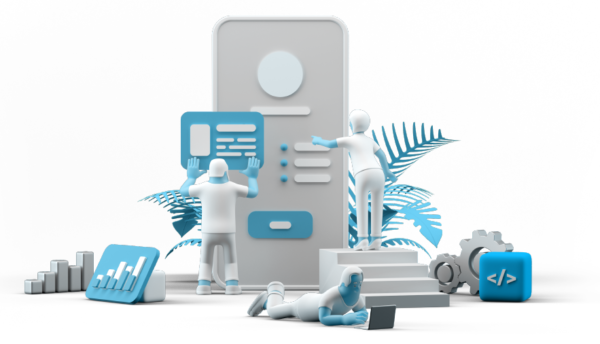
UX and UI design are two crucial fields in digital design that work together to create successful and enjoyable products for users. While UX design focuses on the overall user experience, aiming to improve accessibility, satisfaction, and usability, UI design emphasizes the appearance and presentation of the product, ensuring it is visually appealing and coherent.

The importance of working on both lies in how they connect users with the product. Good UX design ensures that users can interact efficiently, facilitating navigation. Meanwhile, good UI design enhances the product’s aesthetics and user interaction, making the experience more enjoyable.

In the business world, a constant priority is to ensure customer satisfaction. In design, this responsibility is equally fundamental, especially in e-commerce and digital platforms that are frequently used. This turns the audience into vast amounts of data and expectations that designers must meet.

This is where Artificial Intelligence profoundly transforms both fields of digital design. By analyzing large volumes of data and learning from user behavior patterns, AI offers powerful tools that enable designers to create more personalized, efficient, and attractive experiences and interfaces. Next, we will explore the main benefits of AI in UX and UI design.

Benefits of AI in UX/UI Design

Personalization: Unique Experiences and Interfaces for Each User

AI can analyze large amounts of data to uniquely tailor the experience and interface. Algorithms enable applications and websites to automatically adapt to individual user preferences.

Platforms like Spotify adjust the user interface to highlight daily recommendations and personalized playlists based on the user’s listening history.

Design Automation: Efficiency and Creativity in UX and UI

AI-powered design tools allow designers to create more engaging and user-friendly content. Automation helps generate user flows and information architectures based on best practices and data, saving designers significant time.

Tools like Adobe XD with AI offer recommendations in wireframes and prototypes, while Figma uses AI to suggest design components and alignments, facilitating faster and more precise iterations.

Predictive Analysis: Anticipating Needs and Improving Decision-Making

AI’s ability to predict user behavior is invaluable for designers. AI can efficiently process large amounts of user data, providing valuable insights into user behavior and preferences.

For example, e-commerce platforms like Amazon can predict which products a user is more likely to buy, adjusting navigation and offers accordingly.

Continuous Evaluation: Instant Feedback

Usability testing and visual effectiveness evaluation enhance the success of a design. AI can track performance and adjust the design, ensuring that user experiences are always optimized.

An AI-powered visual study, such as the virtual eye-tracking provided by Tobii Pro, analyzes how users interact with the interface. This helps identify problem areas and optimize visual design.

Conversational Interaction: Virtual Assistants and Chatbots

Chatbots and virtual assistants are a clear example of how AI improves user interaction, facilitates communication, and provides real-time information.

Siri and Alexa are examples of AI that, by providing quick and relevant responses, enhance the user experience and interaction with their environment.

Accessibility: Inclusive Design

AI tools can suggest improvements to make websites and applications more accessible, helping to create more inclusive products.

For example, Microsoft’s AI for Accessibility generates alternative descriptions for images and adjusts color contrast for users with visual impairments, enhancing interaction for all disabilities.

User Profiles: Emotion Analysis

AI can help create detailed user profiles to personalize the experience, analyzing emotions and needs to create interfaces that better resonate with users.

Adobe Sensei uses AI to analyze and optimize visual design, recommending the use of certain colors or font styles that evoke the desired emotions to deeply connect with users, increasing both satisfaction and engagement.

5 AI Tools for UX/UI Design

Now that you know the benefits AI offers, it’s time to integrate it into your CRM. Follow these simple steps to effectively adapt your company:

Uizard: Converts sketches and wireframes into interactive prototypes using AI. This tool is ideal for quickly creating prototypes and gathering user feedback.

Galileo AI: Automates design elements and visual content. Quickly creates prototypes, interfaces, and graphics, and can generate HTML and CSS code to implement the prototypes, facilitating the development process.

Synthetic Users: Builds synthetic users that simulate real user behavior in various situations. This makes it easier to test products and platforms in different scenarios.

Fronty: Automatically transforms design images into HTML and CSS code, enabling agile website creation and editing without coding. Quickly converts visual mockups into functional websites.

Adobe Firefly: Edits and creates images and graphics with greater detail than other AIs. Its advanced algorithms suggest elements that align with the project’s needs.

AI positively influences UX and UI design, from personalization and automation to predictive analysis and design optimization. It offers powerful tools that facilitate the creation of more intuitive, attractive, and user-centered experiences and interfaces. Additionally, it helps designers focus more on creativity and less on repetitive tasks.

At Isource Marketing, we firmly believe that businesses should take the latest trends to make their marketing actions more effective and boost their processes. Please, feel free to contact us for advice or quotes on marketing solutions, and take the bold step to enhance your B2B/B2C strategies with us.