Responsive Menu
Add more content here...

Step into Evolution: Enhance Your CRM with AI

Step into Evolution: Enhance Your CRM with AI

Share

AI

AR

Automation

B2B

blog

Content

Creativity

Customer

Design

Digital Marketing

Events

Hubspot

IA

Influencers

job

Lead Generation

marketing

Newsletter-en

PR

Sales

UI

Uncategorized

UX

In the world of digital marketing, success increasingly depends on deeply understanding customer needs and behaviors. This is where CRM (Customer Relationship Management) is essential for building and maintaining strong relationships. However, we often take its functionality for granted and overlook the opportunities to optimize data usage more intelligently by integrating smart technologies. In this blog, we’ll show you how your CRM can evolve and improve its results with Artificial Intelligence

Customer Relationship Management (CRM) is the main source of data and strategies that achieve more organic marketing to drive the growth of every business. This, in turn, allows companies to offer a personalized experience, improve customer retention and loyalty by analyzing interactions and user data throughout their lifecycle.

Even so, with the massive amount of data generated daily, managing a CRM can be an overwhelming task. Traditional strategies, technologies, and practices can become overloaded, leading to less relevant results or a lack of prioritization of customer needs.

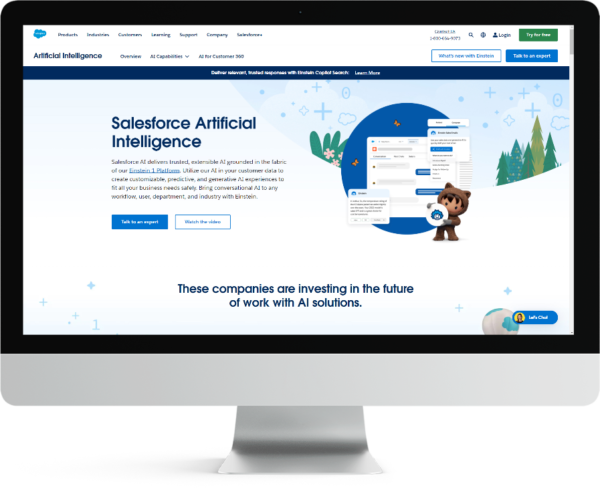
Advanced Analytics: AI can capture large volumes of CRM data to identify patterns and trends, enabling companies to make more informed decisions.

For example, Salesforce has created Einstein, an AI that uses advanced algorithms to analyze customer data and offer relevant solutions.
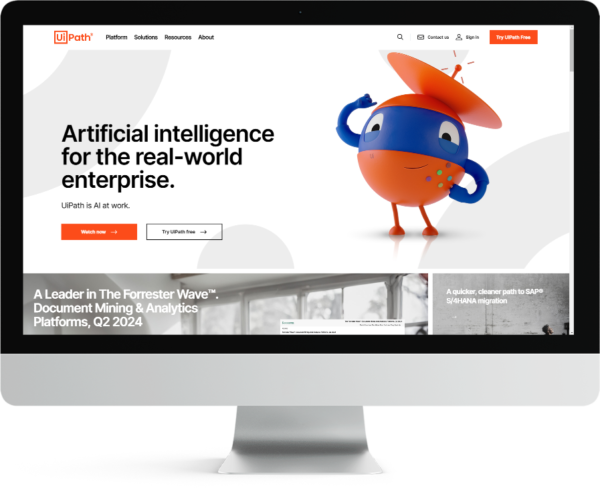
Task Automation: Automates complex tasks, such as customer segmentation and campaign personalization, improving efficiency and reducing response time.

An ideal AI for improving operational efficiency is UiPath. This tool provides solutions that optimize repetitive administrative tasks, such as data entry and inventory management.
02-Automatizacion-de-tareas-600x488

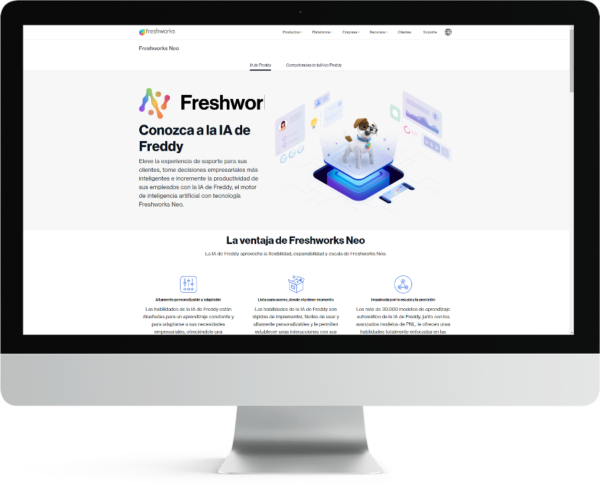
Behavior Prediction: Using advanced algorithms, AI can predict future customer behavior and needs. This helps companies anticipate and offer more relevant solutions.

For this, there are CRM platforms that already integrate their own AI to maximize their tool’s potential. An example is Freddy AI, the AI tool from Freshworks, designed to accompany the customer journey at each stage and provide business and user-adapted recommendations.
03-Prediccion-de-comportamiento-600x488

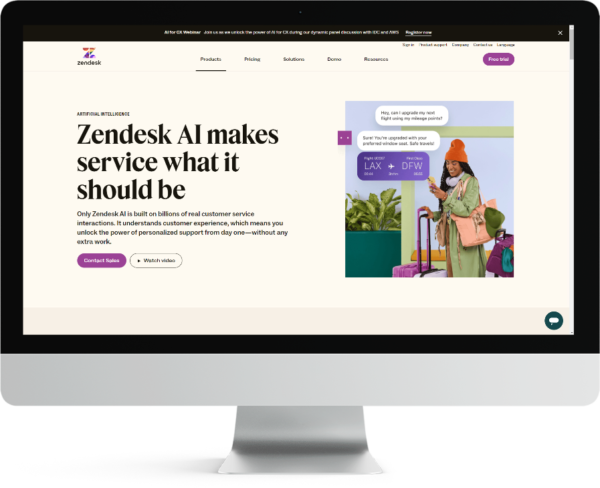
Improving Customer Experience: AI-powered chatbots and virtual assistants can offer faster and more efficient customer service, enhancing the overall user experience.

For this, you can use Zendesk, a platform that uses AI to improve customer service, offering automatic and efficient responses to common queries and directing requests to the sales team in real-time.
04-Mejora-de-la-experiencia-del-cliente-600x488
Blog-June-2024_Titular-04-EN-1

Now that you know the benefits AI offers, it’s time to integrate it into your CRM. Follow these simple steps to effectively adapt your company:

1. Evaluate Needs

Identify the specific challenges you want to address with AI, such as improving lead generation, customer service, or sales projections.

2. Choose the Right AI Tools

Select the AI tool that suits your needs or a CRM platform that is already AI-powered. You can now evaluate various AI solutions to customize your CRM and adapt it to what benefits you the most.

3. Organize Your Information

The accuracy of the results provided by AI depends on how you deliver your information and the quality of your databases. Without an adequate structure, AI cannot guarantee good execution

4. Adapt Your Platform to AI

Work with your IT team or your CRM provider to seamlessly integrate AI tools into your company’s system. You can also opt to acquire CRM software with built-in AI.

5. Prepare Your Team

Train your organization on using these AI tools so they can adapt them to their reports and, in turn, be the ones providing data to the AI.

6. Continuous Monitoring and Optimization

AI models are constantly improving. Monitor changes, updates, and new versions of AI and CRM platforms that optimize the results you seek.

Blog-June-2024_Titular-5-EN-1-600x235

We already know the great improvement opportunities that AI platforms offer for CRM and the ways to incorporate it for better customer personalization. However, we must not forget that it is an emerging technology and can make some errors that we must take into account:

Biased Data: The algorithm can produce inaccurate results if the data is biased or incomplete.

Lower Human Affinity: Responses can fail in interaction with customers and negatively impact their experiences.

Cybersecurity Risks: With AI tools, there is a risk of data breaches or cyberattacks, so it is important to handle it with caution.

Blog-June-2024_Titular-6-EN-600x237

CRM is essential for marketing success, as it allows companies to better understand their customers and offer a more personalized experience. When the power of CRM is combined with the capabilities of AI, companies can further optimize their marketing strategies and evolve their results to be more efficient, proactive, and with greater customer satisfaction and loyalty.

At Isource Marketing, we firmly believe that businesses should take the latest trends to make their marketing actions more effective and boost their processes. Please, feel free to contact us for advice or quotes on marketing solutions, and take the bold step to enhance your B2B/B2C strategies with us.

How to write a good AI prompt to improve your work?

How to write a good AI prompt to improve your work?

Share

AI

AR

Automation

B2B

blog

Content

Creativity

Customer

Design

Digital Marketing

Events

Hubspot

IA

Influencers

job

Lead Generation

marketing

Newsletter-en

PR

Sales

UI

Uncategorized

UX

Imagine if you could have a conversation with artificial intelligence (AI) and guide it to generate exactly what you need. That’s the power of an AI prompt – a simple yet profound way to interact with advanced technology. 

In this blog, we’ll explore prompts and share some practical tips for making them work well. It’s not just about giving orders; it’s about connecting with AI in a clear and effective way.

1) What is an AI Prompt?

prompt in AI, especially in the context of conversational artificial intelligence like chatbots or AI writing tools, is like a starting point or a question that you give to the AI. It’s a bit like giving a hint or direction. 

When you provide a prompt, the AI uses it to understand what kind of response or information you’re looking for. Then, based on this prompt, the AI generates a reply or performs a task. It’s like telling the AI, “This is what I’m interested in,” and then the AI goes on to create something relevant based on your prompt.

2) What kind of results can you get with AI prompts?

An AI prompt can lead to various types of results, depending on what the AI is designed to do. Here are some common outcomes:

  1. Text Generation: The AI can create text based on the prompt. This could be anything from writing a story, generating a report, composing an email, or even creating poetry.

  2. Image Creation: Some AI systems can generate images from descriptive prompts. For example, you could ask for a picture of a “sunset over the ocean” and the AI would create it.

  3. Data Analysis: AI can analyze large sets of data in response to prompts. For instance, you might ask the AI to find patterns or trends within a dataset.

  4. Problem-Solving: You can use prompts to ask AI to solve mathematical problems, optimize processes, or come up with solutions to specific issues.

  5. Language Translation: AI can translate text from one language to another based on your prompt.

  6. Educational Assistance: It can provide explanations, definitions, or tutorials in response to educational prompts.

  7. Personalized Recommendations: Based on prompts, AI can suggest products, movies, books, etc., tailored to individual preferences.

  8. Interactive Conversations: AI can engage in dialogue, offering responses to questions, providing information, or even mimicking a natural conversation.

  9. Code generation: AI can generate code snippets or even entire programs based on coding prompts. This is especially helpful for developers and programmers.

  10. Video creation: Some AI systems can generate videos based on descriptive prompts. You can request videos on various topics or scenarios, and the AI will create them, which can be useful for content creators and marketers.

The specific results depend heavily on the AI’s capabilities and the nature of the prompt given.

3) How to Write Effective AI Prompts?

Writing effective AI prompts involves clarity, specificity, and understanding the capabilities of the AI system you’re working with. Here are some tips to guide you:

  • Be Clear and Specific: Vague prompts might lead to vague responses. If you need a specific type of output, make sure your prompt reflects that. Also, unnecessary length can confuse the AI.

  • Include Contextual Information: No matter how smart AI tools become, they can’t really get what you mean unless you give some extra details.

  • Keep Trying and Improve: AI might not give you the perfect answer the first time. Be ready to make your requests better as you see how AI responds.
  •  

H3: Is there any formula for writing a good AI prompt?

There’s no one-size-fits-all formula for writing a good prompt because it mostly depends on the situation and what you’re trying to achieve. However, we’ve found some approaches that have proven to work well. Here are some examples:


  • “Create a . . .” or “Write a . . .”

    These prompts are versatile and commonly used. You can initiate AI writing tasks by starting with “Create a” or “Write a” and then specifying what you need, such as “Create a TikTok video script using the side-eye trend” or “Write a love poem about flowers.”


  • “Act as a . . .”

    You can instruct AI to take on different roles or personas, like a marketer, lawyer, or even a cranky person. This can be especially helpful for tasks that require a specific perspective or tone.


  • “Mimic this style . . .”

    If you want AI to emulate a particular writing style, you can provide a sample text in that style and use the “Mimic this style . . .” prompt. It can help you get content that matches your preferred tone, whether it’s passionate, formal, or personal.


  • “Show this as a . . .”

    Some AI writing assistants can convert raw data into basic graphs or charts. Although these visuals may be rudimentary, they can serve as a foundation for creating more polished presentations.


  • “Compare . . .”

    If you want to analyze similarities and differences between two things, you can instruct AI to compare them. AI will typically outline what’s alike and what’s distinct, providing a helpful comparison.

If you want to learn more about artificial intelligence and marketing, we recommend you to read: Learn how you can create a marketing campaign using AI

In summary

When you provide a prompt, it’s like giving a hint to the AI about what you want. The AI then uses that hint to generate a response or perform a task, whether it’s writing a story, creating an image, analyzing data, or engaging in interactive conversations. While there’s no standard formula for writing prompts, we’ll share some approaches that work well, like “Create a . . .” or “Act as a . . .” prompts, to help you get the most out of your AI interactions.

At Isource Marketing, we firmly believe that businesses should take the latest trends as AI tools to make their marketing actions easier and boost their processes. Please, feel free to contact us for advice or quotes on marketing solutions, and take the bold step to enhance your B2B/B2C strategies with us.
The growing reach of ChatGPT in Marketing

The growing reach of ChatGPT in Marketing

Share

AI

AR

Automation

B2B

blog

Content

Creativity

Customer

Design

Digital Marketing

Events

Hubspot

IA

Influencers

job

Lead Generation

marketing

Newsletter-en

PR

Sales

UI

Uncategorized

UX

ChatGPT is an amazing solution that helps businesses of all sizes optimize their marketing campaigns and make data-driven decisions.

According to an AI Index study, demand for AI-related skills is increasing in almost all industrial sectors in the United States. And indeed, the number of job postings related to AI increased on average from 1.7% in 2021 to 1.9% in 2022. The study also notes that in countries such as the United States, private investment led the way, allocating 47.4 billion dollars to AI, a figure that is 3.5 times more than that of China, second in the list. And attending to areas, the one with the highest private investment was the medical sector (6.100 million); followed by the cloud and data management and processing (5.900 million); and fintech (5.500 million).

Nevertheless, with the arrival of the fifth generation of Chat GPT from the White House, serious consideration is being given to drawing up a series of legal rules to establish control over this Artificial Intelligence. The legislation of governments has needed to adapt with the emergence of new technologies. Something that will continue to happen with Artificial Intelligence.

A tool on the rise

ChatGPT is a solution developed by OpenAl that has managed to exceed 100 million users in its short life. A recent UBS study has just confirmed that ChatGPT is the fastest growing consumption system in history. The research also highlights that the total potential market in which ChatGPT operates could reach a value of 1 trillion dollars.

But what makes this chat system so attractive? This tool is based on a conversational artificial intelligence model, which means it has been trained to hold coherent and accurate conversations with users, as the strategic implementation of this AI can bring a variety of benefits, including its potential to generate high-quality content, create personalized messages and generate potential customers for marketing, as ChatGPT is a reliable and accurate tool that can generate quick responses or automate tasks that usually take time.

In view of the above, let us see the 5 implementations of ChatGPT in marketing that are most favoring companies today:

1. Search engine optimization (SEO):

This conversational artificial intelligence tool is very useful for improving your content marketing and SEO. It can also help you identify relevant keywords, generate ideas, and optimize content to get greater visibility in search engines. If you use the tool properly, asking the right questions, you will not only reduce the amount of time it takes to conduct a keyword research, but also get more relevance, low cost and better results.

2. Content creation:

Companies can also use ChatGPT to create complete content, including blog posts, product descriptions, success stories, among others. In this case, the tool is provided with a brief description of the topic and the tool will generate a complete article. Companies can edit the generated content to ensure that it fits their brand style and objectives.

3. Customer Service:

In customer service ChatGPT can offer real-time assistance through a chat interface, enabling customers to interact with the system to ask questions and get immediate answers in a natural and fluid way. It can also automate responses to frequently asked questions and repetitive tasks, which helps reduce the workload of customer service agents and improve response times. Most striking is that it can analyze the sentiment behind customer interactions, allowing companies to identify and proactively address issues.

4. Data Analysis:

The tool can help companies analyze large amounts of data to identify patterns and trends. This can help companies make informed decisions about their customers, operations and products.

5. Market Research:

ChatGPT can be used to conduct market studies and surveys. This solution can help companies get information about their audience’s preferences and needs, which can significantly influence their marketing strategy.

As artificial intelligence continues to evolve, so will its applications in the marketing field. By working the benefits of Artificial Intelligence, companies will be able to better understand their target markets and create more effective and personalized marketing campaigns. In the near future, we can expect more and more companies to use ChatGPT to boost their marketing efforts, and the results will surely be effective.

We know the importance of positioning in your company, and we also know that a correct strategy is one of the first steps to achieve success. At Isource Marketing we have 2 regional offices and local presence in Miami, Florida-USA and throughout the main countries of Latin America, so we are always ready to help you create that strategy for your company no matter where you are.

PR & Media Coordinator
Passion: Arts, Nature

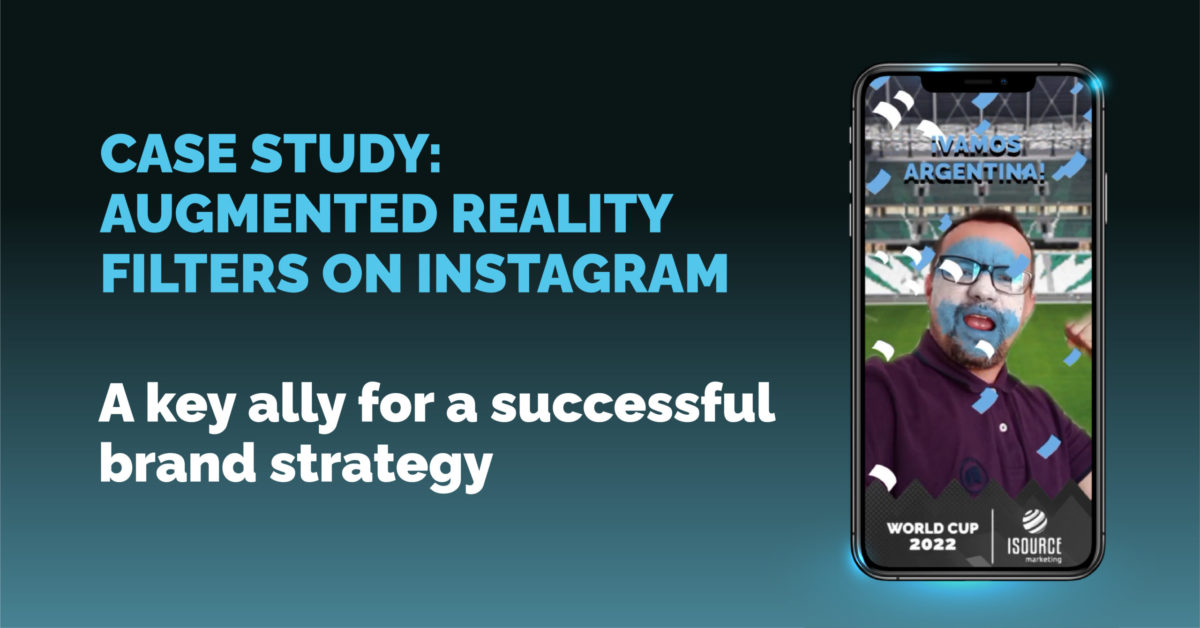
Case Study: Augmented Reality Filters on INSTAGRAM: A key ally for a successful brand strategy

Case Study: Augmented Reality Filters on INSTAGRAM: A key ally for a successful brand strategy

Share

AI

AR

Automation

B2B

blog

Content

Creativity

Customer

Design

Digital Marketing

Events

Hubspot

IA

Influencers

job

Lead Generation

marketing

Newsletter-en

PR

Sales

UI

Uncategorized

UX

Nowadays, technology has advanced since the first uses of this type of experience, since the filters developed in social networks currently allow to recognize not only human faces, but also other parts of the body such as hands, or even be used by several people at the same time. In this way, the creative possibilities provided by the use of Augmented Reality filters are increasing, and it is positioning itself as one of the preferred and essential complements for users in their Instagram stories. Thinking about it, Isource Marketing implemented a filter on the Instagram social network, given the need to see how Extended Reality is a technology in the market that is gaining strength in the world of digital marketing, where both brands and users have managed to get a greater reach. This the most recent Instagram filter developed by Isource marketing, strengthened its experience in the creation of type of tools that the agency has been developing for more than 5 years, carrying out projects for clients and providing greater recognition to the daily use of experiences of Augmented Reality, by developing a filter for -renowned sporting event world that allowed for a greater geographical reach and general interest. 


The main challenge of the project focused on the large number of filters created and published on Instagram, however, the objective was to provide a complete, customizable, interactive, differential and current experience with individual or group use to generate greater engagement among users taking advantage of the great reception of the recent sporting event. The first drawbacks when starting to develop the tool on Instagram were of technical origin, since the restrictions that Instagram has, influenced factors such as the weight of the files, the proper use of graphic elements and the textures in the environment or face of the person, the definition of the trigger and the audio. These factors were limiting factors that had to be adequately worked on based on trial/error testing, correcting the development with an internal testing group, which provided feedback to the creative and programming team of the agency, in order to arrive at the correct execution. of the filter, taking into account the technical limitations and weight of the social network mentioned above.

For all these reasons, Isource Marketing relied on the design and implementation of the filter that allowed the optimization of the agency’s engagement and the obtaining of recognition of the company in a faster and more precise way, in addition to providing a fun tool for all users allowing users to share the filter and access it permanently. Despite the great competition in today’s market, for Isource Marketing the development of a good segmentation when developing the project has always been a key element.

Proposed Solution

The initial solution was the implementation of a tool in social networks that would support the need to strengthen the commercial brand positioning tools for the agency, and that were implemented in social networks such as Facebook Ads and Google Ads, to boost the filter of the Qatar 2022 World Cup, obtaining a reach of 55% higher than the average that has been handled in campaigns related to filters and results that were reflected in the use of the same.

Lines of Action

  • Responsibilities and resources: Assign responsibilities and resources, specifying the collaboration framework between the agency’s creative and programming team, well as setting a calendar for the development of the project.

  • The Assuring quality.: objective of this phase was to determine if the development of the filter was of optimum quality, to cover all the requirements defined in its functional analysis for the target audienceFor each metric and analysis dimension defined for use on Instagram, the restrictions were determined, as well as the degree of availability and adequacy of the elements for the development of the filter. The result of these two phases allowed the optimal execution of the tool on the social network and its visibility through reach, use, and interaction with the public.

  • Pilot test: After the validation of the quality of the tools, the implementation of the tool began, but with a sample of significant data based on trial/error.

  • Put into production: After the validation of the pilot test,take the filter was formally implemented on Instagram, in order to advantage of and offer unique experiences and generate greater engagement with digital communities.

  • Final data evaluation: This phase allowed Isource Marketing to determine the metrics of the filter, evaluating factors such as the number of Impressions, how many times it was opened, how many captures it obtained and its reach and the number of times shared. In general, an analysis of the performance of the filter was carried out, as well as the type of public it reached. These figures helped the agency to understand what its community is looking for, but also to improve its next project in the development of filters.

Successful Result

Thanks to excellent teamwork from Isource Marketing, the filter developed by the agency allowed users to interact and get to know the agency by offering a current format linked to the brand. Likewise , it allowed the company to reach a larger audience and new audiences, increasing the scope of the actions, placing Isource Marketing at the forefront in the creation of interesting content and aware of the latest news with the constant use of new narratives and formulas that will distinguish the agency from the rest of its competitors.

PR & Media Coordinator
Passion: Arts, Nature

Public Relations & Artificial Intelligence – A new Alliance

Public Relations & Artificial Intelligence – A new Alliance

Share

AI

AR

Automation

B2B

blog

Content

Creativity

Customer

Design

Digital Marketing

Events

Hubspot

IA

Influencers

job

Lead Generation

marketing

Newsletter-en

PR

Sales

UI

Uncategorized

UX

As digital transformation advances, many companies are turning to Artificial Intelligence (AI) to streamline repetitive processes and become more efficient. Public relations (PR) does not avoid this reality, since more efficient and successful public relations campaigns may be created by making clever use of AI. According to a study by the CIPR (Chartered Institute of Public Relations), the use of this technology in PR will triple in the next five years.

Thanks to AI, companies can quickly search for information available on digital platforms and take the content of interest to their customers by programming a search bot. It’s also used to monitor media coverage of products and services of competitors. It then provides PR professionals with better access to the data required for a clear understanding of the performance of a press release and identifies any necessary adjustments. Relying on an AI system to seek out specifically defined information and present it in an easy-to-read format, dramatically accelerates the process of analyzing and interpreting data from multiple, concurrent channels, allowing for a more complete overview delivered in less time. For example, a quick evaluation of a particular article or social media post offers a greater insight into the target audience’s preferences and reveals the performance updates used to measure the outcomes.

According to a New Vantage study, it is estimated that 99% of organizations are investing in AI or Big Data

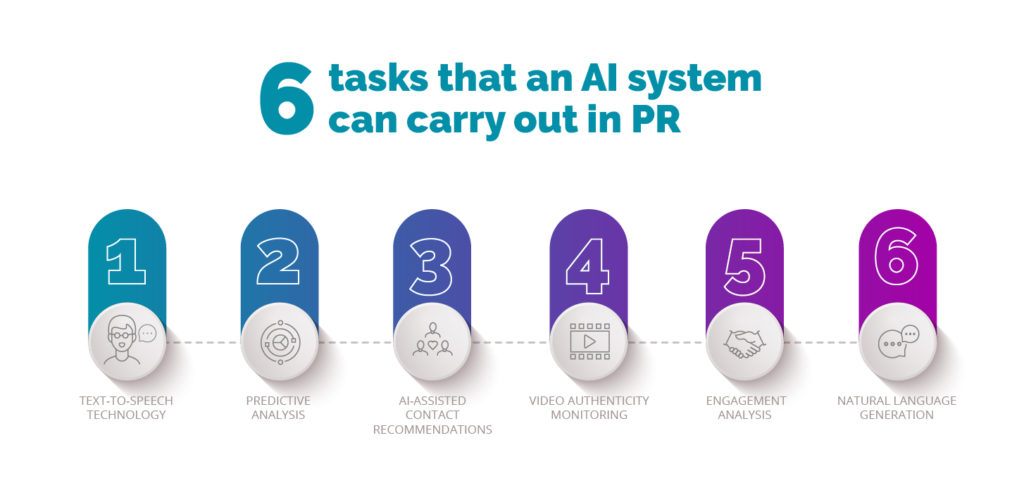
Here are some examples of tasks that an AI system can perform in PR:

1- Text-to-Speech (TTS) technology:

AI offers more and more diverse ways to make life easier. Today, for example, TTS solutions are used for a variety of purposes: whether to optimize schedules, automate processes, or stand out from the competition, this technology improves your customer service experience by detecting voices and converting them to text. This is useful for transcriptions of media interviews and searching for podcasts or press conferences.

2- Predictive analysis:

This type of analysis offers tools that help personalize reporting angles for journalists based on interests, past coverage, personalities, and trends, and predicting the likelihood of news information being covered.

3- AI-assisted contact recommendations:

While not yet perfected, there are tools that can help you proactively discover reporters writing about the IT industry, allowing you to target the outlets most likely to publish your news rather than manually compiling traditional media lists based on category and keyword searches.

4- Video Authenticity Monitoring:

There are even tools that can be used to monitor “fake” videos that could negatively affect brand reputations.

5- Engagement analysis:

Tools for performing advanced sentiment analysis on social media are also being developed.

6- Natural language generation:

Using this technology, machines can produce information and convert it into different languages for wider distribution.

Challenges of AI in PR

As organizations accelerate their digital transformation, the issues in PR service management concentrate on rebuilding businesses while minimizing downtime. This year’s major challenge is on applying AI to more and more day-to-day tasks. However, at Isource Marketing, we identify two additional challenges: monitoring accuracy and data security. 

As the volume of digital content increases, so does the challenge of accurately monitoring and measuring it. Media monitoring companies play an essential role in the information supply chain, capturing vast amounts of content, data, and metadata daily. Historically, media monitoring organizations depended on manual human labor to gather and evaluate this data; now, AI and machine learning are becoming increasingly essential. Similarly, privacy and security are the main factors that influence the availability of data and resources for a public relations officer, and it becomes another challenge because these data are generated from millions of users around the world (personal data of journalists, influencers, IT companies, etc), and there is a possibility that vulnerabilities exist and are taken advantage. Some companies have already begun working creatively to overcome these obstacles.

With an increasing need for AI, what is the function of the communicator or public relations professional?

To avoid being stuck with PR tools from the past, PR professionals must go further into achieving goals with companies in a disruptive and inventive way, with the help of new technology. Machines do not capture knowledge from the outside as the human brain does, and they do not have feelings or experiences, or even perceive what is happening in their environment as easily. These tools are based on information previously directed by people.

Regardless of technology, it is important to consistently keep a human value in the relationship of PR work

When developing a communication strategy, a brand may be unwilling to communicate with a robot or computer because it is a strictly “relational” activity. As a result, regardless of technology, it is important to consistently keep a human value in the relationship of PR work and to always be in direct and personal contact with the client. AI and technology, in general, should be viewed as a professional’s partner in public relations. This is how the interpretation of the AI’s results and the subsequent action plan should be personally supervised and endorsed.


Isource Marketing we see AI as a tool to embrace and provide advantages in data collection to focus on metrics and creativity in the marketing industry. Our strength is technology, but we also understand and adhere to the principles of a sense of belonging and closeness to our customers, because most of the critical responsibilities of public relations professionals demand a high degree of personal approach.  For this, we are guided by four capabilities in our PR area: the development of creative strategies, the establishment of client trust, the creation of original content and narratives, and the empowerment and development of new business relationships. If you need advice on this subject, contact us! We will be happy to help you:: https://old.web.isource.us/#services

PR & Media Coordinator
Passion: Arts, Nature

More science and less fiction: Artificial Intelligence applied to Marketing

More science and less fiction: Artificial Intelligence applied to Marketing

Share

AI

AR

Automation

B2B

blog

Content

Creativity

Customer

Design

Digital Marketing

Events

Hubspot

IA

Influencers

job

Lead Generation

marketing

Newsletter-en

PR

Sales

UI

Uncategorized

UX

Artificial Intelligence (AI) is the simulation of human intelligence by machines. It’s likely the first thing that comes to mind when you think about science fiction films like Terminator. What you probably didn’t realize is that this enthusiasm is grounded in reality: we live in an increasingly connected and intelligent world. Today, you can build an airplane, invest in stocks, and even connect your CRM to your inbox to prioritize the most important emails. And the numbers speak for themselves: According to SEM Rush, the projected annual growth rate of AI between 2020 and 2027 is 33.2%.

Its use in marketing is not far behind. AI utilizes its technology to gather data and information needed to make automated decisions. How?  Through the use of big data analytics, machine learning, and other processes to gain insights into target audiences.  

This is how, with AI, the Marketing department may gain a better understanding of its consumers’ behavior and, as a result, build strategies that maximize the return on investment (ROI). Mercado Libre, Amazon, and Spotify are just a few of the firms that have benefited the most from its use.

According to SEM Rush, the global Artificial Intelligence industry will take the lead in the following years, with a market size of 190.61 billion dollars expected in 2025.

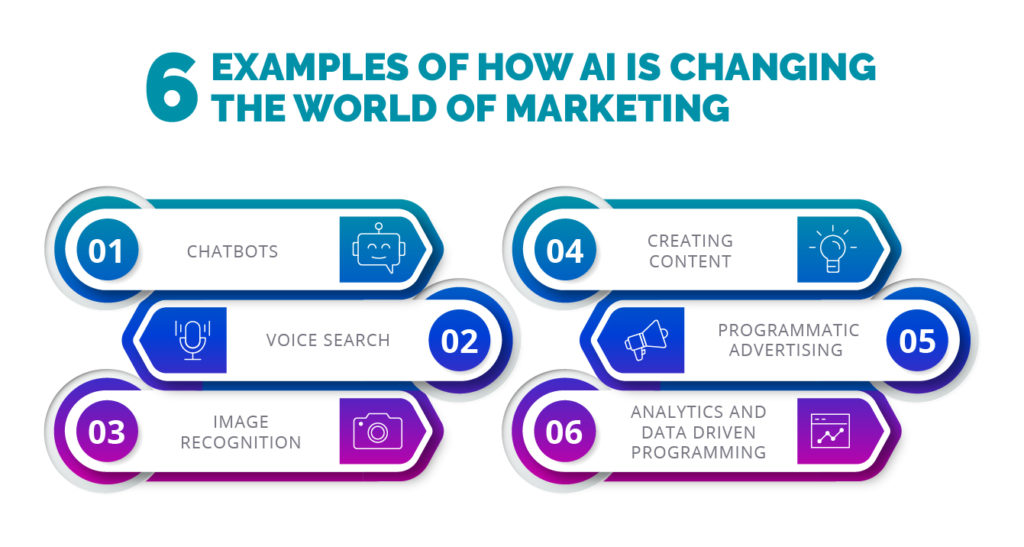
Here are six examples of how AIis changing the world of marketing:

1.Chatbots

Chatbots are applications that allow you to simulate a conversation with a real person by providing automatic responses to your most common doubts or questions. Companies have started using them as an alternate way of managing customer service while facilitating communication throughout the entire Customer Journey, particularly in Support areas

2. Voice search

The feature allows searches carried out by the human voice in systems that can understand it. Its use has expanded in accordance with the development of mobile devices and acts as an alternative to written searches. The advancement of technology in this sector has resulted in the introduction of several search assistants such as Cortana and Siri. These assistants can process and comprehend the user’s natural language and interact with it thanks to AI.

3. Image recognition

A process carried out by software that recognizes images from complex mathematical algorithms. AI is capable of identifying, analyzing, and comparing the arrays of bits that make up a digital image, in order to carry out some action based on the information obtained.

4. Creating Content

Creating content is difficult, and creating high-quality content is much more challenging! However, AI enables engines to produce personalized, appealing, and conversion-optimized content, providing users with unique experiences. This is due to the fact that AI is capable of learning the preferences of our key audiences and generating material based on their interests.

5. Programmatic Advertising

A smarter way to advertise online. Advertisers pay for their ads to be shown only to their target audiences, allowing brands and consumers to connect at the right time, place and in the right way, thereby detecting that a specific person has a real interest in receiving a certain advertisement. This is how programmatic advertising is growing very quickly in the media, and everything indicates that this trend will continue to rise.

6. Analytics and Data Driven Programming

AI is used in the analysis and measurement of results. This is completely necessary for ensuring the success of any strategy, because AI performs real-time tracking with contrasting information for local decision-making, assisting in the resolution of problems and proposing changes to the strategy to better suit the user.

According to SEM Rush, by 2022 companies are expected to have an average of 35 AI projects.

How can the Business to Business (B2B) and Business to Consumer (B2C) sectors benefit from AI?

The incorporation of AI in the B2C field has occurred more quickly and naturally than in the B2B world, which has been changing in recent times. This is primarily due to its ability to process enormous amounts of data that are very useful to improve the customer journey, lead generation, personalization of messages, and the offer of products and services in real-time, to name a few. This skill, which is nothing more than Big Data, has been the foundation of countless companies and their individual Digital Marketing plans for companies in both industries.

At Isource Marketing, we are continuously improving our knowledge and use of AI technologies, and we have a professional team that develops projects in the most efficient way, with services that improve our clients’ experiences. Contact us at https://old.web.isource.us/#contact for more details. We are happy to assist you with your digital transformation strategy!

Front End Developer
Passion: Videogames, Drawing