Newsletter
September 2025
June 2025
May 2025
April 2025
March 2025
February 2025
January 2025
Categorías
AI
- Why Reddit Should Be Part of Your B2B Marketing Strategy
- 3 Things You Must Change in B2B Marketing to Increase Sales in 2026
- 3 Things You Must Change in B2B Marketing to Increase Sales in 2026
- Loop Marketing: The key strategy for your success in 2026
- Ghost SEO: Don’t disappear in the era of AEO
- AI Agents: What they are, how they work, and why your Marketing Team needs one
- HubSpot in Action: Scale your B2B Marketing with CRM, AI, and Automation
- Is your marketing ROI stagnant? AI is the solution You’ve been looking for
- What Digital Advertising Will Bring in 2025: Trends and Tools You Need to Know
- Intelligent Creativity: How AI Influences UX/UI Design
- Step into Evolution: Enhance Your CRM with AI
- How to write a good AI prompt to improve your work?
- The growing reach of ChatGPT in Marketing
- Case Study: Augmented Reality Filters on INSTAGRAM: A key ally for a successful brand strategy
- Public Relations & Artificial Intelligence – A new Alliance
- More science and less fiction: Artificial Intelligence applied to Marketing
AR
- Case Study: Augmented Reality Filters on INSTAGRAM: A key ally for a successful brand strategy
- Augmented Reality in social media: the next step in your digital strategy
Automation
- 3 Things You Must Change in B2B Marketing to Increase Sales in 2026
- Loop Marketing: The key strategy for your success in 2026
- AI Agents: What they are, how they work, and why your Marketing Team needs one
- HubSpot in Action: Scale your B2B Marketing with CRM, AI, and Automation
- Is your marketing ROI stagnant? AI is the solution You’ve been looking for
- What Digital Advertising Will Bring in 2025: Trends and Tools You Need to Know
- Intelligent Creativity: How AI Influences UX/UI Design
- Step into Evolution: Enhance Your CRM with AI
- How to write a good AI prompt to improve your work?
- The growing reach of ChatGPT in Marketing
- Case Study: Augmented Reality Filters on INSTAGRAM: A key ally for a successful brand strategy
- Public Relations & Artificial Intelligence – A new Alliance
- More science and less fiction: Artificial Intelligence applied to Marketing
B2B
- Ghost SEO: Don’t disappear in the era of AEO
- Reimagining B2B Marketing: The new era of ISM and what’s next for your brand
- The evolution of content in the Customer Journey: From a linear funnel to a digital path
- The Secrets of LinkedIn’s Algorithm: Foolproof Tricks for Your Strategy
- Complete Guide to a Customer Experience-Based GTM Strategy
- Is BANT Still Relevant in 2024? Alternative Frameworks
- Why should TikTok be included in your B2B marketing plan?
- 7 tips to prospect clients in the B2B sector
- If your business wants to attract millennials, read this article. You may be surprised!
- Once upon a time… Storytelling in B2B
- Digital Marketing Strategies for Tech Startups
- 8 Ideas for B2B Lead Generation
blog
- Why Reddit Should Be Part of Your B2B Marketing Strategy
- 3 Things You Must Change in B2B Marketing to Increase Sales in 2026
- 3 Things You Must Change in B2B Marketing to Increase Sales in 2026
- Loop Marketing: The key strategy for your success in 2026
- Ghost SEO: Don’t disappear in the era of AEO
- Reimagining B2B Marketing: The new era of ISM and what’s next for your brand
- AI Agents: What they are, how they work, and why your Marketing Team needs one
- HubSpot in Action: Scale your B2B Marketing with CRM, AI, and Automation
- Is your marketing ROI stagnant? AI is the solution You’ve been looking for
- The evolution of content in the Customer Journey: From a linear funnel to a digital path
- Comprehensive Guide: Advanced Inbound Marketing Strategies for the Technology Sector
- Sales Funnel for Tech Companies: How to Capture Leads and Accelerate Your B2B Sales
- What Digital Advertising Will Bring in 2025: Trends and Tools You Need to Know
- The Secrets of LinkedIn’s Algorithm: Foolproof Tricks for Your Strategy
- Complete Guide to a Customer Experience-Based GTM Strategy
- Intelligent Creativity: How AI Influences UX/UI Design
- Step into Evolution: Enhance Your CRM with AI
- Is BANT Still Relevant in 2024? Alternative Frameworks
- What is Advergaming? Benefits and Examples
- How to write a good AI prompt to improve your work?
- The Future of Marketing: Predictions for 2024
- Inspire Your Brand Strategy with Taylor Swift’s Marketing Moves
- Tips and ideas to plan your end-of-year celebrations for work
- Viral Marketing: Strategy or luck?
- Micro-influencers and UGC content generators: Key elements in the marketing strategy
- The growing reach of ChatGPT in Marketing
- Why should TikTok be included in your B2B marketing plan?
- Case Study: Augmented Reality Filters on INSTAGRAM: A key ally for a successful brand strategy
- MQL and SQL: The Key to Increase Your Sales in 2022
- Public Relations & Artificial Intelligence – A new Alliance
- 7 tips to prospect clients in the B2B sector
- UX Writing: Creating Human-Centered Content
- More science and less fiction: Artificial Intelligence applied to Marketing
- Augmented Reality in social media: the next step in your digital strategy
- Design thinking: Think big to generate value for your business
- If your business wants to attract millennials, read this article. You may be surprised!
- Once upon a time… Storytelling in B2B
- Digital Marketing Strategies for Tech Startups
- The importance of a good influencer marketing strategy
- Learn why your company’s website should be Mobile-First!
- New UX Design Trends
- Agile Marketing: An optimization strategy for your business
- 8 Ideas for B2B Lead Generation
Content
- The Future of Marketing: Predictions for 2024
- Inspire Your Brand Strategy with Taylor Swift’s Marketing Moves
- Viral Marketing: Strategy or luck?
- UX Writing: Creating Human-Centered Content
- Augmented Reality in social media: the next step in your digital strategy
- If your business wants to attract millennials, read this article. You may be surprised!
- Once upon a time… Storytelling in B2B
Creativity
- The Future of Marketing: Predictions for 2024
- Inspire Your Brand Strategy with Taylor Swift’s Marketing Moves
- Viral Marketing: Strategy or luck?
- Why should TikTok be included in your B2B marketing plan?
- UX Writing: Creating Human-Centered Content
- Augmented Reality in social media: the next step in your digital strategy
- If your business wants to attract millennials, read this article. You may be surprised!
- Once upon a time… Storytelling in B2B
Customer
- The evolution of content in the Customer Journey: From a linear funnel to a digital path
- Complete Guide to a Customer Experience-Based GTM Strategy
- Learn why your company’s website should be Mobile-First!
Design
- UX Writing: Creating Human-Centered Content
- Learn why your company’s website should be Mobile-First!
- New UX Design Trends
Digital Marketing
- 3 Things You Must Change in B2B Marketing to Increase Sales in 2026
- Loop Marketing: The key strategy for your success in 2026
- AI Agents: What they are, how they work, and why your Marketing Team needs one
- Is your marketing ROI stagnant? AI is the solution You’ve been looking for
- Comprehensive Guide: Advanced Inbound Marketing Strategies for the Technology Sector
- What Digital Advertising Will Bring in 2025: Trends and Tools You Need to Know
- The Secrets of LinkedIn’s Algorithm: Foolproof Tricks for Your Strategy
- Step into Evolution: Enhance Your CRM with AI
- Is BANT Still Relevant in 2024? Alternative Frameworks
- What is Advergaming? Benefits and Examples
- How to write a good AI prompt to improve your work?
- The Future of Marketing: Predictions for 2024
- Inspire Your Brand Strategy with Taylor Swift’s Marketing Moves
- Viral Marketing: Strategy or luck?
- The growing reach of ChatGPT in Marketing
- Why should TikTok be included in your B2B marketing plan?
- More science and less fiction: Artificial Intelligence applied to Marketing
- Design thinking: Think big to generate value for your business
- Digital Marketing Strategies for Tech Startups
- Agile Marketing: An optimization strategy for your business
Events
Hubspot
IA
- 3 Things You Must Change in B2B Marketing to Increase Sales in 2026
- Loop Marketing: The key strategy for your success in 2026
- Ghost SEO: Don’t disappear in the era of AEO
- Reimagining B2B Marketing: The new era of ISM and what’s next for your brand
Influencers
job
Lead Generation
- Comprehensive Guide: Advanced Inbound Marketing Strategies for the Technology Sector
- Sales Funnel for Tech Companies: How to Capture Leads and Accelerate Your B2B Sales
- MQL and SQL: The Key to Increase Your Sales in 2022
- 7 tips to prospect clients in the B2B sector
- 8 Ideas for B2B Lead Generation
marketing
- Why Reddit Should Be Part of Your B2B Marketing Strategy
- 3 Things You Must Change in B2B Marketing to Increase Sales in 2026
- Ghost SEO: Don’t disappear in the era of AEO
Newsletter-en
- Newsletter September 2025
- Newsletter June 2025
- Newsletter May 2025
- Newsletter April 2025
- Newsletter March 2025
- Newsletter February 2025
- Newsletter January 2025
PR
- Micro-influencers and UGC content generators: Key elements in the marketing strategy
- Public Relations & Artificial Intelligence – A new Alliance
Sales
- Sales Funnel for Tech Companies: How to Capture Leads and Accelerate Your B2B Sales
- What is Advergaming? Benefits and Examples
- Tips and ideas to plan your end-of-year celebrations for work
- MQL and SQL: The Key to Increase Your Sales in 2022
- Design thinking: Think big to generate value for your business
- Agile Marketing: An optimization strategy for your business
UI
Uncategorized
UX
Archivos
- Why Reddit Should Be Part of Your B2B Marketing Strategy
- 3 Things You Must Change in B2B Marketing to Increase Sales in 2026
- 3 Things You Must Change in B2B Marketing to Increase Sales in 2026
- Loop Marketing: The key strategy for your success in 2026
- Ghost SEO: Don’t disappear in the era of AEO
- Reimagining B2B Marketing: The new era of ISM and what’s next for your brand
- AI Agents: What they are, how they work, and why your Marketing Team needs one
- HubSpot in Action: Scale your B2B Marketing with CRM, AI, and Automation
- Is your marketing ROI stagnant? AI is the solution You’ve been looking for
- The evolution of content in the Customer Journey: From a linear funnel to a digital path
- Comprehensive Guide: Advanced Inbound Marketing Strategies for the Technology Sector
- Sales Funnel for Tech Companies: How to Capture Leads and Accelerate Your B2B Sales
- What Digital Advertising Will Bring in 2025: Trends and Tools You Need to Know
- The Secrets of LinkedIn’s Algorithm: Foolproof Tricks for Your Strategy
- Complete Guide to a Customer Experience-Based GTM Strategy
- Intelligent Creativity: How AI Influences UX/UI Design
- Step into Evolution: Enhance Your CRM with AI
- Is BANT Still Relevant in 2024? Alternative Frameworks
- What is Advergaming? Benefits and Examples
- How to write a good AI prompt to improve your work?
- The Future of Marketing: Predictions for 2024
- Inspire Your Brand Strategy with Taylor Swift’s Marketing Moves
- Tips and ideas to plan your end-of-year celebrations for work
- Viral Marketing: Strategy or luck?
- Micro-influencers and UGC content generators: Key elements in the marketing strategy
- The growing reach of ChatGPT in Marketing
- Why should TikTok be included in your B2B marketing plan?
- Case Study: Augmented Reality Filters on INSTAGRAM: A key ally for a successful brand strategy
- MQL and SQL: The Key to Increase Your Sales in 2022
- Public Relations & Artificial Intelligence – A new Alliance
- 7 tips to prospect clients in the B2B sector
- UX Writing: Creating Human-Centered Content
- More science and less fiction: Artificial Intelligence applied to Marketing
- Augmented Reality in social media: the next step in your digital strategy
- Design thinking: Think big to generate value for your business
- If your business wants to attract millennials, read this article. You may be surprised!
- Once upon a time… Storytelling in B2B
- Digital Marketing Strategies for Tech Startups
- The importance of a good influencer marketing strategy
- Learn why your company’s website should be Mobile-First!
- New UX Design Trends
- Agile Marketing: An optimization strategy for your business
- 8 Ideas for B2B Lead Generation
2026
2025
2024
2023
2022
2021
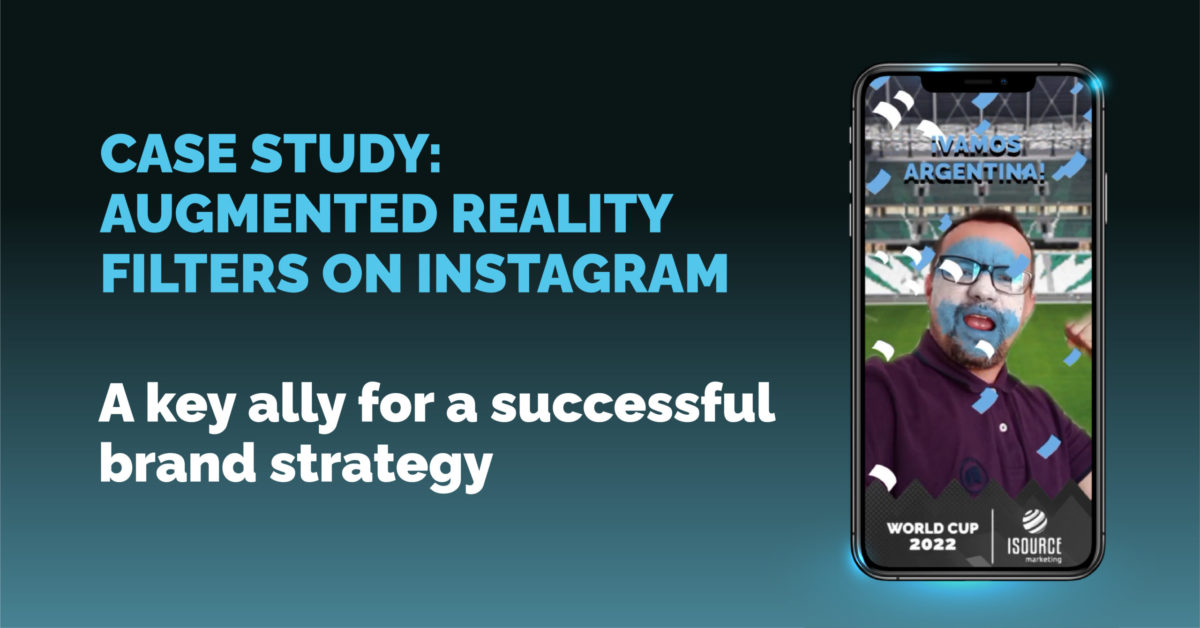
Nowadays, technology has advanced since the first uses of this type of experience, since the filters developed in social networks currently allow to recognize not only human faces, but also other parts of the body such as hands, or even be used by several people at the same time. In this way, the creative possibilities provided by the use of Augmented Reality filters are increasing, and it is positioning itself as one of the preferred and essential complements for users in their Instagram stories. Thinking about it, Isource Marketing implemented a filter on the Instagram social network, given the need to see how Extended Reality is a technology in the market that is gaining strength in the world of digital marketing, where both brands and users have managed to get a greater reach. This the most recent Instagram filter developed by Isource marketing, strengthened its experience in the creation of type of tools that the agency has been developing for more than 5 years, carrying out projects for clients and providing greater recognition to the daily use of experiences of Augmented Reality, by developing a filter for -renowned sporting event world that allowed for a greater geographical reach and general interest.
The main challenge of the project focused on the large number of filters created and published on Instagram, however, the objective was to provide a complete, customizable, interactive, differential and current experience with individual or group use to generate greater engagement among users taking advantage of the great reception of the recent sporting event. The first drawbacks when starting to develop the tool on Instagram were of technical origin, since the restrictions that Instagram has, influenced factors such as the weight of the files, the proper use of graphic elements and the textures in the environment or face of the person, the definition of the trigger and the audio. These factors were limiting factors that had to be adequately worked on based on trial/error testing, correcting the development with an internal testing group, which provided feedback to the creative and programming team of the agency, in order to arrive at the correct execution. of the filter, taking into account the technical limitations and weight of the social network mentioned above.
For all these reasons, Isource Marketing relied on the design and implementation of the filter that allowed the optimization of the agency’s engagement and the obtaining of recognition of the company in a faster and more precise way, in addition to providing a fun tool for all users allowing users to share the filter and access it permanently. Despite the great competition in today’s market, for Isource Marketing the development of a good segmentation when developing the project has always been a key element.
Proposed Solution
The initial solution was the implementation of a tool in social networks that would support the need to strengthen the commercial brand positioning tools for the agency, and that were implemented in social networks such as Facebook Ads and Google Ads, to boost the filter of the Qatar 2022 World Cup, obtaining a reach of 55% higher than the average that has been handled in campaigns related to filters and results that were reflected in the use of the same.
Lines of Action
- Responsibilities and resources: Assign responsibilities and resources, specifying the collaboration framework between the agency’s creative and programming team, well as setting a calendar for the development of the project.
- The Assuring quality.: objective of this phase was to determine if the development of the filter was of optimum quality, to cover all the requirements defined in its functional analysis for the target audienceFor each metric and analysis dimension defined for use on Instagram, the restrictions were determined, as well as the degree of availability and adequacy of the elements for the development of the filter. The result of these two phases allowed the optimal execution of the tool on the social network and its visibility through reach, use, and interaction with the public.
- Pilot test: After the validation of the quality of the tools, the implementation of the tool began, but with a sample of significant data based on trial/error.
- Put into production: After the validation of the pilot test,take the filter was formally implemented on Instagram, in order to advantage of and offer unique experiences and generate greater engagement with digital communities.
- Final data evaluation: This phase allowed Isource Marketing to determine the metrics of the filter, evaluating factors such as the number of Impressions, how many times it was opened, how many captures it obtained and its reach and the number of times shared. In general, an analysis of the performance of the filter was carried out, as well as the type of public it reached. These figures helped the agency to understand what its community is looking for, but also to improve its next project in the development of filters.
Successful Result
Thanks to excellent teamwork from Isource Marketing, the filter developed by the agency allowed users to interact and get to know the agency by offering a current format linked to the brand. Likewise , it allowed the company to reach a larger audience and new audiences, increasing the scope of the actions, placing Isource Marketing at the forefront in the creation of interesting content and aware of the latest news with the constant use of new narratives and formulas that will distinguish the agency from the rest of its competitors.

PR & Media Coordinator
Passion: Arts, Nature