
Responsive Menu
Add more content here...

Ghost SEO: Don’t disappear in the era of AEO

Ghost SEO: Don’t disappear in the era of AEO

Share

AI

AR

Automation

B2B

blog

Content

Creativity

Customer

Design

Digital Marketing

Events

Hubspot

IA

Influencers

job

Lead Generation

marketing

Newsletter-en

PR

Sales

UI

Uncategorized

UX

B2B digital marketing can no longer rely solely on traditional SEO methods. The rise of AI Search, also known as AEO (Answer Engine Optimization), is radically changing the way brands are found online. Now, search engines go beyond keywords. They combine social media data, dynamic content, and user signals to deliver precise, personalized answers.

Brands that cling to outdated tactics risk being left behind in the conversation and losing visibility in search results. This new era requires smart strategies, adapted to how users really search and consume information today.

In this blog, we’ll show you how brands must adapt, optimize their sites and content for AEO, and other new ways to drive traffic, ensuring they stay visible to the decision-makers in the B2B sector.

The dark side of traditional SEO: Will it disappear soon?

For years, brands have relied on traditional SEO formulas, using tactics based on volume, generic keywords, and superficial metrics. But today, those strategies are showing their limits: users are looking for quick, relevant, and personalized answers, while decision-makers expect content to provide real value.

In other words, SEO is moving to the “dark side” because if you don’t adapt your content strategy, your brand risks losing visibility, getting trapped in irrelevant results, and disappearing.

The rise of AEO (Answer Engine Optimization) is a response to this reality: more and more people are searching for answers through AI, and now even Google offers AI Mode or AI-generated responses, making traditional strategies insufficient.

So, the decision is clear: you need to adapt to the new era of smart search, where AI is redefining how users find information and how brands must position themselves to stay visible.

From Google ghosts to AI spirits: The evolution of online search

Now, brands must go beyond the surface; Google and traditional SEO are still key tools for being found, but their role is transforming.

It’s crucial to consider how AI tools like ChatGPT, Gemini, Perplexity, and Copilot integrate social media data, user behavior signals, and relevant, descriptive content within web pages to generate more precise and contextual results.

This shift forces brands to rethink their visibility strategy, ensuring that their content can connect with their target audience in the new era of smart search.

How to prepare your brand for the AEO era

To survive and thrive in the AI search era, brands must go beyond traditional SEO tweaks. Here are key recommendations to optimize your online presence and ensure your content is discoverable and relevant:

  • Restructure your website: Organize your content clearly and hierarchically to make it easier for AI engines to interpret it correctly. Ensure that each section has clear headings and relevant keywords.


  • Relevant and optimized content for AI + SEO: Focus on content that answers real user questions. Include keywords for voice search, such as natural phrases and full questions. This way, you maintain a balance between traditional SEO and AEO optimization, ensuring visibility on both fronts.


  • Structured data and schema: Use schema markup to help AI and search engines understand the context of your information. This positions your content as a reliable resource and source of information for AI Search.


  • Integration of external signals: Ensure that your content can be enriched by social media signals and user behavior. The more relevant and referenced it is, the more likely AI will prioritize it in search results.


  • User experience and accessibility: Make your content easy to read, quick to load, and well-structured. This not only benefits your users but also helps AI engines use it as a reliable source, improving your authority.


  • Constant updates and relevance: Keep your content fresh and aligned with industry trends. AI prioritizes recent and relevant information, so publishing regularly increases your traffic opportunities.


  • Combine SEO and AEO strategically: Optimize titles, meta descriptions, and content for both users and search engines. Ensure that each page is visible to Google and understandable to AI Search, maximizing your reach.


By applying these strategies, your brand will not only survive, but it will be prioritized in this new era of smart search. This is the difference between disappearing into the “dark side” of traditional SEO and being visible, relevant, and connected with your target audience.


Secret predictions: What to expect from SEO and visibility in the AI era

Online search is evolving at a rapid pace. What works in SEO and AEO today could be obsolete tomorrow. Here are some trends that will make a difference for B2B brands in this era:

  • Integration with generative AI: Models like ChatGPT, Gemini, and Copilot will continue to redefine how information is prioritized and presented.


  • Contextual and voice search: Users are increasingly using more natural and complete phrases; optimizing for these types of searches will be crucial.


  • Structured and reliable content: AI prioritizes clear, precise, and well-organized sources.


  • User experience: The combination of relevance, speed, and accessibility will remain a key factor for visibility.


These trends show that adapting isn’t optional: it’s the only way to stay relevant. Visibility in AI Search and traditional engines requires dynamic strategies, updated content, and a focus on the decision-makers who truly matter.

In Summary

In summary, the era of AEO is not a passing trend: it’s a radical shift that forces brands to rethink their online presence. Optimizing your website, content, and visibility strategy not only prevents you from disappearing from the digital radar but also positions you as a relevant, trustworthy, and visible brand for the decision-makers in your industry.

Stop being a ghost in the search results. In the age of AI Search, your brand needs to be visible, relevant, and well-positioned. At Isource, we help with SEO, AEO, and your entire web and content strategy to ensure your brand doesn’t disappear and stays on the radar of your users and future clients.

Reimagining B2B Marketing: The new era of ISM and what’s next for your brand

Reimagining B2B Marketing: The new era of ISM and what’s next for your brand

Share

AI

AR

Automation

B2B

blog

Content

Creativity

Customer

Design

Digital Marketing

Events

Hubspot

IA

Influencers

job

Lead Generation

marketing

Newsletter-en

PR

Sales

UI

Uncategorized

UX

It’s time to do things differently

B2B marketing can no longer follow the same old paths. The rules have changed, and brands that don’t adapt will fall behind. Isource Marketing has decided to break the rules and do things differently. In this blog, we’re being honest with you: we’re sharing why and how we’re challenging the status quo, adopting a more authentic approach that’s aligned with the new landscape of B2B marketing.

B2B Marketing needs a radical change

For years, companies have followed the same old recipes and strategies that no longer work, achieving empty results that don’t contribute to their growth. The old marketing formulas are outdated because the market is changing. Approaches that once worked are now obsolete: traditional marketing, superficial metrics, and tactics focused on volume instead of real results.

The global landscape teaches us that brands must respond to the immediacy of the market, especially in the B2B tech sector. The rapid pace of change and new consumer behavior forced us to rethink everything.

Artificial intelligence, new ways of interacting with customers, the shift in communication channels, and the evolving needs of consumers have shown us that we need to innovate and adapt to the future. At Isource, we decided to change our approach because we know the old recipes no longer work. It’s time to break the mold and do marketing in a radically different way so you can see real growth in your results.

Challenging the rules of B2B Marketing: We adapt to the now

The changes in the market are not only driven by technology but also by the way brands interact with their customers. Now more than ever, vanity metrics like clicks and impressions are losing their value. What matters now is

– Relevance of interaction: How brands connect with decision-makers.

– Personalization: Offering unique, tailored experiences to each customer.

– Authentic connection: Building genuine relationships with leads and potential clients.

Companies can no longer continue doing marketing the same way, thinking that results will come with outdated methods.

This radical change is what led us at Isource to rethink our strategy and adapt to the new market expectations. We know that brands must evolve, and the way B2B marketing is done has changed forever. From here, our mission was born: to help our clients—and future brands—grow authentically. We want to ensure their growth never stops, delivering what they really need: real results, not empty metrics.

The #NoBS approach at Isource: Direct, authentic, and no nonsense

At Isource, we’ve chosen to be different. Our #NoBS approach is not just about using a challenging tone; it’s about being authentic, transparent, and direct in everything we do. We’re tired of empty promises and superficial marketing. Our new style is without frills, no unnecessary jargon, and no selling false expectations.

What defines us now is our ability to connect genuinely with brands, understand their real needs, and provide solutions that truly generate ROI. We’re not here to talk about “vanity metrics” or fleeting trends. At Isource, we focus on what really matters: transforming marketing strategies, changing the game, and helping brands achieve their goals effectively and without fluff.

We’re ready to face the challenges that today’s B2B marketing brings, adopting innovative technologies and creating personalized strategies that reflect the true needs of each brand. Our goal is to be strategic partners, not just service providers.

We want to be part of the change your company needs to stay competitive in a market that’s evolving at full speed.

Now It’s your turn: Start doing real marketing

The question is simple: Are you ready to leave behind outdated strategies and adopt an approach that truly works? At Isource, we’re ready to transform your B2B marketing with innovative techniques that challenge the norms and guarantee maximum ROI.

Contact us, and let’s start changing the game. It’s time to do things differently, with a #NoBS approach that lets you get exactly what you need: measurable results.

We don’t want you to lose a single dollar on tactics that don’t deliver results.
Schedule a consultation with us to discover how we can help you maximize ROI by executing the right strategies for your brand.

The evolution of content in the Customer Journey: From a linear funnel to a digital path

The evolution of content in the Customer Journey: From a linear funnel to a digital path

Share

AI

AR

Automation

B2B

blog

Content

Creativity

Customer

Design

Digital Marketing

Events

Hubspot

IA

Influencers

job

Lead Generation

marketing

Newsletter-en

PR

Sales

UI

Uncategorized

UX

The Customer Journey has undergone a radical transformation in recent years. As emerging technologies redefine how businesses interact with their customers, the buying process has shifted from a linear path to a dynamic, digital, and multichannel experience.

In the past, decision-makers followed a predictable journey: they identified a need, researched options, and contacted sales. Today, the process is far more complex. CEOs, CTOs, and marketing teams gather information from multiple platforms before even considering a purchase. They engage with content on LinkedIn, attend webinars, explore short-form videos, and prioritize personalized experiences at every stage of their decision-making process.

In this article, we’ll explore how the customer journey has evolved, why these changes are critical for success, and what strategies businesses can implement to create high-impact content and convert high-value clients.
From a linear approach to a dynamic and personalized journey

Traditionally, the customer journey followed a structured sales funnel with three stages: Awareness, Consideration, and Decision. This model assumed that customers moved through each phase in an orderly manner. However, today’s consumers engage with multiple touchpoints before making a decision, requiring a more strategic content approach to attract and convert potential clients.
In the past, many businesses relied on mass content production, primarily through blogs, as their main lead generation channel. The belief was that publishing more content would increase the chances of capturing potential customers.

However, this approach had several flaws:

  • Market saturation: With countless businesses creating similar content, standing out became increasingly difficult.

  • Inconsistent quality: Prioritizing quantity over quality led to repetitive, superficial content.

  • Lack of personalization: Generic content failed to address the specific needs of customers at different stages of their journey.

  • Single-channel strategy: Blogs dominated content marketing, limiting outreach to more effective formats.

By relying solely on blogs and SEO, many companies struggled to capture the attention of decision-makers who preferred other content formats and platforms.

The Old Linear Model: High-Volume content and a single channel

Today: High-Quality content in a multichannel strategy

Now, the focus has shifted toward creating strategic and relevant content, prioritizing quality over quantity. The goal is no longer just to generate traffic but to educate, provide value, and guide customers throughout their buying process.

Successful companies follow three key principles:

  • Relevance and value: Content must align with customer needs at every stage of the Customer Journey.

  • Personalization: By leveraging analytics and Artificial Intelligence, businesses can create highly tailored experiences.

  • Multichannel strategy: Companies distribute content across multiple formats and platforms to reach customers at the right time.

According to a Gartner study, 74% of B2B buyers conduct independent research before speaking with a supplier. This means businesses must ensure their content is available across multiple formats and channels to capture attention at every stage of the buying process.

By integrating social media, video, email marketing, and interactive content, companies can drive higher engagement, build trust, and improve conversion rates.

Key factors driving change in the B2B Customer Journey

1. Digitalization and access to information

B2B buyers no longer rely solely on sales teams to learn about solutions; instead, they seek answers through online communities, social media, and digital platforms. The explosion of content has made customers more discerning, pushing businesses to create high-quality, relevant, and differentiated content to stand out.

2. Generational shift in decision-makers

A new wave of business leaders, particularly in startups and tech companies, consists of digital natives. They prefer consuming content in interactive formats, look for agile experiences, and value authenticity over traditional marketing tactics.

Studies show that 50% of B2B buyers are under 40 years old, meaning outdated strategies like mass email marketing and traditional SEO are no longer enough to capture their interest. Instead, businesses must focus on engaging, data-driven content strategies to appeal to this demographic.

3. Personalization and tailored experiences

Modern B2B buyers expect personalized experiences based on their industry, preferences, and specific needs. In fact, 80% of B2B buyers demand tailored interactions, making personalization a key driver of engagement and conversions.

Companies leveraging Artificial Intelligence (AI) and data analytics to deliver custom content and recommendations see significantly higher engagement rates and improved conversion metrics. By embracing personalization, businesses can foster deeper relationships, build trust, and enhance the overall buying experience.

Effective strategies for the new Customer Journey

1.  Implementing artificial intelligence and machine learning

Artificial Intelligence (AI) allows businesses to personalize content in real time, streamline sales processes, and predict buying behaviors. Key applications include:
Smart chatbots that provide instant answers and improve customer interactions.

  • Recommendation algorithms that suggest relevant content based on user behavior.

Predictive analytics tools that identify high-potential leads and optimize marketing efforts.

2. Extreme personalization: A data-driven approach

Generic strategies no longer work in B2B marketing. To stay competitive, businesses must:

  • Segment audiences based on industry, company size, and decision-maker roles.
  • Create tailored content specifically for CEOs, CTOs, and technical teams.

Adapt messaging according to where the customer is in the sales funnel.

EXTRA TIP:

If you want to dive deeper into advanced Inbound Marketing strategies for the tech industry, check out our Complete Guide to Inbound Marketing.

3. Diversifying content formats

Instead of relying solely on blogs and ebooks, businesses should embrace a multiformat content strategy to reach decision-makers where they are most active. Key formats include:

  • Short-form videos and reels on LinkedIn and YouTube.
  • Podcasts featuring industry experts for in-depth discussions.
  • Infographics and interactive reports that present insights visually.
  • LinkedIn posts with key industry takeaways to boost engagement.

By offering content in multiple formats, companies expand their reach and increase audience engagement across various digital platforms.

4. Optimizing for voice search and AI-Powered search engines

With the rise of AI-driven search engines and voice assistants, businesses must ensure their content is optimized for:

  • Conversational queries on Google, aligning with how users naturally ask questions.
  • Voice searches on devices like Alexa, Siri, and Google Assistant.
  • Concise, structured responses that AI can easily interpret and rank in search results.

As search behavior evolves, adapting content for AI and voice-driven interactions will be crucial for maintaining visibility and attracting the right audience.

In Summary

The Customer Journey has changed irreversibly. It is no longer a linear sales funnel, but rather a dynamic, digital, and multichannel experience, where decision-makers actively research, compare, and validate options before making a purchase.

By creating relevant, personalized content and leveraging multiple platforms to engage with customers, businesses can optimize the customer journey, increase interest, and improve marketing performance.

Is Your Business Ready to Adapt to the New Customer Journey?

At Isource, we stay ahead of market trends and leverage multiple platforms to design a content strategy tailored to your audience, helping you enhance your B2B marketing strategy.

The Secrets of LinkedIn’s Algorithm: Foolproof Tricks for Your Strategy

The Secrets of LinkedIn’s Algorithm: Foolproof Tricks for Your Strategy

Share

AI

AR

Automation

B2B

blog

Content

Creativity

Customer

Design

Digital Marketing

Events

Hubspot

IA

Influencers

job

Lead Generation

marketing

Newsletter-en

PR

Sales

UI

Uncategorized

UX

LinkedIn is one of the most powerful platforms for professionals and businesses looking to build meaningful connections, increase visibility, and enhance brand positioning. To maximize the impact of your posts and optimize your marketing strategy, it’s essential to understand the rules governing LinkedIn’s algorithm and how to tailor your content accordingly.

While this algorithm may seem mysterious, in this article we’ll reveal its secrets and share foolproof tricks, including AI tools that will help you generate real impact.

Decoding the LinkedIn Algorithm

LinkedIn’s algorithm is designed to prioritize relevant content for each user, based on several factors, including previous interactions, content type, and early engagement. In 2024, posts that quickly receive interactions —such as comments and shares— are up to 50% more likely to be seen by a wider audience.

Previous interactions are also essential: LinkedIn gives priority to posts from first-degree connections you’ve frequently engaged with (likes, comments, messages). This makes it crucial to maintain an active relationship with your network.

Content relevance plays a key role as well, with the algorithm favoring posts aligned with users’ interests, past behaviors, valuable topics, and trends. To ensure your content stands out, it’s important to identify the best times to post and use the formats that resonate most with your audience.

5 Foolproof Tricks for LinkedIn

1. Relevant Content Never Goes Out of Style

Posting content aligned with your audience’s interests and needs is essential for capturing their attention and fostering meaningful interactions. According to the Algorithm Insights Report, posts that address valuable topics or trends relevant to your niche perform better.

Creating long-form articles directly on LinkedIn allows you to position yourself as a thought leader in your industry. Sharing case studies, practical advice, or industry news analysis are great ways to attract engagement. 

2. Unleash the Power of Engagement

Engagement on LinkedIn goes beyond just receiving likes. As with other social networks, comments and shares carry more weight in the algorithm because they reflect a deeper level of audience commitment. To encourage meaningful interactions, try using polls and motivate your audience to actively participate in conversations.

Publishing at the right times also influences performance. Wednesdays and Thursdays at 10 a.m. tend to be the best times to capture attention, as audiences are most active then. However, experimenting with different time slots and analyzing your brand’s engagement data will help identify the most effective moments to post.

3. Capture Your Audience with Digital Networking

An effective LinkedIn strategy involves more than just posting content; it’s also about expanding your network and maintaining regular interactions. Connecting with experts, collaborating on joint posts, and participating in discussion groups will help you reach a broader audience.

Integrating digital networking into your content strategy is essential for maximizing long-term impact.

4. More Formats, Fewer Hashtags

Using a variety of formats on LinkedIn is key to keeping your audience engaged. Carousels are the most effective in terms of reach, outperforming single-image and video posts by more than 50%. Additionally, LinkedIn Live, along with video and audio events, is ideal for webinars and live discussions, generating up to 12 times more engagement than traditional videos​.

For hashtags, it’s recommended to use between 1 and 3 per post to improve visibility without overwhelming your message.

5. LinkedIn Ads Deliver Results

LinkedIn Ads allow you to reach specific audiences through sponsored content or text and image ads. Conversions can increase by 10-20% when ads are combined with active organic content.

However, success depends on having a well-defined strategy that is based on a deep understanding of your goals and what your audience is looking for, enabling you to create truly effective campaigns.

At Isource Marketing, we design and execute strategic LinkedIn campaigns that combine optimized ads with organic content. Contact us, and let’s work together to unlock the power of your LinkedIn strategy!

An Ace Up Your Sleeve: AI

Artificial intelligence has become a crucial tool for optimizing content strategies. With tools like LinkedIn Sales Navigator and AI-Powered Campaign Manager, you can automate audience segmentation, personalize messages, and generate more precise leads. These tools not only save time but also increase campaign efficiency.

Recent data shows that companies using AI on LinkedIn are 30% more successful in client acquisition and lead generation. Platforms like HubSpot and Hootsuite integrate these tools, allowing businesses to focus on strategy while AI handles routine tasks.

Lessons Learned

Mastering LinkedIn’s algorithm can be challenging, but with the right strategies—such as leveraging AI, creating varied content, and optimizing posting times—you can significantly improve your visibility and engagement on the platform. Implementing these tactics will take your marketing to the next level, helping you generate more leads, expand your network through professional networking, and strengthen your brand presence.

At Isource Marketing, we combine innovation and technology to design personalized, AI-optimized campaigns, helping you achieve tangible results.

Contact us to discover how we can elevate your LinkedIn presence!

Complete Guide to a Customer Experience-Based GTM Strategy

Complete Guide to a Customer Experience-Based GTM Strategy

Share

AI

AR

Automation

B2B

blog

Content

Creativity

Customer

Design

Digital Marketing

Events

Hubspot

IA

Influencers

job

Lead Generation

marketing

Newsletter-en

PR

Sales

UI

Uncategorized

UX

In the competitive world of marketing, an effective go-to-market (GTM) strategy can be the difference between a product’s success and failure. However, in a saturated industry, only those companies that truly understand and prioritize customer experience (CX) can stand out. Here’s how to design a GTM strategy focused on customer experience, transforming the way they interact with your brand.

The GTM Strategy

A go-to-market (GTM) strategy is a comprehensive plan that guides a company on how to successfully bring a product or service to market. To implement it effectively, several key points must be considered:

  • Defining the target audience
  • Positioning
  • Product value proposition
  • Distribution channels
  • Launch activities
  • Promotion
  • Marketing strategies
La estrategia GTM

The primary goal of a GTM strategy is to ensure that the product or service reaches the right customers, at the ideal time, and through the most effective channels. Therefore, a deep study of the market, competition, and, most importantly, customer needs and behaviors is essential.

Prioritizing Customer Experience in Your GTM Strategy

When we talk about customer experience (CX), we refer to how a person perceives all their interactions with a company at every stage of the purchase journey, from the first contact with the product to post-purchase support.

Today, customers are demanding, knowledgeable, and have more choices than ever. To stand out in this environment, companies must offer an exceptional customer experience. This is where a customer-centric GTM strategy comes into play, prioritizing customers’ needs and desires to design experiences that truly resonate with the audience.

When a GTM strategy is designed with CX in mind, it achieves:

Priorizar la Experiencia del Cliente en tu Estrategia GTM
  • Attracting and converting the most valuable customers: By understanding their priorities, you can offer solutions that genuinely solve their problems and align with their expectations.

  • Creating an emotional connection and brand loyalty: A positive experience not only satisfies customers but also fosters long-term relationships.

  • Significantly differentiating from the competition: CX can be a decisive factor that makes customers choose your product over others, even if the competition has similar offerings.
  •  

Clearly, a GTM strategy encompasses key aspects of a winning CX, and at the same time, customer experience can enhance GTM to increase the chances of product success. So, how do you implement it? It’s time to learn the essential steps to build your GTM strategy from the perspective of customer experience.

7 Pasos para una estrategia GTM centrada en el cliente

7 Steps to a Customer-Centric GTM Strategy

Step 1: Customer Research and Understanding

Create detailed buyer personas to segment the market and personalize your messaging and offerings. Build these profiles through interviews and surveys, ensuring you gather key information about their demographics, motivations, and pain points.

This is where AI can be very useful. Tools like Delve AI and Crystal Knows are excellent for analyzing customers, their personalities, and behaviors, helping you develop AI-optimized strategies.

Step 2: Designing the Value Proposition

An effective value proposition clearly communicates how your product solves specific problems or improves your customers’ lives. Define what makes your product unique and valuable to them, and what sets you apart from the competition.

One way to evaluate this is by launching a beta version of your product to a group of users and collecting their feedback. Platforms like SurveyMonkey and Typeform are recommended for efficiently gathering and organizing this information.

Step 3: Product Development

Customer-centric design focuses on understanding and addressing the needs and limitations of customers at every stage of the design process. Create product prototypes and conduct usability tests with customers to observe their interactions and identify issues or areas for improvement.

Platforms like UserTesting and Lookback are useful for optimizing moderated tests, A/B testing, behavior analysis, and providing immediate feedback.

Step 4: Marketing and Communication Strategies

Plan how you will communicate and sell your product. Start by training your sales team on the importance of CX and how they can enhance it in every interaction. With your team’s support, design campaigns that highlight the customer experience.

Identify the preferred communication channels of your customers and focus your efforts on those channels. Use platforms like Hootsuite or Buffer to automate metrics and analyze digital media performance.

Step 5: Purchase Experience and Customer Service

A simple and frictionless purchase process is crucial for a good customer experience. Effective and proactive customer support can make a significant difference.

Implementing live chat on your website to answer questions in real-time is a great idea, and you can optimize it with customer support tools like Zendesk and Intercom.

Step 6: Customer Loyalty

Implementing strategies to keep your customers satisfied and loyal is a top priority. At launch, offer events or special promotions to generate excitement and attention.

During the consolidation phase of your product, offer incentives and loyalty programs to motivate your customers. Our team can help you execute this as we specialize in creating and developing customized loyalty programs. These programs are designed to enhance rewards and discounts, specifically tailored to your brand’s needs.

Step 7: Continuous Measurement and Optimization

Use metrics such as Net Promoter Score (NPS), Customer Satisfaction (CSAT), and Customer Effort Score (CES) to evaluate customer satisfaction. This allows you to make continuous adjustments and optimizations based on data and customer feedback.

To improve your data analysis, Google Analytics and Mixpanel are suitable programs for identifying behavior patterns and areas for improvement in the customer experience.

Key Takeaways

A customer-centric GTM strategy not only enhances customer satisfaction but also drives business growth and sustainability. By placing the customer at the heart of your strategy, you can build deeper connections, foster loyalty, and stand out in a crowded market.

Remember to stay in touch with your customers; the industry evolves, and it is crucial to continually listen to your customers and adapt your GTM strategy to meet their ever-changing needs. Follow these steps, and you’ll ensure your products resonate with your customers.

Is BANT Still Relevant in 2024? Alternative Frameworks

Is BANT Still Relevant in 2024? Alternative Frameworks

Share

AI

AR

Automation

B2B

blog

Content

Creativity

Customer

Design

Digital Marketing

Events

Hubspot

IA

Influencers

job

Lead Generation

marketing

Newsletter-en

PR

Sales

UI

Uncategorized

UX

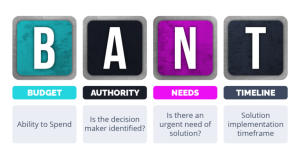
In today’s fast-paced world of business-to-business (B2B) technology sales, the methods we use to find and support potential customers are always changing. BANT, a tried-and-true approach, has long been a key tool. Created by IBM, BANT helps sales teams figure out if a potential customer has the Budget, Authority to make a purchase, a Need for the product, and a suitable Timing. This approach has been essential for sales teams to determine if a prospect is likely to become a customer.

However, it’s crucial to question whether BANT can still meet the demands of the current market. With new tech and changes in the way people buy, looking into new strategies is key to keeping up.

Blog-March-2024_Blog-2-EN-768x408

BANT and the Evolution of Lead Qualification

Checking if someone is likely to make a purchase (lead qualification) is crucial in sales, ensuring our efforts and resources are focused on potential customers who are actually interested. BANT has long served as an easy-to-follow guide for this purpose. However, BANT was created in a time when sellers had more influence over sales. Nowadays, with the internet, buyers do a lot of research and consider various options well before they speak to a salesperson.

This shift means it’s time to rethink old methods like BANT. Sales teams now must navigate a world where buyers are much more informed and have higher expectations. Buyers are looking for products that not only meet their immediate needs but also support their long-term goals.

Alternatives to BANT

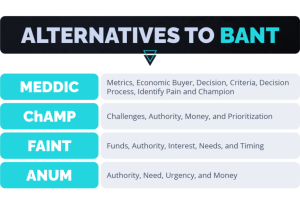
Given that BANT doesn’t fully meet the needs of the modern B2B tech market, new strategies have come up. These new methods are designed to better understand and match today’s buying habits and what the market wants.

Blog-March-2024_Blog-3-EN-768x523

CHAMP

CHAMP stands for understanding the customer’s main CHALLENGES, who has the AUTHORITY to make decisions, how much MONEY they have, and what needs to be done first (PRIORITIZATION). This method focuses more on what the buyer needs than on selling. It helps sales teams make their pitches more relevant by showing how they can solve the buyer’s specific problems.

MEDDIC

MEDDIC is about getting to know the buyer’s business better. It stands for looking at METRICS (or measures of success), finding out who the ECONOMIC BUYER is (the person with the money), understanding the DECISION CRITERIA AND PROCESS, IDENTIFYING the main Pain points, and finding a CHAMPION (someone inside the company who supports your solution). This approach makes sure that sales efforts match up with how the buyer makes decisions and works internally. 

ANUM

ANUM redefines the traditional components of BANT by emphasizing AUTHORITY, NEED, URGENCY, and MONEY, highlighting the importance of the decision-maker’s power and the immediate need for a solution. By focusing on the urgency, ANUM equips sales teams to quickly identify and seize opportunities where prospects are ready to make fast decisions.

FAINT

FAINT, which stands for FUNDS, AUTHORITY, INTEREST, NEED, and TIMING, understands that not every potential customer will have a set budget for your product but could find the means if they see its value. This approach is especially useful in the startup world and innovative industries, where budgets are more adaptable.

Choosing the Right Framework Beyond BANT

Selecting the appropriate framework depends on various factors, including your industry, sales cycle length, and the nature of your product or service. While BANT offers a solid foundation, its alternatives can provide a more flexible and modern approach to understanding and engaging with today’s smart buyers.

When you use these methods in your sales plan, it’s important to find the right balance. You need to make sure the leads are really likely to buy, but also be flexible for each potential customer’s special situation. In addition, you should adapt your CRM (Customer Relationship Management) system to successfully implement the chosen framework and reach your goals.

If you want to learn more about sales and marketing, we recommend you to read: Lead generation: The key to success in sales

In Summary

Although BANT’s straightforward approach and emphasis on critical factors are still appreciated, newer frameworks are proving to be more flexible and thorough, better matching the needs of current buyers.

Adopting these new approaches allows sales teams to improve how they decide which leads to focus on, foster stronger connections with potential clients, and achieve greater success. The quest for improved sales techniques in today’s digital era is continuous, emphasizing the importance of staying updated and adaptable.

At Isource Marketing, we firmly believe that businesses should take the latest trends to make their marketing actions more effective and boost their processes. Please, feel free to contact us for advice or quotes on marketing solutions, and take the bold step to enhance your B2B/B2C strategies with us.

Why should TikTok be included in your B2B marketing plan?

Why should TikTok be included in your B2B marketing plan?

Share

AI

AR

Automation

B2B

blog

Content

Creativity

Customer

Design

Digital Marketing

Events

Hubspot

IA

Influencers

job

Lead Generation

marketing

Newsletter-en

PR

Sales

UI

Uncategorized

UX

TikTok’s popularity has grown rapidly in Latin America and in countries such as the United States, and it appears that the application’s growth will continue in the near future, as the way in which businesses use the application for everything related to B2B has become extremely relevant. According to data presented by ByteDance Ltd. in January of this year, TikTok is the fastest growing social network in recent years, with more than 105 million monthly active users over the age of 18 worldwide. In this context and given the growth of a valued social network among  50 and 75 billion dollars, the following concern arises: how can TikTok help companies develop an optimal B2B marketing plan? From Isource Marketing, as an agency specialized in B2B, we offer you 5 key recommendations so that companies decide to invest in this important social network that continues to be a trend in the market:

1.Human Centric Marketing

One of the new trends in marketing that continues to grow is theHuman Centric Marketing, which consists of not only treating the client only as a consumer, but also as a person. In this way, Tik tok is presented as an important resource that demonstrates this trend with more humane and informal actions. The most recent statistics of Data Reportal show that B2B Companies on TikTok have a higher engagement and ROI rate than other brands, and this has led 58% of B2B marketers to increase investment within this platform. Likewise, the same study indicates that the average engagement rate on TikTok isof the 5.96%; the highest of all social networks.

2.Creative participation

Since TikTok is an entertainment social network, the content must attract users in a natural and creative way. So it is very useful to use the new trending hashtags that are published every week, as long as they are related to your content or you know how to relate them to your marketing efforts. It is also essential to upload content regularly to your profile, that will make users enter more times to see if you have news. To reinforce that creativity there are numerous viral videos that can be used to your advantage with a little imagination. These audios can be songs or dialogues from reality shows, series or movies that have gone viral. According to “tiktokers”, recording over short and viral audios makes you have a better chance of appearing on the recommendations page. Another option is to upload videos showing the infrastructure of your company, or work team, create short tutorials about your products or services. Finally, you can take quizzes through Tik Tok to engage potential customers in your content.

3.Success stories

This is a good tool to attract potential customers without advertising directly to them. a good start to create this type of content is finding stories in your industry and bringing the benefits to your audience. For example, Adobe is renowned for effectively handling B2B marketing on TikTok, as the company regularly posts some pretty eye-catching how-to videos, giving its customers the knowledge to get the most out of its tools and actively supporting the community they serve they try to sell. Additionally, Adobe launched in 2022 a campaign that connected creators with small businesses, awarding $10,000 to the finalist.

4.Find influencers on tik tok

If you’re not sure how to start creating content for your B2B business on TikTok, we recommend looking for influencers in your niche to get you off to a good start. The influencers of this social network are very familiar with the platform, the audience and the algorithms that consume content onTikTok. Using this information, you can create creative and exciting content that gets a large audience. Therefore it is key to find an influencer who understands your B2B product or service and invest monthly to create content for your company page.

5.First Party

This social network solution will allow companies to share details and information about those products and services that may be attractive to your customers, since it allows your company to create fluid interactions to reach your audience, in order to convert them in potential customers. Likewise, the tool allows the creation of customizable messages applicable to multiple customer segments. Leads can be downloaded manually or can be integrated into your company’s CRM, as they can be activated immediately. For businesses using TikTok, the information from these forms is vital to making sure they are reaching their potential customers in an effective and prudent manner.
TikTok continues to support and empower companies on the platform with simple solutions that allow them to connect closely with their customers while maintaining the privacy and security of all platform users, allowing brands to tell their story safely while user data is protected and they can optimally attract new customers.

What are you waiting for to incorporate tik tok into your B2B strategy?

We know the importance of branding in your company, and we also know that a correct positioning strategy is one of the first steps to achieving success. At Isource Marketing we have 2 regional offices and a local presence in Miami, Florida-USA and in the rest of the main countries of Latin America, so we are always ready to help you create that B2B strategy in tiktok for your company regardless of the place in the one you meet.

PR & Media Coordinator
Passion: Arts, Nature

7 tips to prospect clients in the B2B sector

7 tips to prospect clients in the B2B sector

Share

AI

AR

Automation

B2B

blog

Content

Creativity

Customer

Design

Digital Marketing

Events

Hubspot

IA

Influencers

job

Lead Generation

marketing

Newsletter-en

PR

Sales

UI

Uncategorized

UX

Customer prospecting is of the utmost importance for any business. In the case of companies in the Business to Business (B2B) sector, the rationale is that their target audiences are more rational, specialized, and informed compared to those in the Business to Consumer (B2C) market, which requires a methodical, analytical, and a very orderly segmentation process. This comment is especially relevant after understanding that, according to HubSpot Researchmore than 40% of company salespeople think that prospecting is the most difficult part of the sales process, followed by closing (36%) and qualification ( 22%).

We at Isource Marketing aim to provide you with tips on how to prospect successfully. Therefore, we’ve compiled a list of seven things to consider when segmenting clients in the B2B sector.

1. Define the buyer persona and segment your prospects.
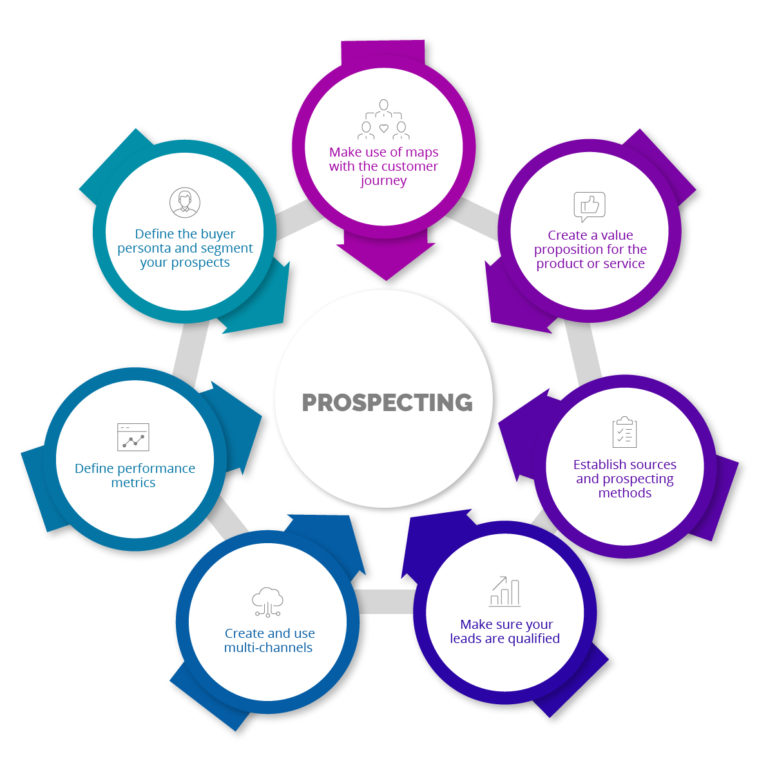
A buyer persona is a generalized depiction of your ideal customer. It is obtained through the use of qualitative and quantitative data derived from market research, competitor knowledge, and existing customer profiles. In terms of prospecting, varying factors, such as geographic and demographic, must be considered.

According to HubSpot Research, over 40% of company salespeople think prospecting is the hardest part of the sales process, followed by closing (36%) and qualifying (22%)

2. Make use of customer journey maps

Observing your potential customers’ real web behavior will help you discover who they are and what they want. The customer journey map is the ideal tool for accomplishing this. It is a process that individuals go through from the minute they show interest in your product or service until they become actual customers.

3. Create a value proposition for the product or service

The information that the marketing and sales teams will communicate in their work is critical, which is why the value proposition must be included in your prospecting plan; it includes market research with the goal of identifying client demands for the success of your product and services.

4. Establish prospecting sources and methods

When developing a prospecting strategy, you must have a technologically advanced and powerful data platform that can provide analysis and intelligence services capable of finding new clients amid large volumes of data. Prospecting via social networks, such as LinkedIn, is essential in the B2B industry, in addition to internal databases and phone calls.

5. Verify that your leads are qualified.

In the B2B sector, qualified leads are companies that are interested in your product and, in the best case, will become customers. To do this, you must ask the appropriate questions in order to determine whether or not they are qualified for the sales process. Click here to learn more about how to generate leads in the B2B sector on our blog.

To reach your target audience more effectively, you must develop a multi-channel communication plan.

6. Create and use multi-channels

To effectively target your audience segments, you must establish a multi-channel communication plan based on your buyer persona. There are certain B2B companies that are more effective than others. LinkedIn, as previously mentioned, is among the most significant, as are email marketing, advertisements, content marketing, and paid advertising through Google AdWords.

7. Define performance metrics

High-quality B2B sales and marketing areas continually assess the effectiveness of their efforts. They can achieve better performance and productivity on their goals by tracking and taking action to improve important metrics.

Are you ready to begin your prospecting strategy?

We understand the importance of sales management in your company, and we also recognize that a proper prospecting strategy is one of the first steps toward success. At Isource Marketing, we are happy to help you effectively segment your target audiences. We have a highly qualified team and more than 15 years of experience as a strategic partner. Contact us! https://old.web.isource.us/#contact

Project Account Manager
Passion: Nature and well being

If your business wants to attract millennials, read this article. You may be surprised!

If your business wants to attract millennials, read this article. You may be surprised!

Share

AI

AR

Automation

B2B

blog

Content

Creativity

Customer

Design

Digital Marketing

Events

Hubspot

IA

Influencers

job

Lead Generation

marketing

Newsletter-en

PR

Sales

UI

Uncategorized

UX

The millennial generation (born between 1981 and 1996) is the first to come of age in the new century and is expected to be a key economic force in the decades ahead. According to Gallup, it is the largest labor force in the United States, representing 73 million people. To the surprise of many baby boomers, it is predicted that by 2025, millennials will make up 75 percent of the global workforce. Shocking right?

Millennials are the first generation to be born in the digital age. This generation is well recognized for rejecting traditional lifestyles such as marriage and having a traditional family. In comparison to past generations, they tend to emancipate from occupations more rapidly. Millennials are communicators, multitaskers, nonconformists who value their free time and want to live in a better environment, and their consumption patterns are heavily impacted by technology. The great majority of them, without a doubt, own a smartphone, through which they carry out a substantial portion of their activities, such as playing, shopping, learning, working, and interacting with the world.

Millennials actively influence purchasing decisions and consumer habits.

In this article, we will discuss how the Business to Business (B2B) sector can incorporate functional design elements into their digital marketing strategies to engage this target audience, given that millennials actively influence purchasing decisions and consumption habits. According to the organization B2B International, 73 percent of individuals who are employed already have an active role in the company’s acquisition of products or services.

A challenging generation and a significant challenge for businesses

One of the aspects that millennials take into account the most is the experience with the brand. They are twice as likely to abandon a brand forever if they don’t like it and twice as likely to recommend it to others if they had a great experience. 

When it comes to advertising content, millennials are more skeptical than other generations. They look at advertising with caution, including content produced by influencers. However, they do trust content created by other users. Not to mention that their favorite place to consume it is on social networks. 

Taking these factors into account, businesses that want to target this generation must focus on the millennial customer experience, which includes listening to their viewpoint, recognizing weak areas, and working to solve them innovatively. It is a collaborative effort that requires integrated, flexible, viral, and credible marketing strategies. These strategies should focus on user experience (UX), which seeks to meet the satisfaction and needs of users in terms of information architecture, interaction, usability, prototyping, and visual design.

When it comes to advertising content, millennials are more skeptical than other generations.

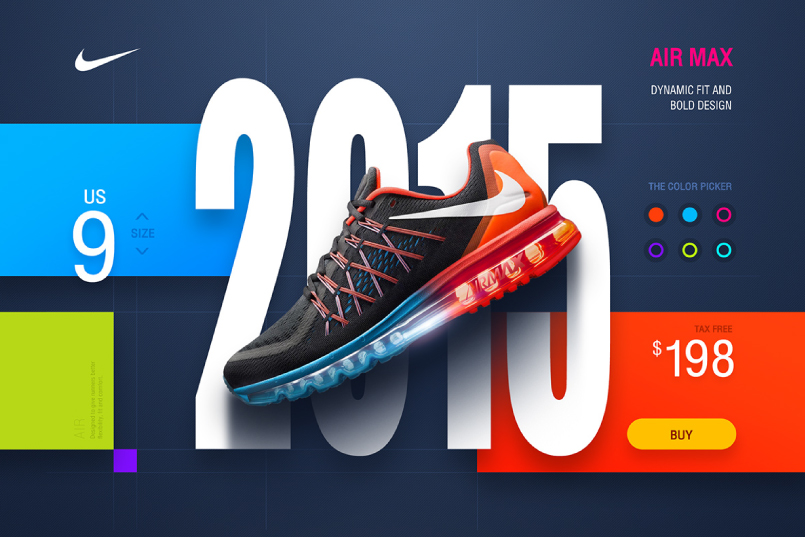
As a result, we will share six digital visual design trends that, in our opinion, are the most powerful for a B2B organization to make millennials fall in love with the ever-demanding millennials:

1 Semi-flat design

In addition to flat design, it combines shadows and gradients into the vector design, which adds depth without sacrificing the minimalist qualities.

2. 3D

Without a doubt, 3D has been one of the most innovative tools in graphic design in recent years. With the rapid evolution of modeling software, there are more possibilities to create incredibly realistic-looking textures and shapes.

Below, you will find the redesign of one of our top clients: NETGEAR Insight’s website, which showcases the entire business product line as a single ecosystem managed from the Insight platform.

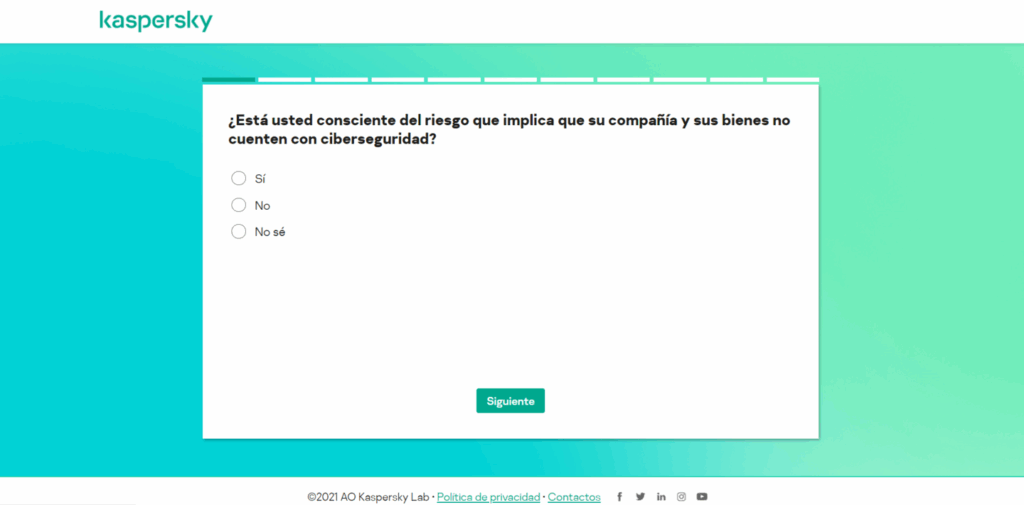
3. Gradients

Instagram has been a pioneer in this movement for a few years. Creating a logo using gradients was unfathomable in the days of paper and print, but they are increasingly being included in the digital landscape. Today, this approach is frequently included in the branding of major corporations.

Another example: Security Assessment Online, which is a security level self-assessment landing page for companies, which aims to showcase the solutions that best fit the customer’s needs.

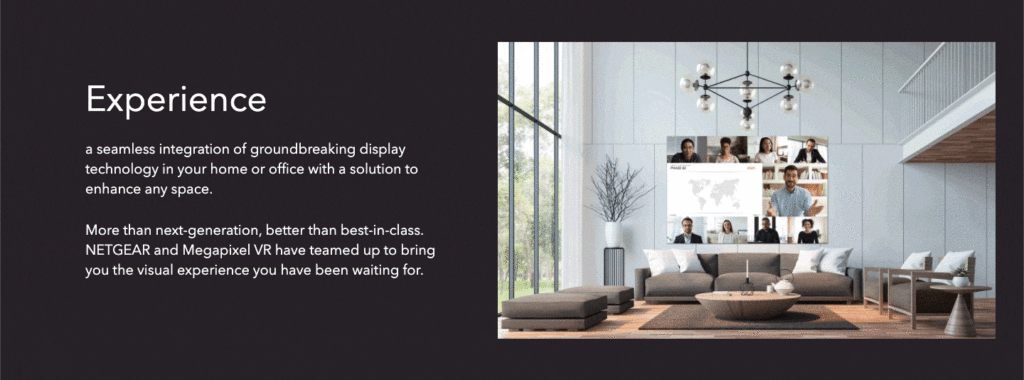
4. Cinemagraph

Created back in 2017, cinemagraphs combine static and moving images, which allows for more realism and provides a sensation that cannot be achieved with a simple image.

Another example of Cinemagraphs is from NETGEAR’s landing page with its partner MEGAPIXEL that shows how ProAV switches help deliver high-quality graphics on Full HD displays in high-end spaces.

5. Colors

Calm blues stand out, conveying peace and tranquility. In a chaotic world like ours, earth tones create a mental connection with the environment and generate pleasant emotions. Citrus hues are associated with freshness and optimism, while the contrast of black and white stands out more than the market’s oversaturated style of striking tones.

6. Retrofuturism

A popular style in 2021 that was created in the 1980s when many imagined various elements of the future and  was highly used, hence the name that references the future while still mentioning retro to acknowledge the past. It is recognized by the use of geometric forms and neon colors.

We hope you enjoyed this review of how companies must fully commit to the renewal of their products, services, brand image, marketing strategies, communication, and advertising content if they don’t want to lose the vote of the most influential generation: the millennials. The section on visuals discussed, when applied properly, will make your business plan successful within the demanding generation. At Isource Marketing, we have a highly qualified team of designers, illustrators, and creators ready to help you take your brand to the next level. Contact us now by clicking here: https://old.web.isource.us/#contact 

UI/UX Creative Artist
Passion: Digital Art

Once upon a time… Storytelling in B2B

Once upon a time… Storytelling in B2B

Share

AI

AR

Automation

B2B

blog

Content

Creativity

Customer

Design

Digital Marketing

Events

Hubspot

IA

Influencers

job

Lead Generation

marketing

Newsletter-en

PR

Sales

UI

Uncategorized

UX

Who doesn’t like stories? We live in a world surrounded by them; in fact, our life is a story in itself. Companies have recognized the potential storytelling can have and are utilizing it to captivate their consumers and potential customers.  What exactly is it, and why does it hold so much opportunity in the Business-to-Business (B2B) world? The solutions to these questions may be found throughout this blog.

Storytelling, in its purest form, is the art of telling, creating, and adapting stories in situations with a beginning, middle, and end, with the objective of communicating messages from an emotional perspective. 

In content marketing, it is a powerful tool because it allows you to tell stories about a brand and its products, and while it has been used for many years by companies in the B2C sector, one may ask if it can make a positive impact in the B2B world, whose buyers tend to be driven by logic, evidence, and facts?  The answer is simple: absolutely, because it has been proven that even in the coldest industries, the transmission of emotional, compelling, and entertaining stories has unimaginable effects on target audiences.

In content marketing, storytelling is a powerful tool because it allows you to generate emotional, compelling and entertaining connections with your audiences.

To help you understand it a bit better, here are three examples of how three B2B companies used storytelling to get their message across from a human perspective:

  • Adobe: https://bit.ly/3rjErPk

    This hilarious Adobe Marketing Cloud ad conveys the value of the marketed product without boring the viewer at all. The video begins in an office with employees dealing with an unexplainable rise in orders and doing everything they can to complete them. The ad concludes with a touching and humorous visual that should not be missed!

  • Slack:https://bit.ly/3rt1ya6

    Slack collaborated with Sandwich Productions to create the 2014 film “So Yeah, We Tried Slack.” From the perspective of the production company’s employees, the video depicts the widespread acceptance of today’s favorite corporate communications platform. It’s a clever idea that’s worth watching and analyzing.
  • Hootsuite:https://bit.ly/3d3ZVHJ

    Hootsuite discusses why certain organizations aren’t successful on social media in this animated video in a clear and honest tone. It then outlines how it may assist companies in resolving the challenge
    •  

Did you like watching videos? Now, we’ll provide you with six tips on boosting your marketing campaigns using the art of storytelling.

1. Identify

It’s the first step in telling a story, and to do that you have to ask yourself:

Will the audience be familiar with what I want to tell?

What do they want to know?

What challenges would my readers face without my product/service?

When you understand who they are and why they require your product/service, you will be able to interpret how to convey a clear message that will enhance the engagement of your campaigns.

2. Try to have a structure

Good storytelling has a logical thread, i.e. a beginning, a middle, and an end, which makes the story easier to understand. Consider the following elements:

The protagonist: the customer.

The antagonist: the challenge.

The mission: the journey to overcome the challenge.

The execution: the solution to the challenge.

The climax: the result.

3. Be sure to listen

It’s critical to understand what people want to hear and where they want to hear it. Do some research to understand your audience’s challenges, which will lead you to the best platform for telling the story. For example, if you find that people love short videos, you may create and share animations with amusing characters on social media.

4. Harness the power of gamification

We like this one since we at Isource are specialists in the execution of immersive experiences and the positive outcomes they generate. By gamifying your storytelling, you provide your audiences unimaginable power with quizzes, games, puzzles, and countless other resources for them to learn what your product or service accomplishes, for example.


By gamifying storytelling, you give unimaginable power to your audiences.

5. Let your customers tell the story

It enables the customer to control the story and showcase his or her own experience, humanizing it through case studies, success stories, testimonials, etc.

6. Share stories with data

Numbers and narratives are both required. In fact, stories and statistics are strongly intertwined. One aids in the establishment of an emotional connection, while the other fosters trust in the realities of the situation.

The storytelling field has no boundaries, and we are confident that your company has a variety of elements to create effective and empathetic stories and, as a result, communication pieces that captivate your audiences. And we at Isource Marketing are here to help you since we have designers and copywriters that have been trained to do so. Interested in contacting us or scheduling a call? Find us here: https://old.web.isource.us/#contact We look forward to meeting you!

PR & Media Coordinator
Passion: Arts, Nature