Responsive Menu
Add more content here...

The Future of Marketing: Predictions for 2024

The Future of Marketing: Predictions for 2024

Share

AI

AR

Automation

B2B

blog

Content

Creativity

Customer

Design

Digital Marketing

Events

Hubspot

IA

Influencers

job

Lead Generation

marketing

Newsletter-en

PR

Sales

UI

Uncategorized

UX

As we look ahead to 2024, it’s crucial to anticipate the changes in the marketing landscape. This blog is your guide to the major predictions for 2024, spotlighting the trends and innovations that are poised to reshape how we approach marketing.

From the integration of AI and human creativity to the rise of voice-driven strategies, we’re here to explore what these developments mean for the future of connecting with customers. Let’s journey into what 2024 has in store for the world of marketing!
1) The Big Debate Continues: AI Content vs. Human Content

One big discussion is about using AI (Artificial Intelligence) to create content versus content written by people. In 2024, we expect both to be important. AI can quickly analyze information and write basic stuff, but it can’t replace the unique touch humans bring.

Let’s break down the pros and cons of each one.

AI Content

  • Pros:
    Efficiency: AI can create content much faster than humans and at a lower cost. This means more content in less time, which is great for keeping up with the demand for fresh material.

  • Cons:
    Risk of Plagiarism and Impersonality: AI-generated content can sometimes accidentally copy existing material, leading to plagiarism issues. Also, it may lack a personal touch, feeling generic or less engaging.

Human Content

  • Pros:
    Creativity and Authentic Engagement: Human writers bring creativity and a personal touch that AI can’t match. This leads to content that resonates more deeply with audiences, fostering genuine engagement.

  • Cons:
    Time and Resource Intensive: Manual writing process takes longer and requires more resources (like skilled writers). This can mean higher costs and slower content production.

2) Voice Marketing

The use of voice-activated devices and voice assistants such as Amazon’s Alexa, Google Assistant, Apple’s Siri, and others to engage with users through spoken interactions is becoming increasingly popular every day.

In 2024, making your content easy to find and use through these technologies will be crucial. It’s about making it easier and more personal for customers to connect with your brand using their voice. If you are thinking to take actions, here are three ways to develop marketing strategies in audio:

  • Create Voice Ads: Develop ads specifically for voice assistants to reach consumers who use these devices. This method can tap into a growing segment of users who rely on voice commands for information and shopping.

  • Use Voice Assistants at Events: Incorporate voice assistants in events and conferences to engage with prospects. This could include interactive sessions where voice assistants provide information or facilitate activities, creating a memorable experience for attendees.

  • Content Creation: Dive into creating audio content such as podcasts or audiobooks. This format is ideal for in-depth discussions, interviews, or sharing insights about the tech industry, catering to an audience that prefers listening over reading.

3) Testing New Self-Service Ad Platforms Arriving in 2024

In recent years, self-service ad platforms have played a significant role in making online advertising accessible to businesses of all sizes, enabling them to effectively reach their target audiences while maintaining control over their advertising budgets.

On these platforms, advertisers can create their ads, select their desired audience, allocate their budget, and monitor real-time performance.

In 2024, significant developments are expected in this sector. The coming year is poised to witness the emergence of enhanced self-service ad platforms from major players such as Amazon, Microsoft, Disney, and LinkedIn. These companies are either upgrading their existing advertising services or launching new platforms, positioning themselves to challenge the dominance of Meta (formerly Facebook) and Google.

Key Developments:

  • Amazon and Microsoft: With their vast resources and data, these tech giants are expected to offer innovative advertising solutions, especially beneficial for technology and e-commerce sectors.

  • Disney: Known for its storytelling prowess, Disney’s entry into self-service advertising might offer unique branding and content-driven ad opportunities.

  • LinkedIn: As a professional networking giant, LinkedIn’s ad platform is particularly promising for B2B marketers, offering targeted access to professionals and businesses.

These developments promise to diversify the digital advertising landscape, potentially offering more specialized and effective marketing options for B2B technology companies.

4) First Party Data Is the New Standard

The way marketers collect and use data is changing significantly. With stricter privacy laws and the phasing out of third-party cookies (the tiny data files websites use to track visitors), there’s a growing emphasis on first-party data. This is the information that companies collect directly from their customers, like when someone signs up for a newsletter or makes a purchase.

Why First-Party Data Is Gaining Importance:

  • Trust and Privacy: Customers are more concerned about their privacy. They’re more likely to trust and share their information directly with brands they have a relationship with, rather than through third-party sources.

  • Accuracy and Reliability: Data collected directly from customers is generally more accurate and reliable. It gives a clearer picture of who the customers are and what they want.

  • Personalization and Experience: With first-party data, companies can tailor their marketing campaigns more precisely. This personalization can lead to better customer experiences, as messages and offers are more relevant to each individual.

  • Long-term Relationships: Using first-party data helps build deeper, direct relationships with customers. It’s about understanding and catering to their specific needs over time.

  • Navigating Privacy Regulations: As privacy laws become stricter, relying on first-party data is a safer bet. It helps companies stay compliant while still making informed marketing decisions.

This shift towards first-party data represents a move to more respectful and effective marketing, where customer privacy is prioritized, and marketing efforts are more targeted and meaningful.

5) Video Marketing Dominance

Video marketing is not just maintaining its relevance; it’s expected to grow even more powerful in 2024. Here’s how it’s evolving:

  • Brand Storytelling and Product Showcasing: Marketers are increasingly using video to tell engaging brand stories and showcase products. This method allows for a more dynamic and visually appealing way to communicate the values and specifics of tech products, making complex information more digestible and engaging.

  • Live Streaming: It offers real-time interaction, which is key for authenticity and engagement. Brands hosting live events, product launches, and behind-the-scenes looks can provide immersive and compelling content. This approach not only captivates audiences but also builds a sense of community and immediacy around the brand and its offerings.

  • Deeper Connections with the Audience: Through these video strategies, brands can forge deeper connections with their target audience. The interactive nature of live streaming, coupled with the storytelling power of video, creates a two-way conversation between brands and consumers. This is particularly important in the B2B technology sector, where establishing trust and understanding is crucial.

In summary

Looking towards 2024, marketing is evolving rapidly with AI and human creativity merging to create more impactful content. Also, voice marketing is on the rise, offering new ways to engage customers, and the debut of new ad platforms by tech giants is set to shake up the digital advertising world.

Meanwhile, the focus on first-party data is becoming crucial for tailored, privacy-conscious marketing. Video marketing, especially live streaming, is expected to continue growing, providing more interactive and authentic brand experiences. These trends indicate a shift towards more personalized, efficient, and engaging marketing practices.

At iSource Marketing, we firmly believe that businesses should take the lastest trends to build strong brand concepts and to develop marketing plans that turn clients into fans.  Please, feel free to contact us for advice or quotes on innovative solutions, and take the bold step to enhance your B2B/B2C strategies with us.
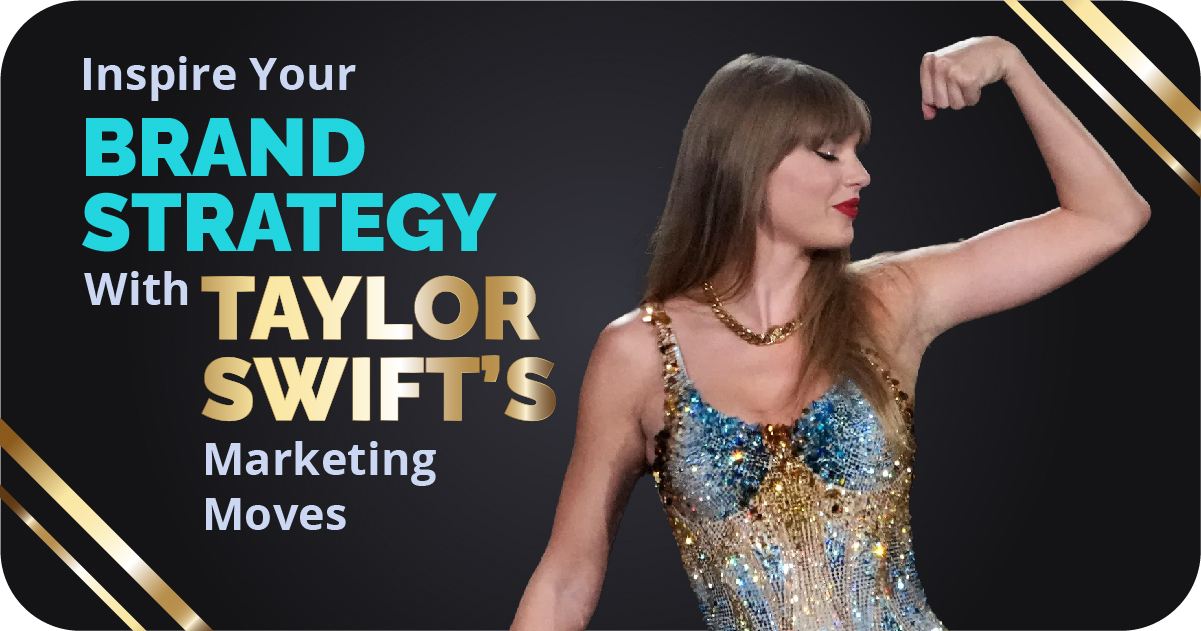
Inspire Your Brand Strategy with Taylor Swift’s Marketing Moves

Inspire Your Brand Strategy with Taylor Swift’s Marketing Moves

Share

AI

AR

Automation

B2B

blog

Content

Creativity

Customer

Design

Digital Marketing

Events

Hubspot

IA

Influencers

job

Lead Generation

marketing

Newsletter-en

PR

Sales

UI

Uncategorized

UX

In the dynamic world of marketing, drawing inspiration from diverse industries is crucial, even from those seemingly unrelated to our niche. Take, for instance, the world of pop music. There’s a goldmine of insights waiting to be tapped, especially when looking at Taylor Swift marketing.

As a marketing agency with a specialization in the technology sector, we often advise our clients to look beyond their industry boundaries. Taylor Swift might sing pop hits, but her marketing impact spreads across sectors, offering lessons in storytelling, adaptability, and immersive branding experiences. For that reason, we’ll explore three primary lessons tech companies can learn from her strategy.

3 Key Takeaways from Taylor Swift Marketing

1) Storytelling: A Key Element in Taylor Swift Marketing

For Taylor Swift, storytelling has been an integral part of her marketing and brand identity since the inception of her career. Beyond her music, she deepens the connection with her fans by sharing personal anecdotes, holding exclusive sessions, and sending personal messages, making them feel intertwined with her journey. 

Tech companies can take inspiration from her approach to effectively connect with their target audiences and boost sales. Here’s how:

  • Humanize the Brand: Just as Taylor uses personal narratives to connect with her fans, tech companies can share stories about their beginnings, challenges faced, or the people behind the product. This can help humanize a brand and make it more relatable.

  • Create a Narrative Around Products: Rather than just highlighting features, tech companies can share stories about how their products can transform users’ lives, solve real-world problems, or even the process behind its creation.

  • Engage Through Visual Content: Taylor’s music videos add a visual dimension to her songs. Similarly, tech companies can use video demos, tutorials, and customer testimonial videos to provide a visual narrative about their products or services, making them more engaging.

  • Build a Community: Taylor’s engagement with her fans fosters a strong sense of community. Tech companies can create dedicated forums, social media groups, or events to engage with their users, share stories, and build a community around their brand.

  • Offer Exclusive Insights: Just as Taylor has secret sessions for her fans, tech companies can offer sneak peeks, beta tests, or behind-the-scenes looks into their product development, making their users or audience feel special and valued.

  • Customer Success Stories: Just like fans resonate with Taylor’s personal experiences, potential customers resonate with stories of others who’ve benefited from a product. Sharing testimonials or case studies can help potential customers visualize their success with the product.

  • Content Strategy: Consistently produce content that tells a story, be it blog posts, podcasts, or webinars. The narrative can revolve around industry changes, innovations, or how technology is shaping the future.

2) Adapting to Industry Changes: The Evolutionary Side of Taylor Swift Marketing

From her transition from country to pop, to the way she’s handled streaming services, Swift has always had her finger on the pulse, adjusting her strategy based on the industry landscape and her audience’s preferences.

What lessons can tech companies learn about this?

  • Stay Agile: Like Swift’s approach to the shifting music scene, tech companies should remain flexible and ready to pivot their strategies based on industry trends and technological advancements.

  • Listen to the Audience: Swift’s adaptability is, in part, a result of her keen sense of her audience’s pulse. Tech companies can similarly employ feedback loops, user surveys, and beta testing to understand consumer needs and adapt accordingly.

  • Advocate for Industry Standards: Just as Swift stood up for artists’ rights, tech companies can take stances on issues pertinent to their industry, like data privacy or open-source standards. This can build trust and respect among consumers and peers.

  • Diversify Offerings: Much like Swift’s genre exploration, tech companies can look into diversifying their product or service line-ups. This could mean exploring new tech verticals or integrating complementary services to cater to a wider audience.

  • Strategic Partnerships: Swift’s collaborations with other artists and brands have expanded her reach. Tech companies can similarly forge strategic alliances or partnerships to tap into new markets or demographic segments.

3) Immersive Brand Experiences in Taylor Swift Marketing

Taylor Swift’s approach to her concerts exemplifies how an artist can transcend the traditional boundaries of a performance to create a multi-sensory and immersive brand experience. A prime example of this is The Eras Tour.

Every element, from the stage’s grand design to the themed custom cocktails, was crafted to engage the audience’s senses fully. For instance, during her performance of “Bad Blood”, the pyrotechnics were so vivid and powerful that attendees could physically feel their warmth.

Tech companies can draw inspiration from this approach to create captivating learning environments that resonate with their users. Some ideas include:


  • Interactive Tech Tools: Just as the RFID wristbands were used in Swift’s concert, tech companies can employ interactive tools or gadgets during product launches or expos. This ensures attendees are actively involved and not merely passive observers.

  • Engaging Environments: Creating an atmosphere that engages all senses—be it through visuals, sounds, or even tactile experiences—can help in better retention of information. For instance, when launching a new software or device, integrating stunning visuals or tactile experiences can make the learning curve more enjoyable for users.

  • Augmented and Virtual Reality: Leveraging AR and VR technologies can transport users to a multi-dimensional world, enhancing their understanding of a product’s features or the story behind a brand.

  • Multimedia Integration: Just as Swift’s LED stage showcased supporting content, tech companies can integrate video demos, infographics, and other multimedia content when presenting new information or training sessions, making them more engaging and easier to grasp.

  • Personalized Experience: Personalization can enhance user engagement. Whether it’s a user interface that adjusts based on preferences or a training module that evolves based on a learner’s pace and understanding, personalization can make learning more efficient and enjoyable

In summary

Taylor Swift’s marketing methods offer more than just insights for the music world; they’re a roadmap for any industry looking to deepen engagement. By tapping into storytelling, embracing change, and immersing audiences in unique experiences, she has set a gold standard in brand connection.

For tech companies, emulating these approaches can be transformative. By humanizing their brands, staying agile, and creating rich, sensory experiences, they can foster stronger bonds with their audience and drive greater success.

At iSource Marketing, we firmly believe that businesses should build strong brand concepts and develop marketing plans that turn clients into fans.  Please, feel free to contact us for advice or quotes on innovative solutions, and take the bold step to enhance your B2B/B2C strategies with us.
Viral Marketing: Strategy or luck?

Viral Marketing:
Strategy or luck?

Share

AI

AR

Automation

B2B

blog

Content

Creativity

Customer

Design

Digital Marketing

Events

Hubspot

IA

Influencers

job

Lead Generation

marketing

Newsletter-en

PR

Sales

UI

Uncategorized

UX

In the digital age where social media is king, going viral is like striking gold. This type of content supercharges your message, makes you more visible, and allows you to engage with a ton of people all at once. But is there a secret formula to “make” viral marketing campaigns? Is it something you can actually strategize for?

Nobody can guarantee that your next post will go viral on the internet, but you can absolutely stack the deck in your favor. That’s why we’ve assembled a set of tried-and-true strategies to help you knock your next campaign out of the park.

What makes a marketing campaign go viral on social media?

A marketing campaign goes viral when people feel compelled to share its content on their own social media platforms, adding their voice to a topic they believe is of broad interest. The goal is to turn the brand’s message into a public talking point, where a wide audience can form an opinion, find a sense of identity, or experience strong emotions.
In the marketing game, luck and timing can give you a boost, but let’s not overlook the power of smart planning. There are concrete guidelines you can follow to up your chances of hitting it big and getting your message in front of a whole lot of eyes. It’s not just about going viral; it’s about expanding your customer circle in a big way.
When you dissect some successful viral campaigns, certain guidelines show up again and again. Let’s unpack some of them:

  • Deliver originality: People are tired of feeling like they’re just a click away from a sales funnel. So, your content needs to feel genuine and not like another billboard on the digital highway.

  • Entertain, don’t just inform: We’re in an age where humor can make or break your campaign. Comedy doesn’t just rack up views; it keeps folks glued to their screens, making them more likely to share and comment.

  • Keep it simple: a punchy message can often be more impactful than a long, drawn-out one. Get to the point and make it memorable. People appreciate clarity and directness, especially in a world overloaded with information.

  • Don’t forget the feels: A campaign that triggers genuine emotions can send your content from average to unforgettable. Ask yourself, what can make my audience laugh, cry, or better yet, hit that share button?

  • Be valuable: Does it solve a problem? Offer a fresh perspective? Keep up with current trends? Your content should offer something that makes people think, “Wow, this is worth my time”.

Viral marketing: proven strategies for going viral

When it comes to navigating the fast-paced world of marketing, there are certain go-to approaches for turning your content or campaigns into viral sensations. Let’s dive into some of these industry favorites:

  • Share-for-Rewards: This marketing strategy encourages users to spread a message by offering them some sort of reward, such as discounts or freebies. By sharing the content or providing email addresses of their contacts, users get something valuable in return. At the same time, they significantly extend the reach of your campaign.

  • Buzz Building: This approach focuses on crafting messages or narratives that not only circulate on their own but also ignite rumors around the initial content. It’s about designing a message so gripping that it doesn’t just get shared—it becomes the topic of speculation and conversation.

  • “Share-It” Effect: Unlike some other strategies, the aim here is to create content specifically designed for sharing—no rewards or incentives needed. The key is to craft messages that resonate on a personal level, messages that pass the “share test” because they’re relatable, thought-provoking, or have social approval. When people identify with your message, they’ll naturally want to spread the word.

  • Stealth Tactics: The aim here is to captivate users so effectively that they share breaking news or shocking events, all while being completely unaware that they’re actually contributing to a well-orchestrated advertising plan.

Some examples of viral marketing

Case 1: Engage your audience

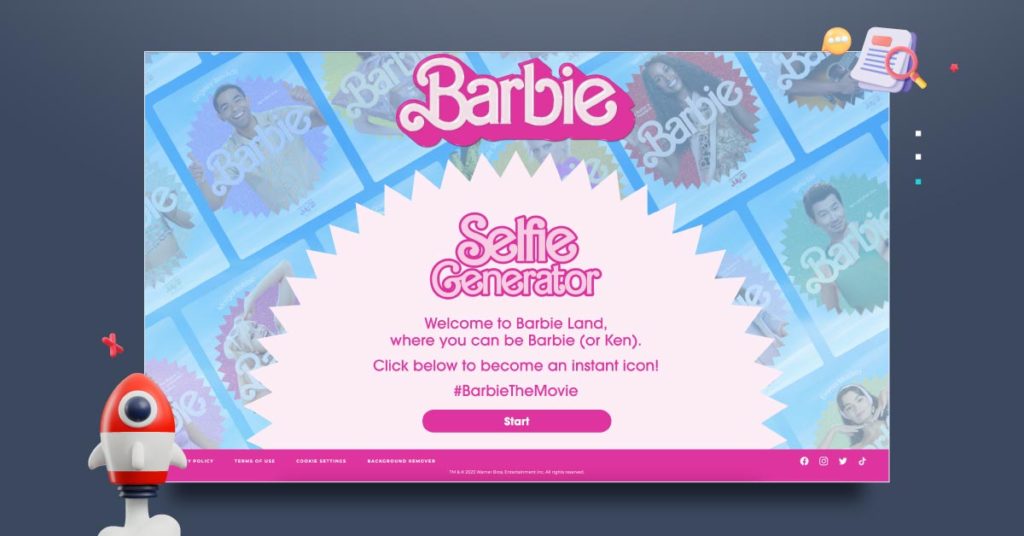
Campaign: Barbie selfie generator

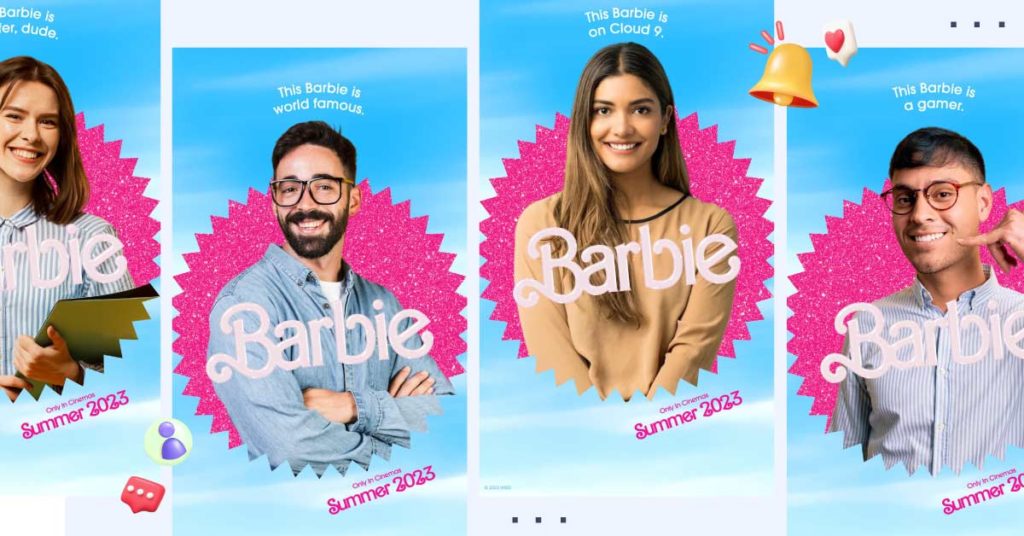
In the world of viral marketing, the Barbie movie’s Selfie Generator campaign is a textbook example of doing it right. Launched in early April 2023, the campaign featured a cutting-edge AI-driven website where users could transform their selfies into personalized movie posters, complete with customizable text.

As soon as it launched, this campaign exploded on social media, amplifying the pre-launch buzz that marketers were gunning for.

What really drove the campaign’s success were a couple of key elements we’ve touched on before: the irresistible urge to share, the social approval and the desire to be part of the group. On top of that, this was many users’ first foray into interacting with artificial intelligence, offered at no cost. The result? It became one of the most buzzed-about marketing campaigns of the entire year.

If you want to learn more about campaigns that have used XR technology in their favor, you can check out our case study: Augmented reality filters on Instagram – A key ally for a successful brand strategy.

Case 2: Put trends to work for you

Campaign: Heinz and Absolut Vodka’s pasta sauce launch

The curious thing about this case is no one expected this collaboration. After model Gigi Hadid shared her Penne Alla Vodka recipe on Instagram Stories in 2020, this particular combination between tomato paste and vodka was suddenly a viral trend on social media that year. This business opportunity led Heinz and Absolut Vodka executives to launch their own ready-to-use version in 2023.

Before Heinz x Absolut Tomato Vodka Pasta Sauce hit the shelves, it had a pre-launch campaign that covered OOH, PR, social media and influencers. In fact, influencer marketing played a key role in making the product launch a hit, particularly using micro and nano influencers. These opinion leaders stirred up buzz and enthusiasm for the new item on Instagram and TikTok.

This marketing campaign proves that incorporating unexpected or innovative elements into an internet buzz significantly boosts your odds of engaging with a larger audience.

In summary

Viral marketing strategies offer a clever and often cost-effective way to boost a brand or product’s visibility. Employing tactics ranging from rewards for sharing messages to the spreading of controlled rumors, these methods aim to stimulate public conversation and social sharing.

Certainly, we firmly believe in the transformative power of viral marketing to drive our clients towards their objectives. Feel free to reach out to Isource Marketing for consultations or quotes on cutting-edge solutions. Take the bold step to enhance your B2B/B2C strategies with our expertise in marketing and technology.

UX Writing: Creating Human-Centered Content

UX Writing: Creating Human-Centered Content

Share

AI

AR

Automation

B2B

blog

Content

Creativity

Customer

Design

Digital Marketing

Events

Hubspot

IA

Influencers

job

Lead Generation

marketing

Newsletter-en

PR

Sales

UI

Uncategorized

UX

One of the biggest challenges when writing on digital platforms is making the texts clear, concise, and useful. There is a powerful tool for this known as UX Writing (User Experience Writing), which is nothing more than writing based on the user’s experience, interaction, and emotions during the process. 

Many people believe that this technique is new, however, it is not. People have been writing for interfaces for as long as they have existed. UX Writing adds value by formalizing the practice with advanced guidelines. Furthermore, its demand is constantly increasing, and it is closely related to UX Design (User Experience Design), a process that seeks to create digital products that generate relevant and significant experiences for users through design, usability, and more.  

Read the blog New UX Design Trends

Writing based on the user’s experience, engagement, and emotions throughout the process is UX writing.

Although the difference between UX Writing and Copywriting is very subtle, the first aims to guide and help, while the second informs, persuades or sells.  Do not confuse UX Writing with Micro Copywriting, which aims to synthesize concepts through short texts in order to make browsing and usability more humane and simple.

What qualities should an attractive UX Writing have?

Clarity.

A clear text, with simple and direct language, is the best way to help the user understand and process the communication.

Consistency.

Consistency in the texts is key to generating trust in the user. For example, in an online course sales app, if the user purchases course “X”, that name (or text) must be the same throughout the purchase process. 

Precision.

The instructions must be specific, that is, they must explain exactly what must be done in each instance.  

Conversational.

Texts that point to a discussion are more appealing, warm, and pleasant; surely, with the appropriate tone of voice.

What Are the Advantages of UX Writing? Quite a few! At Isource Marketing, we highlight the 5 most significant advantages:

  1. Helps empathize with users. UX Writing determines the tone of communication with users. It is key to creating a connection of empathy and trust between the product and the users.

  2. Humanizes the product. The UX writers are in charge of developing the language for the product-user interactions, therefore their goal is to humanize the products by establishing a relationship between them.

  3. Increases conversion rates and user engagement. A good UX Writing strategy is CTA ( Call to Action)which helps improve conversion goals. The idea is to create texts that lead to action and make communication effective.
     
  4. Create smoother interactions. Understanding how to use a digital product can be very difficult, so good UX Writing is responsible for providing all the necessary information for the user and improving their experience.

  5. Reduce the amount of time users spend on apps. Having all of the steps clear ensures that users utilize the app for the necessary amount of time, avoiding frustrations and increasing the likelihood that they will use or recommend the app again.

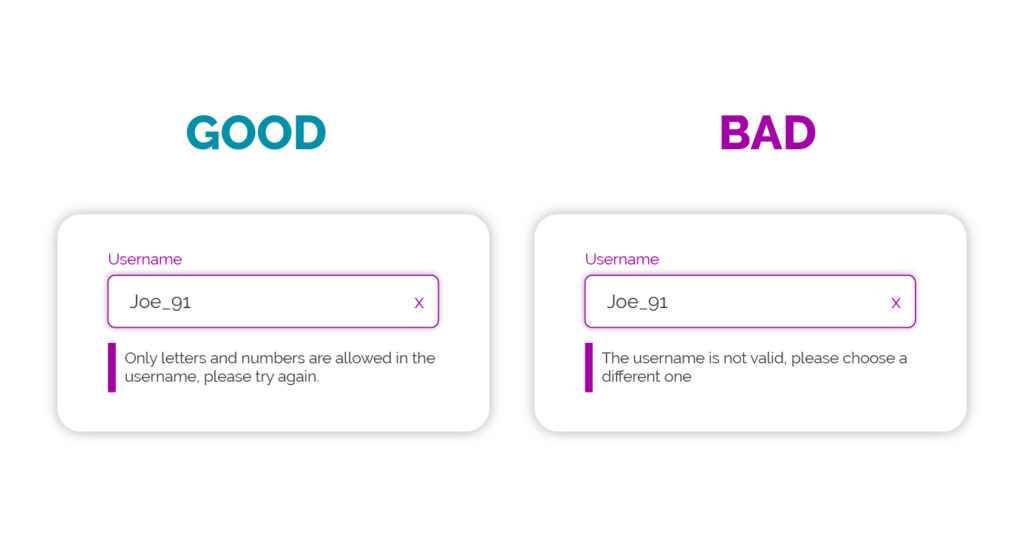
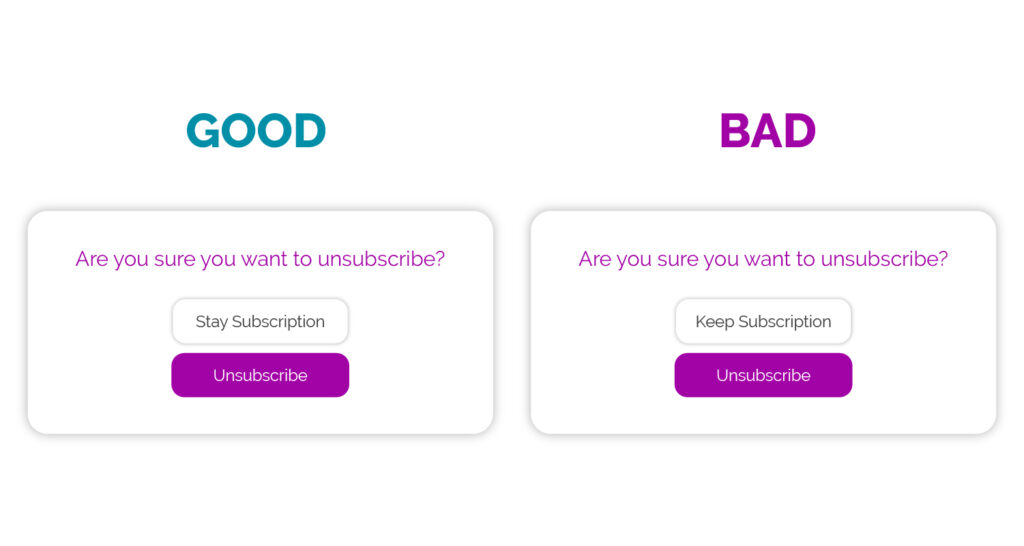
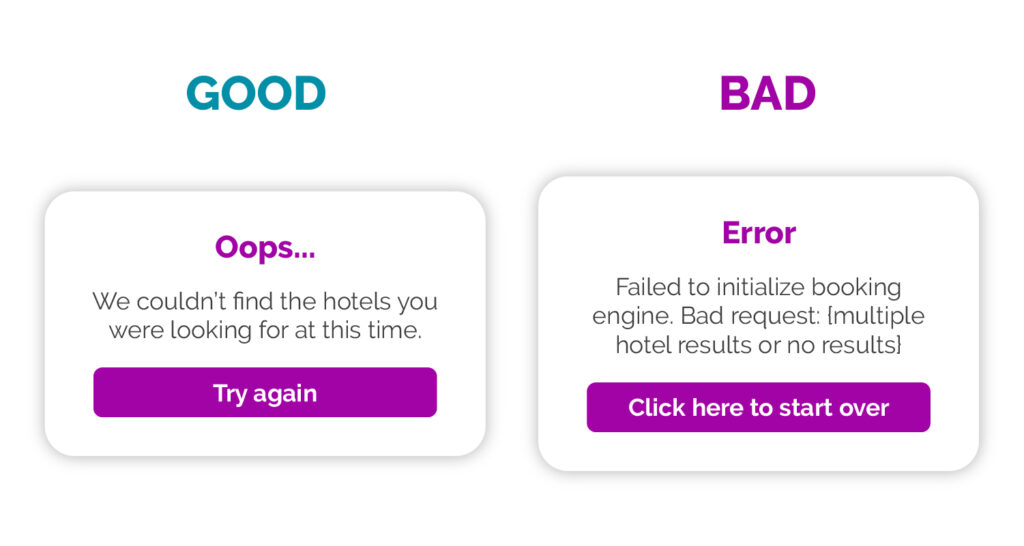
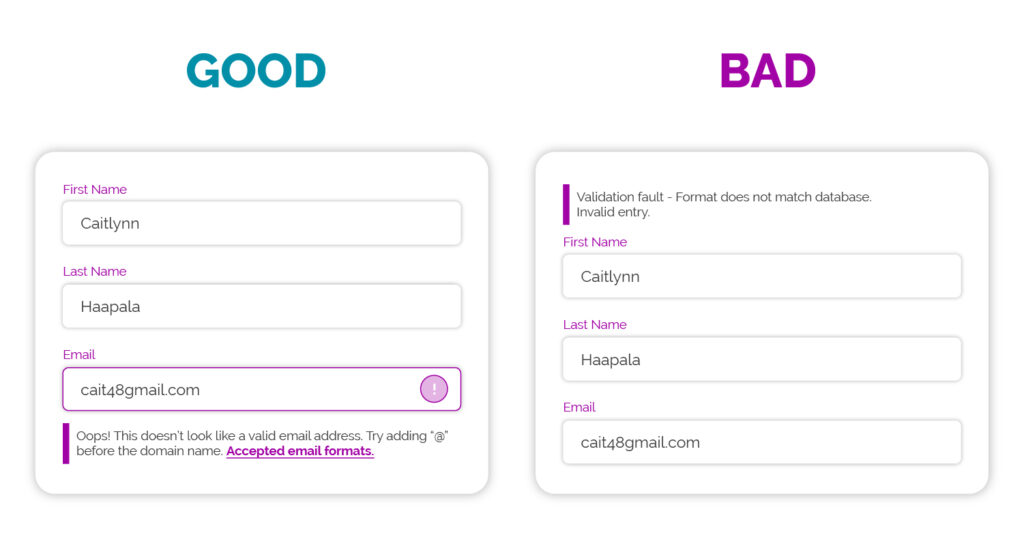
Then there are 4 comparative examples with texts, one using UX Writing and the others not.

The UX Writer

The UX Writer must be capable of creating content that offers the digital platform logic, coherence, and order. Furthermore, it determines how the company’s voice should be expressed and simplifies the customer experience. To structure an optimal interface, you must be familiar with UX Design and work closely with designers.

The UX Writer must be capable of creating content that offers the digital platform logic, coherence, and order.

As we could see in this blog post, users want the experience on websites and applications to be clear, concise, and useful. UX Writing is one of the tools for doing so. At Isource Marketing we have writers specialized in this area, as well as a group of designers 100% focused on UX Design. Contact us for your next digital project! https://old.web.isource.us/#contact

UI/UX Creative Artist
Passion: Digital Art

Augmented Reality in social media: the next step in your digital strategy

Augmented Reality in social media: the next step in your digital strategy

Share

AI

AR

Automation

B2B

blog

Content

Creativity

Customer

Design

Digital Marketing

Events

Hubspot

IA

Influencers

job

Lead Generation

marketing

Newsletter-en

PR

Sales

UI

Uncategorized

UX

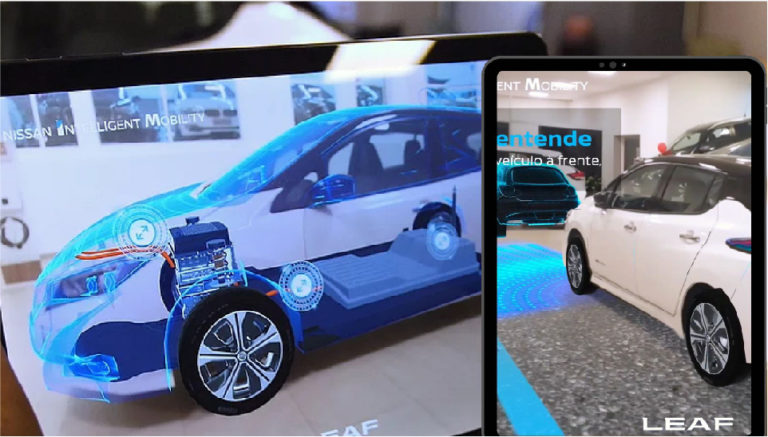
What is augmented reality? It is a technology resource that provides users with interactive experiences by combining a virtual component to a real physical environment with the use of digital devices. Although its origins date back to the early 20th century and its term was originally created in the early 1990s, it is now embedded in everyone’s lives and continues to progress at a fast pace.

We use augmented reality on a regular basis, and it is present in our everyday lives primarily for entertainment purposes. However, companies utilize AR to improve sales, enhance product or service presentation, train employees, and even analyze statistical data. Click on this link to visit our blog, where we discuss the benefits of augmented reality, virtual reality, and extended reality in the corporate sector. 

In this blog, we will examine the operations and benefits of augmented reality in social media. Before we begin, let’s look at some numbers. According to Statista, the number of social media users worldwide climbed from 1.22 billion to 3.09 billion between 2011 and 2021. According to eMarketer, in 2020, 30% of users interacted with augmented reality content on social networks monthly. In 2021, that number was predicted to grow 7.2% and reach a total of 46.9 million users. Eye-opening, right?

In 2020, 30% of users on social networks interacted with content relating to augmented reality on a monthly basis.

These statistics demonstrate how social networking through mobile devices has become a part of our everyday lives, making it an important platform for developing immersive augmented reality experiences. There was speculation that Facebook had purchased Oculus in order to become the next large social network. Although significant progress has been made in this direction – remember the last push of Metaverse: Horizon Worlds – there are already communities, applications, and social events for virtual reality, with which augmented reality is without a doubt the number one technology for immersive social interaction.

The most significant advantage it provides in social networks is its distribution, which is far simpler and more widespread than virtual reality. It is compatible with a large number of smartphones on the market. The Snapchat filters, which have over 300 million active users, and Instagram filters, which have 1.4 billion active users, are the most visible evidence of its value.

As a result of the abovementioned, we can conclude that companies from all sectors, both B2C and B2B, have enormous potential to promote their products and services on social networks and platforms that utilize augmented reality.

Augmented Reality might serve as Facebook’s point of entry into the Metaverse.

So let’s take a look at the 5 benefits of using this awesome immersive social media technology in your next social media marketing strategy:

  • Enhances the user’s experience

    Augmented reality merges the virtual and real worlds, dramatically increasing user experience and, as a result, improving consumer satisfaction with a product or service.
  • Keeps the audience’s attention for a longer time.

    According to The Drum, augmented reality can keep consumers’ attention for up to 85 seconds. Additionally, you may enhance your purchase click-through rate by 33% and your engagement rate by 20%. This suggests that, regardless of the quality of the campaign, Internet users are likely to pay attention to and engage with augmented reality experiences.
  • It helps generate buzz around the brand.

    Augmented reality may be utilized to increase indirect sales and boost brand awareness. It contains playful, innovative, and surprising features that, when well executed, may create a pleasant atmosphere around the brand, product, or company itself. A well-designed augmented reality brand experience might just get people talking about a brand and associate it with positive emotions like joy and excitement.
  • Encourage engagement.

    Increase brand engagement by providing consumers with new, immersive experiences that hold their interest longer than a static image or text. Additionally, augmented reality allows for interaction with products and advertisements at various stages of the consumer experience. It may be used at the pre-sale, point-of-sale, and post-sale phases. It may also be utilized in gamification and branding applications to engage consumers.
  • Drive the Playable Ads model

    Instead of promoting a conventional advertisement, brands can have their customers participate in a game centered around a product for a certain period of time. Consumers would be able to touch and rotate objects while an indirect promotional message is communicated and no specific purchase action is pushed. On the contrary: augmented reality aims to provide a preview of the product or service so that the potential customer may use the experience to learn about their qualities. 

Types of Augmented Reality

AR based on projection

AR based on recognition

AR based on location

AR based on superposition

AR based on schemes

ConclusionIt is clear that augmented reality is here to stay on social media. Its ongoing growth and competition among the various platforms that develop it have meant that consumers and businesses alike benefit from it.

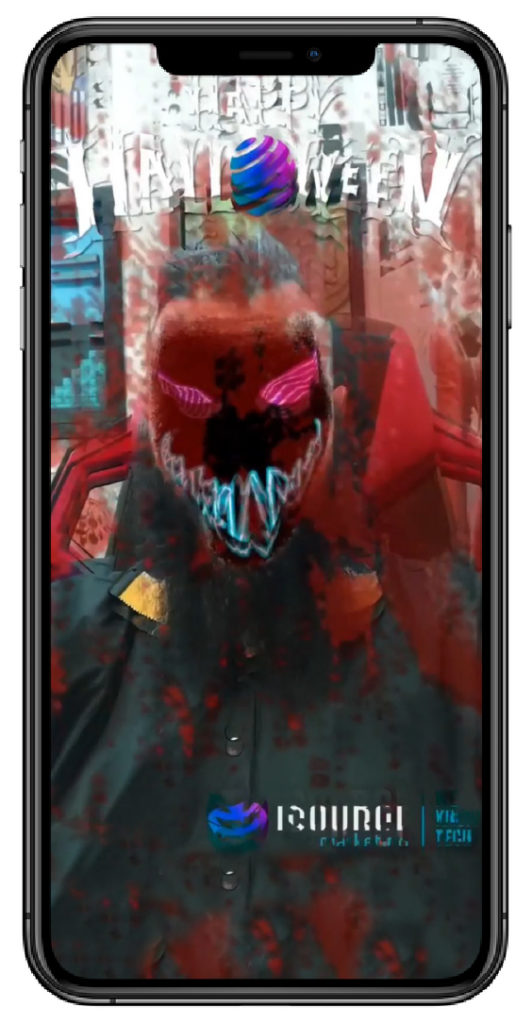
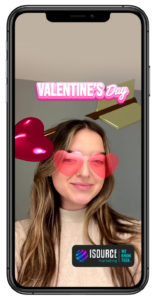
And, as a Digital Marketing and Communication agency committed to the development of immersive experiences, Isource Marketing has created a variety of Instagram and Snapchat filters as well as experiences. Here are two that we really like:

HalloSource is a frightening filter that we created for Halloween 2021. It is a fun experience in which the user may choose their preferred mask and give a great terrifying scream with it.

Valentine’s Day is rocking! Long live love! Also, long live rock! To celebrate Valentine’s Day, we put on a rock performance using this filter.

Are you ready to explore the world of augmented reality? At Isource Marketing, we have experts in the development of apps for different viewers and platforms, not just for augmented reality, but also for virtual and extended reality. Contact us at https://old.web.isource.us/#contact!

Front End Developer
Passion: Videogames, Drawing

If your business wants to attract millennials, read this article. You may be surprised!

If your business wants to attract millennials, read this article. You may be surprised!

Share

AI

AR

Automation

B2B

blog

Content

Creativity

Customer

Design

Digital Marketing

Events

Hubspot

IA

Influencers

job

Lead Generation

marketing

Newsletter-en

PR

Sales

UI

Uncategorized

UX

The millennial generation (born between 1981 and 1996) is the first to come of age in the new century and is expected to be a key economic force in the decades ahead. According to Gallup, it is the largest labor force in the United States, representing 73 million people. To the surprise of many baby boomers, it is predicted that by 2025, millennials will make up 75 percent of the global workforce. Shocking right?

Millennials are the first generation to be born in the digital age. This generation is well recognized for rejecting traditional lifestyles such as marriage and having a traditional family. In comparison to past generations, they tend to emancipate from occupations more rapidly. Millennials are communicators, multitaskers, nonconformists who value their free time and want to live in a better environment, and their consumption patterns are heavily impacted by technology. The great majority of them, without a doubt, own a smartphone, through which they carry out a substantial portion of their activities, such as playing, shopping, learning, working, and interacting with the world.

Millennials actively influence purchasing decisions and consumer habits.

In this article, we will discuss how the Business to Business (B2B) sector can incorporate functional design elements into their digital marketing strategies to engage this target audience, given that millennials actively influence purchasing decisions and consumption habits. According to the organization B2B International, 73 percent of individuals who are employed already have an active role in the company’s acquisition of products or services.

A challenging generation and a significant challenge for businesses

One of the aspects that millennials take into account the most is the experience with the brand. They are twice as likely to abandon a brand forever if they don’t like it and twice as likely to recommend it to others if they had a great experience. 

When it comes to advertising content, millennials are more skeptical than other generations. They look at advertising with caution, including content produced by influencers. However, they do trust content created by other users. Not to mention that their favorite place to consume it is on social networks. 

Taking these factors into account, businesses that want to target this generation must focus on the millennial customer experience, which includes listening to their viewpoint, recognizing weak areas, and working to solve them innovatively. It is a collaborative effort that requires integrated, flexible, viral, and credible marketing strategies. These strategies should focus on user experience (UX), which seeks to meet the satisfaction and needs of users in terms of information architecture, interaction, usability, prototyping, and visual design.

When it comes to advertising content, millennials are more skeptical than other generations.

As a result, we will share six digital visual design trends that, in our opinion, are the most powerful for a B2B organization to make millennials fall in love with the ever-demanding millennials:

1 Semi-flat design

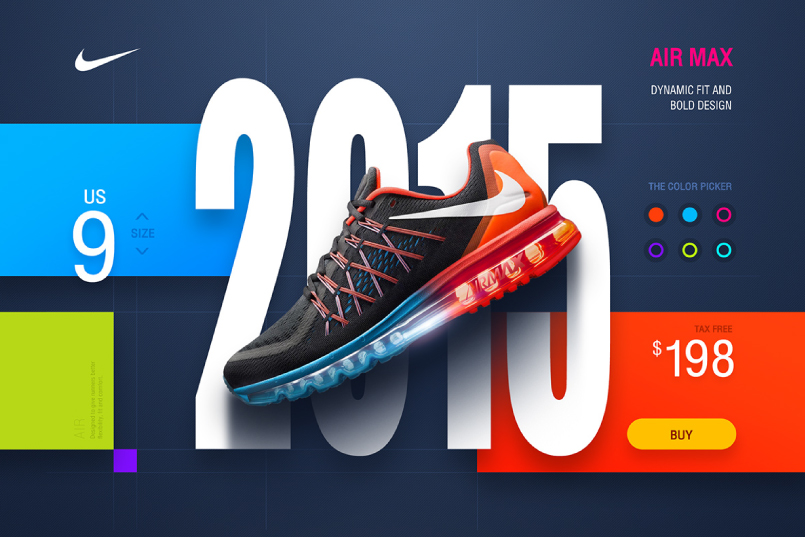
In addition to flat design, it combines shadows and gradients into the vector design, which adds depth without sacrificing the minimalist qualities.

2. 3D

Without a doubt, 3D has been one of the most innovative tools in graphic design in recent years. With the rapid evolution of modeling software, there are more possibilities to create incredibly realistic-looking textures and shapes.

Below, you will find the redesign of one of our top clients: NETGEAR Insight’s website, which showcases the entire business product line as a single ecosystem managed from the Insight platform.

3. Gradients

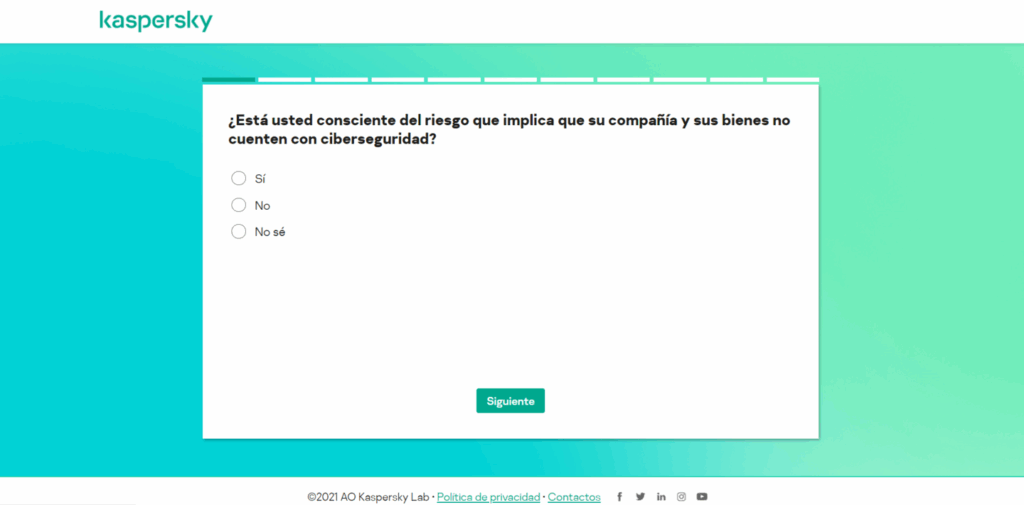
Instagram has been a pioneer in this movement for a few years. Creating a logo using gradients was unfathomable in the days of paper and print, but they are increasingly being included in the digital landscape. Today, this approach is frequently included in the branding of major corporations.

Another example: Security Assessment Online, which is a security level self-assessment landing page for companies, which aims to showcase the solutions that best fit the customer’s needs.

4. Cinemagraph

Created back in 2017, cinemagraphs combine static and moving images, which allows for more realism and provides a sensation that cannot be achieved with a simple image.

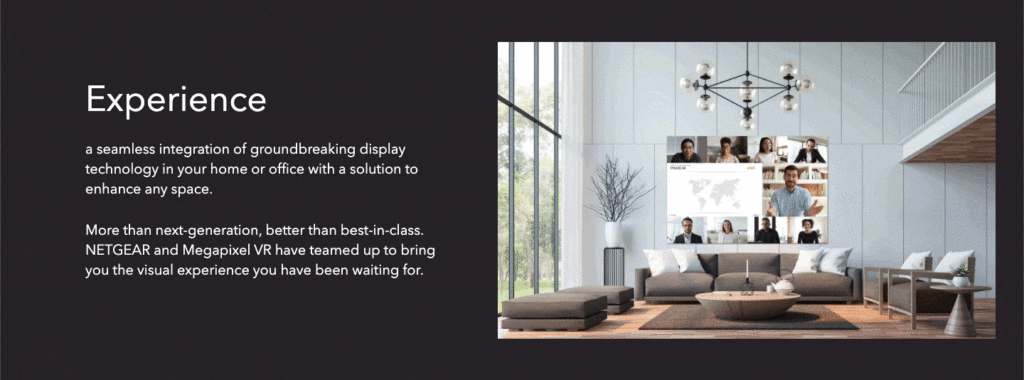
Another example of Cinemagraphs is from NETGEAR’s landing page with its partner MEGAPIXEL that shows how ProAV switches help deliver high-quality graphics on Full HD displays in high-end spaces.

5. Colors

Calm blues stand out, conveying peace and tranquility. In a chaotic world like ours, earth tones create a mental connection with the environment and generate pleasant emotions. Citrus hues are associated with freshness and optimism, while the contrast of black and white stands out more than the market’s oversaturated style of striking tones.

6. Retrofuturism

A popular style in 2021 that was created in the 1980s when many imagined various elements of the future and  was highly used, hence the name that references the future while still mentioning retro to acknowledge the past. It is recognized by the use of geometric forms and neon colors.

We hope you enjoyed this review of how companies must fully commit to the renewal of their products, services, brand image, marketing strategies, communication, and advertising content if they don’t want to lose the vote of the most influential generation: the millennials. The section on visuals discussed, when applied properly, will make your business plan successful within the demanding generation. At Isource Marketing, we have a highly qualified team of designers, illustrators, and creators ready to help you take your brand to the next level. Contact us now by clicking here: https://old.web.isource.us/#contact 

UI/UX Creative Artist
Passion: Digital Art

Once upon a time… Storytelling in B2B

Once upon a time… Storytelling in B2B

Share

AI

AR

Automation

B2B

blog

Content

Creativity

Customer

Design

Digital Marketing

Events

Hubspot

IA

Influencers

job

Lead Generation

marketing

Newsletter-en

PR

Sales

UI

Uncategorized

UX

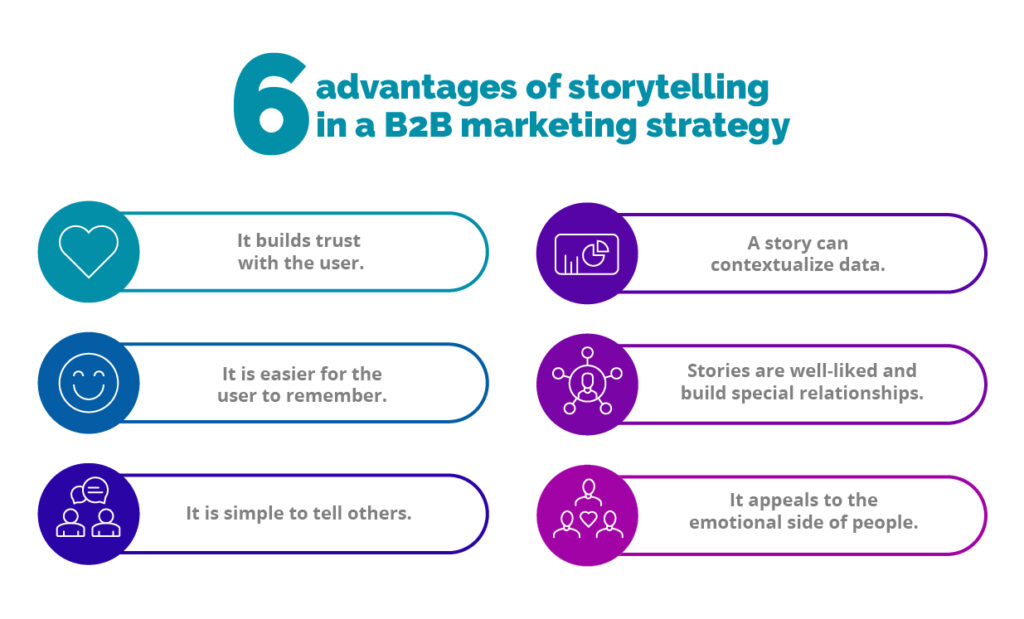
Who doesn’t like stories? We live in a world surrounded by them; in fact, our life is a story in itself. Companies have recognized the potential storytelling can have and are utilizing it to captivate their consumers and potential customers.  What exactly is it, and why does it hold so much opportunity in the Business-to-Business (B2B) world? The solutions to these questions may be found throughout this blog.

Storytelling, in its purest form, is the art of telling, creating, and adapting stories in situations with a beginning, middle, and end, with the objective of communicating messages from an emotional perspective. 

In content marketing, it is a powerful tool because it allows you to tell stories about a brand and its products, and while it has been used for many years by companies in the B2C sector, one may ask if it can make a positive impact in the B2B world, whose buyers tend to be driven by logic, evidence, and facts?  The answer is simple: absolutely, because it has been proven that even in the coldest industries, the transmission of emotional, compelling, and entertaining stories has unimaginable effects on target audiences.

In content marketing, storytelling is a powerful tool because it allows you to generate emotional, compelling and entertaining connections with your audiences.

To help you understand it a bit better, here are three examples of how three B2B companies used storytelling to get their message across from a human perspective:

  • Adobe: https://bit.ly/3rjErPk

    This hilarious Adobe Marketing Cloud ad conveys the value of the marketed product without boring the viewer at all. The video begins in an office with employees dealing with an unexplainable rise in orders and doing everything they can to complete them. The ad concludes with a touching and humorous visual that should not be missed!

  • Slack:https://bit.ly/3rt1ya6

    Slack collaborated with Sandwich Productions to create the 2014 film “So Yeah, We Tried Slack.” From the perspective of the production company’s employees, the video depicts the widespread acceptance of today’s favorite corporate communications platform. It’s a clever idea that’s worth watching and analyzing.
  • Hootsuite:https://bit.ly/3d3ZVHJ

    Hootsuite discusses why certain organizations aren’t successful on social media in this animated video in a clear and honest tone. It then outlines how it may assist companies in resolving the challenge
    •  

Did you like watching videos? Now, we’ll provide you with six tips on boosting your marketing campaigns using the art of storytelling.

1. Identify

It’s the first step in telling a story, and to do that you have to ask yourself:

Will the audience be familiar with what I want to tell?

What do they want to know?

What challenges would my readers face without my product/service?

When you understand who they are and why they require your product/service, you will be able to interpret how to convey a clear message that will enhance the engagement of your campaigns.

2. Try to have a structure

Good storytelling has a logical thread, i.e. a beginning, a middle, and an end, which makes the story easier to understand. Consider the following elements:

The protagonist: the customer.

The antagonist: the challenge.

The mission: the journey to overcome the challenge.

The execution: the solution to the challenge.

The climax: the result.

3. Be sure to listen

It’s critical to understand what people want to hear and where they want to hear it. Do some research to understand your audience’s challenges, which will lead you to the best platform for telling the story. For example, if you find that people love short videos, you may create and share animations with amusing characters on social media.

4. Harness the power of gamification

We like this one since we at Isource are specialists in the execution of immersive experiences and the positive outcomes they generate. By gamifying your storytelling, you provide your audiences unimaginable power with quizzes, games, puzzles, and countless other resources for them to learn what your product or service accomplishes, for example.


By gamifying storytelling, you give unimaginable power to your audiences.

5. Let your customers tell the story

It enables the customer to control the story and showcase his or her own experience, humanizing it through case studies, success stories, testimonials, etc.

6. Share stories with data

Numbers and narratives are both required. In fact, stories and statistics are strongly intertwined. One aids in the establishment of an emotional connection, while the other fosters trust in the realities of the situation.

The storytelling field has no boundaries, and we are confident that your company has a variety of elements to create effective and empathetic stories and, as a result, communication pieces that captivate your audiences. And we at Isource Marketing are here to help you since we have designers and copywriters that have been trained to do so. Interested in contacting us or scheduling a call? Find us here: https://old.web.isource.us/#contact We look forward to meeting you!

PR & Media Coordinator
Passion: Arts, Nature