
Responsive Menu
Add more content here...

3 Things You Must Change in B2B Marketing to Increase Sales in 2026

This is how 2026 will work: Predictions and Strategies for B2B Marketing

Share

AI

AR

Automation

B2B

blog

Content

Creativity

Customer

Design

Digital Marketing

Events

Hubspot

IA

Influencers

job

Lead Generation

marketing

Newsletter-en

PR

Sales

UI

Uncategorized

UX

2026 will be the year when brands that want to stay competitive must adopt smarter strategies powered by data, AI, automation, and a real customer-first mindset.

If you thought automation and AI were just “trends,” 2026 will prove they are now requirements for consistent, measurable growth with strategic vision, adaptation, and continuous implementation.

In this blog, we share our predictions for B2B tech marketing in 2026, along with practical strategies to help your brand not only survive but lead. #NoBS

Operational and Governed AI: From hype to a real Growth Engine

We can describe 2025 as the “baby boom” of generative AI: plenty of experimentation, some wins, and a whole lot of testing. In 2026, everything changes. AI stops being a pilot initiative and becomes critical infrastructure within the B2B Go-to-Market (GTM) ecosystem.

Companies that already adopted AI in their processes are reporting real improvements in efficiency, reduced repetitive work, and higher productivity. But with great power comes great responsibility. Analysts warn that unmanaged AI could cost B2B companies billions in 2026 if quality, ethics, and human oversight policies are not implemented.

What to do now

  • Apply a “governed AI” approach: define quality controls, human review steps, and clear guidelines for sensitive data.

  • Measure ROI from day one: set clear KPIs such as time saved, conversion rates, and operational efficiency to justify investment and adjust as needed.

How ISM helps you: We evaluate your current stack, identify relevant use cases, design your AI architecture powered by data, and configure automated workflows ready to scale.

AEO + GEO + SEO + Data First = Reinvented Visibility

Since 2025, it’s been clear that traditional SEO is no longer enough. With chatbots, answer engines, and conversational tools, the new standard is AEO (Answer Engine Optimization), an evolution of SEO that blends intent, data, context, and algorithms.

On top of that, a new layer has emerged: GEO (Generative Engine Optimization), focused on how generative models like ChatGPT, Gemini, or Perplexity create content, recommend brands, and structure information. It’s no longer just about showing up; it’s about how AI interprets you, describes you, and includes you in its answers.

What’s changing?

  • B2B users want answers, not pages: they expect instant clarity, expert content, and useful data.

  • Generative engines no longer “read” your website. They reinterpret it, generate summaries, compare solutions, and recommend providers.

  • The semantic quality of your content (conceptual clarity and technical accuracy) determines whether AI considers you a reliable source.

  • First-party data is no longer optional. Without it, you lose personalization, attribution, and efficiency.

What should your 2026 strategy look like?

  • Prioritize answer-driven content: clear guides, technical FAQs, use cases, and actionable documentation.

  • Create “AI-ready” content: organize your text with a clear structure, use concrete concepts like technology or product names, provide brief definitions for technical terms, and maintain precision in your data. This helps AI models understand your content and use it as a reference.

  • Optimize for generative engines (GEO): publish verifiable data, benchmarks, definitions, and technical content that AI can draw from.

  • Activate your own data: centralize and automate your CRM, strengthen your consent management to protect personal data, and review each customer’s history and interaction signals. Real personalization comes from your own data, not from third parties.

How ISM Helps You: Through Digital Machine, we audit your content architecture and data, lead the redesign and content strategies for AEO/GEO/SEO, and define an implementation plan built on data-first and privacy-first principles.

RevOps, Dynamic ABM, and unified processes: The new commercial muscle

2026 demands fully aligned teams. Marketing, sales, service, and product can no longer operate in silos. RevOps (Revenue Operations) becomes essential for orchestrating data, processes, and technology in one unified flow.

What We’ll See

  • Teams aligned on objectives, tools, and data: MQLs, SQLs, pipeline, and opportunities all in one place.
  • ABM (Account-Based Marketing) powered by real intent data, automation, and large-scale personalization for key accounts.
  • Nonlinear buyer journeys that reflect real B2B behavior, with many touchpoints such as content, demos, events, AI agents, and support interactions.

How to Implement It

  • Establish a “single source of truth”: one CRM, one shared dashboard, and aligned processes.
  • Prioritize accounts with real signals (intent, behavior, fit). Activate ABM campaigns with personalized outreach and continuous nurture.
  • Implement workflows that connect marketing, sales, and customer service from end to end.

How ISM Helps You: Through  Pipeline Factory, we define your RevOps structure, design your tech stack (CRM, automation, tracking), and create playbooks that strengthen nurturing and retention.

Human first in an AI-First world: Experience, Trust, and Community

Even though AI dominates the technology landscape, the human factor will be more valuable than ever in 2026. B2B buyers want trust, transparency, and real relationships. That is why leading brands will combine AI with human touch through community, events, experiences, and authentic content.

How to Make It Happen

  • Create authentic content: real case studies, testimonials, research, and deep technical insights. No more generic marketing.
  • Organize events, webinars, and live conversations because AI can automate, but trust is built by people.
  • Support buyers with valuable educational content such as white papers, guides, and tools, while keeping processes transparent.

How ISM Helps You: Through Brand Experience, we develop events that blend technical content with community-building moments, combining AI to streamline production with human expertise to ensure relevant and memorable experiences.

Conclusion

2026 will reward brands that dare to evolve: those that combine technology with authenticity, data with empathy, and automation with real human experiences.

Growth will come to companies that understand that AI does not replace brands; it amplifies their impact.

Continuous innovation and adaptation will be the key for your business to fully leverage B2B marketing in 2026. At Isource, we help you turn these predictions into a real, actionable, and measurable plan.

We want your brand to find the perfect balance between technology that accelerates, strategies that connect, and execution that delivers results. Only #NoBS marketing.


Loop Marketing: The key strategy for your success in 2026

Loop Marketing: The key strategy for your success in 2026

Share

AI

AR

Automation

B2B

blog

Content

Creativity

Customer

Design

Digital Marketing

Events

Hubspot

IA

Influencers

job

Lead Generation

marketing

Newsletter-en

PR

Sales

UI

Uncategorized

UX

Marketing is no longer linear. Funnels have fallen short in a world where customers expect continuous, personalized, and connected experiences. Over time, different models have guided how brands attract customers, but one has long dominated: inbound marketing, with its classic approach of attract, convert, and close. However, that model no longer reflects today’s market reality.

That’s why HubSpot introduced Loop Marketing, a new model of continuous growth designed to replace the traditional funnel by integrating marketing, sales, and service into a single, dynamic cycle powered by artificial intelligence.

And if you’re planning your strategy for 2026, this is the approach your brand needs to stay in constant motion. In this blog, we’ll explain how to apply Loop Marketing at every stage of the process to transform your B2B strategy and achieve sustainable, scalable growth in the year ahead.

What is Loop Marketing and why is it a game changer?

Marketing evolution is no longer optional; it’s essential to stay competitive. Today’s customers no longer move in a straight line: they revisit, research, compare, and expect personalized experiences even in the B2B world.

Faced with this new behavior, companies must adopt smarter and more adaptive strategies. This is where HubSpot’s Loop Marketing comes into play, an approach that combines artificial intelligence and real-time data to replace the funnel with a continuous cycle that optimizes, personalizes, and strengthens every interaction through the power of AI.


Unlike the funnel, which ends at the sale, the Loop keeps the momentum going:

  • Satisfied customers generate new opportunities.

  • Every interaction feeds new data back into the system.

  • And AI optimizes each step to repeat and scale success.

This model is built on three fundamental principles:

  1. Data-driven: Every action generates insights that feed the loop. Decisions are no longer based on assumptions but on real-time data.

  2. AI-connected: Artificial intelligence personalizes, automates, and scales each interaction with customers, creating efficiency without losing the human touch.

  3. Focused on continuous growth: Marketing, sales, and service no longer work in silos. Everything is synchronized to deliver seamless, consistent, and impactful experiences.

The result: a system that grows with every customer, improving acquisition, retention, and advocacy at every turn.

The phases of Loop Marketing and how they work

Loop Marketing allows brands to adapt in real time to market needs and build long-lasting customer relationships. This method is structured into four essential phases, powered by AI and advanced data analytics, ensuring that the cycle constantly evolves and improves.

1. Express

The goal of this first phase is to accurately identify your ideal customer profile (ICP). Through predictive analytics tools, AI helps segment and better understand customers by detecting behavioral patterns and real needs.

This sets a solid foundation for brand strategy and positioning, defining clear, high-potential audiences and avoiding wasted resources on unqualified leads.

2. Tailor

Personalization goes far beyond basic data such as name or industry. It’s about integrating current and relevant information about each prospect, including recent company news, events they attend, product launches, or any other detail that reflects their reality and immediate needs, to create messages that truly fit their specific context.

AI analyzes behaviors, interactions, and intent signals, allowing campaigns to adapt with highly relevant and timely content. This results in more authentic communication, stronger engagement, and a deeper brand-customer relationship.

3. Amplify

Once the message is optimized and segmented, it’s time to amplify the reach. This phase focuses on deploying multichannel campaigns that engage prospects across all digital touchpoints.

Companies leverage tools like Breeze Agents (HubSpot’s virtual assistants powered by AI) that interact with prospects in real time, automatically qualify leads, and generate opportunities for the sales team. Automation and continuous optimization allow brands to scale efficiently and maintain a consistent presence.

4. Evolve

Sustained growth is only possible when every loop cycle is analyzed and refined. In this phase, AI plays a key role by detecting patterns and recommending optimizations based on performance data.

This ensures that the loop remains active and evolving, making each iteration more effective than the last. In this way, Loop Marketing becomes a living system: one that learns, adapts, and maximizes long-term results.

How Loop Marketing prepares brands for the challenges of 2026

Loop Marketing is set to become the key tool for B2B brands to stay competitive in an environment that changes every day. Its continuous structure and the use of artificial intelligence allow companies to adapt to new consumer behaviors, anticipate trends, and build stronger, longer-lasting relationships with their customers.

Here are some of its main advantages:

  • Advanced personalization: Campaigns adapt in real time based on customer data and needs, increasing relevance and impact.

  • Long-lasting relationships: The cycle doesn’t end with the sale; it remains active to foster loyalty and retention.

  • Data-driven decisions: Real-time analysis drives more precise and effective strategies.

  • Smart scalability: Thanks to automation, brands can grow sustainably, optimizing both resources and results.

Looking ahead to 2026, companies that adopt this approach in their campaigns will not only optimize performance but also build a sustainable growth system. In a market that never stops, keeping the loop in motion will be the key to staying relevant.

In Summary

This methodology closes the gap between marketing, sales, and service, ensuring that every action is coherent, connected, and customer-centered, something essential to remain competitive in today’s B2B ecosystem.

Loop Marketing is an innovative strategy that transforms how companies face modern marketing challenges. Adapting, leveraging artificial intelligence, and maintaining a constant cycle of improvement have become the keys to building long-term relationships, improving efficiency, and achieving sustainable growth. We are a HubSpot Partner, and we help you turn that loop into the engine of your growth heading into 2026.

Ready to move toward smarter, more connected, and ever-growing marketing? 

At Isource, as a HubSpot Partner, we help you implement Loop Marketing so your brand keeps moving forward, connecting every part of your business and preparing you for the challenges ahead.

AI Agents: What they are, how they work, and why your Marketing Team needs one

AI Agents: What they are, how they work, and why your Marketing Team needs one

Share

AI

AR

Automation

B2B

blog

Content

Creativity

Customer

Design

Digital Marketing

Events

Hubspot

IA

Influencers

job

Lead Generation

marketing

Newsletter-en

PR

Sales

UI

Uncategorized

UX

Artificial intelligence is no longer a future promise: it’s a real tool that’s transforming how marketing teams operate. But beyond chatbots and simple automations, a new player has taken center stage: AI agents.

In this article, you’ll discover what an AI agent is, how it differs from the tools you already know, and why it’s become a key asset for scaling your B2B strategy without losing control or personalization.

Why is Everyone Talking About AI Agents Now?

In recent years, artificial intelligence has gone from being a novelty to becoming a part of the daily routine in marketing: automating processes, reducing repetitive tasks, and improving efficiency. However, there’s a new tool ready to take the next step: AI agents.

These intelligent systems don’t just execute commands or answer questions. They learn, make decisions, connect to your platforms, and work autonomously to scale marketing, sales, and customer service processes—all while maintaining a human touch.

And the best part: you don’t need to be a multinational corporation to access this technology. There are now tools that have democratized the creation of AI agents. Today, any B2B team can have one up and running if they know how and why to implement it.

What is an AI Agent and What Makes It So Powerful?

An AI agent is an intelligent system that not only understands natural language but also reasons, makes decisions, and performs actions on behalf of your team. Unlike a chatbot or traditional automation, an AI agent can operate autonomously, with access to tools, memory, and well-defined business rules.

What differentiates it from a chatbot or an automation?

  • Automation: Follows fixed rules and always performs the same task. E.g., when someone fills out a form, it sends an email.

  • AI Assistant: Responds to queries but requires direct instructions. E.g., “Write a welcome email.”

  • AI Agent: Acts independently. It analyzes data, makes decisions, and executes actions as part of a broader process.

How does it work?

  • Understands natural language: Interprets questions or commands as a human would.
  • Has memory: Remembers past interactions so it doesn’t start from scratch every time.
  • Connects to your tools: Integrates with your CRM, campaign systems, knowledge base, communication channels (such as WhatsApp, social media, and email).

That’s why, more than just automation, it’s an active team member, working 24/7 without errors, breaks, and with the ability to adapt to results.

How to Determine Which Type of AI Agent Your Business Needs

  • Identifying which type of AI agent you need for your business is crucial to ensure that it’s truly aligned with your marketing, sales, or customer service goals. Below are some tips to help you decide which one is the right fit based on your team’s specific needs.

    1. Determine which area of your business would benefit the most from automation.

    • Marketing: If you want to improve content generation, automate campaign creation, or personalize communication with your leads, a content marketing AI agent is the way to go.
    • Sales: If you need an agent that qualifies leads, follows up, and assigns sales tasks, then a prospecting agent is what your team needs.
    • Customer Service: If you want to provide real-time support, answer frequently asked questions, and offer a personalized experience, a customer service agent is the tool you’re looking for.

    2. Assess the level of personalization required

    Does your business need an agent that simply executes repetitive, fixed tasks or one that can learn, adapt, and offer personalized responses based on customer interactions? If it’s the latter, you’ll need an AI agent with machine learning capabilities.

    3. Consider integration with your current tools

    Make sure that the AI agent you choose can integrate with the tools you’re already using, such as your CRM, campaign platform, database, or customer service system. Additionally, it’s essential that your agent is powered by a robust AI model, such as ChatGPT or Gemini, allowing it to provide accurate responses and make informed decisions. Solutions like HubSpot, and N8N are excellent for this integration ensuring smooth connections between all your platforms. 

    4. Think about the level of autonomy you desire

    If you prefer an agent that simply executes specific tasks under direct commands, an AI assistant might be enough. However, if you’re looking for a fully autonomous agent that can make decisions and handle complex processes continuously, then you need an advanced AI agent.

Interested in learning how HubSpot can help you create AI agents native to your CRM? Read our previous blog and discover everything you can do with HubSpot + AI 

Key Benefits and Recommendations Before Implementing an AI Agent

Using an AI agent is not just about having an intelligent tool but knowing how to harness its true potential to optimize your processes and achieve more ambitious business goals. Below are the key benefits of adopting an AI agent and recommendations to ensure its successful implementation.

Increased Efficiency:

Automate repetitive tasks, freeing up your team to focus on higher-impact activities, while operating 24/7 without errors.

When integrated with your CRM, AI agents can personalize the customer experience based on their history, without overloading your team.

AI agents learn from each interaction and continually improve in marketing, sales, and customer service.

Reduces manual intervention, optimizing time and operational resources.


As your business grows, the agent can handle more volume without the need to hire additional staff.


Recommendations Before Implementing an AI Agent

  • Define un objetivo claro: Establece un objetivo específico para guiar la implementación y selección de la herramienta.

  • Comienza con tareas simples: Empieza con tareas repetitivas como respuestas automáticas o calificación de leads, y avanza gradualmente.

  • Planifica la integración: Garantiza que el agente se integre adecuadamente no solo con tu CRM, sino también con tus fuentes de datos, canales de comunicación y otras plataformas clave que ya usas, como HubSpot.

  • Supervisión humana: Aunque autónomos, los agentes deben ser supervisados por humanos para asegurar resultados óptimos.

  • Mide y ajusta regularmente: Monitoriza su rendimiento y ajusta basándote en métricas como la tasa de conversión y la satisfacción del cliente.

¿Quieres aprender a implementar un agente de IA en tu negocio y sacar el máximo provecho de HubSpot?
Agenda aquí una consultoría gratuita con nosotros y empieza a optimizar tus procesos con IA. 

In Summary

If you’re ready to take the next step toward intelligent automation and personalization, a custom-built AI agent can transform your business. At ISM, we can help you create an AI agent that works 24/7, optimizing your marketing, sales, and customer service processes.

Are you ready to implement your own AI agent and scale your business without losing personalization?

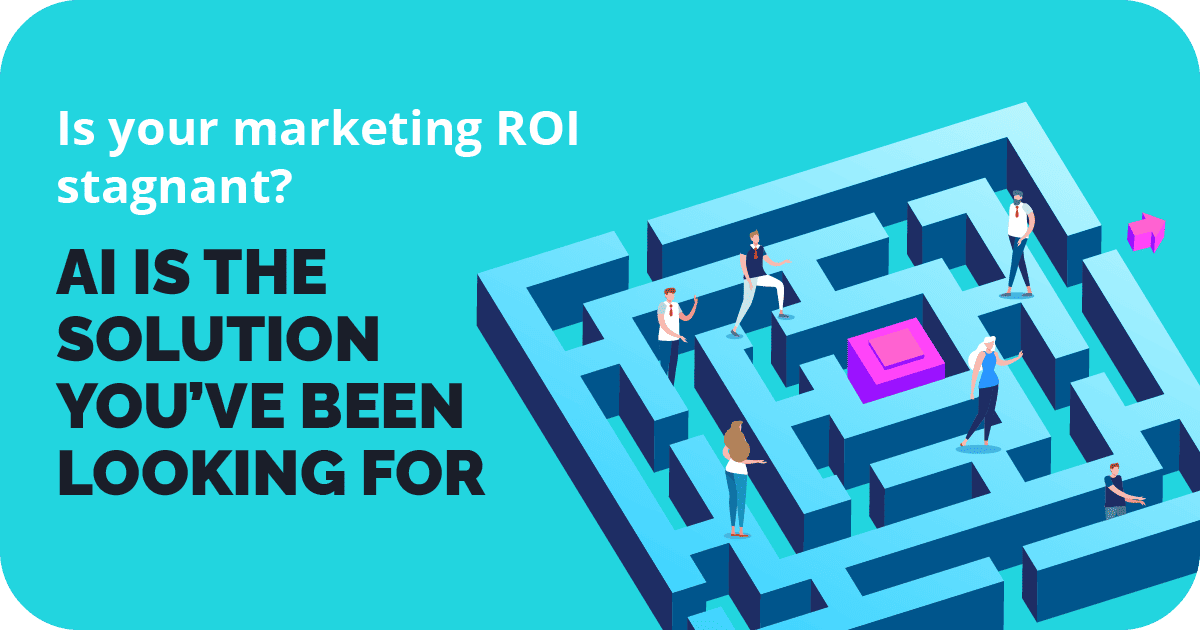
Is your marketing ROI stagnant? AI is the solution You’ve been looking for

Is your marketing ROI stagnant? AI is the solution You’ve been looking for

Share

AI

AR

Automation

B2B

blog

Content

Creativity

Customer

Design

Digital Marketing

Events

Hubspot

IA

Influencers

job

Lead Generation

marketing

Newsletter-en

PR

Sales

UI

Uncategorized

UX

If your marketing team is investing in digital strategies but your return on investment (ROI) isn’t growing at the expected pace, you’re not alone. Many tech companies face this challenge—even with paid campaigns, automation, and optimized content in place.

The reason is simple: traditional marketing is no longer enough. Personalization, real-time responsiveness, and the ability to process large volumes of data are now essential to drive profitability.

This is where artificial intelligence (AI) comes into play. In this blog, we’ll explore how AI is boosting marketing ROI, the key trends shaping the future, and the steps you can take to implement it effectively in your strategy.

Artificial Intelligence in Marketing: The Key to Higher ROI

Artificial intelligence in digital marketing is transforming how tech companies design, execute, and optimize their strategies. With its ability to automate workflows, analyze data in real time, and personalize every customer touchpoint, AI has become a critical ally for driving acquisition, conversion, and long-term loyalty.

By 2025, AI’s impact is no longer a futuristic projection—it’s a measurable and proven reality. This is backed by HubSpot’s recent report Is AI Really Driving ROI for Marketing Teams in 2025?, based on a survey of 700 marketing professionals across Latin America and Spain.

The numbers speak for themselves:

Say AI has improved their marketing ROI.

0 %

Report a direct increase in revenue due to AI implementation.

0 %

Have reduced operational costs through more efficient processes.

0 %

Have improved both content quality and team productivity.

0 %

For tech companies and startups, this represents a unique opportunity to accelerate execution and make smarter, data-driven decisions in real time. AI is no longer optional—it’s the new standard for scaling marketing results with intelligence.

How Is AI Impacting Digital Marketing?

Tech companies are leveraging AI across three key areas to boost profitability and optimize their marketing strategies.

1. AI for Automation and Operational Efficiency

AI-driven marketing automation is one of the fastest-growing areas. In fact, 49.2% of marketers already use chatbots and virtual assistants to enhance user experience and accelerate lead conversion.


Many platforms have integrated AI into their CRM systems to streamline processes such as:


  • Automated audience segmentation for more precise targeting.

  • Email and workflow automation to improve conversion rates.

  • Virtual assistants that handle real-time inquiries and qualify prospects.


With tools like HubSpot Content Assistant and ChatSpot, marketing teams can generate SEO-optimized content, manage customer interactions, and launch campaigns—without manual intervention.

2. AI for Predictive Analysis and Campaign Optimization

In 2025, digital advertising is no longer about simply launching ads—it’s about analyzing real-time data to maximize ROI.

47.5% of marketers already use AI to predict customer behavior and adjust their campaigns across platforms like Google Ads, Meta, and LinkedIn.

With solutions like HubSpot Customer Journey Analytics, companies can:

  • Forecast buying trends and tailor their strategies accordingly.

  • Optimize ad spend in real time, maximizing every marketing dollar.

  • Eliminate underperforming audiences to cut campaign costs.

The result? Greater efficiency, higher-quality leads, and stronger conversions.

3. AI-Powered Content Personalization in Digital Marketing

AI-generated content is another major trend gaining traction. 41.3% of marketers are already using AI tools to create tailored content for different audience segments.

But it’s not just about producing more—it’s about creating highly personalized content based on user behavior. With AI, you can:


  • Generate SEO-optimized blog posts to drive organic traffic.

  • Automate personalized ad copy and email sequences.

  • Create AI-powered visual content, cutting down design and production costs.


Platforms like HubSpot AI Content Generator empower marketing teams to deliver high-impact content without sacrificing quality or strategy.

Challenges and Opportunities of AI in Marketing

While AI in marketing is having a positive impact on ROI, many companies still face implementation challenges.

According to HubSpot’s report:

  • 50% of marketers are not leveraging AI’s full potential due to lack of training.

  • 46.2% cite a shortage of technical knowledge as a barrier.

  • 38.3% experience internal resistance to change.


Despite these challenges, the outlook is promising:
80.3% of marketing professionals plan to increase their use of AI in 2025.

So, what’s on the horizon?

  • Real-time conversion optimization

  • Hyper-segmented personalization at scale

  • Advanced automation powered by AI agents


The strategic adoption of these technologies won’t just improve results—it will determine who leads and who gets left behind in the tech-driven market.

Integrating AI into your marketing strategy goes beyond task automation—it’s about delivering measurable, sustainable results. To achieve that, you must focus on tracking impact and optimizing in real time.

Define Your Key Metrics

Start by identifying clear indicators that help evaluate the ROI of your AI-driven initiatives:

  • Conversion rate

  • Customer acquisition cost (CAC)

  • Customer lifetime value (CLTV)

These metrics reveal how effective your personalized and automated campaigns truly are.

Optimize Continuously

AI enables real-time optimization throughout your campaigns:

  • Reallocate budgets toward high-performing channels.

  • Personalize messages based on user behavior and intent.

Enhance segmentation using up-to-date and predictive data.

How to Implement AI in Your Strategy to Drive ROI

Companies Already Seeing Results

Linkedin

Increased conversions with AI-personalized ad campaigns.

Deloitte

Achieved a 74% boost in customer satisfaction.

Amazon

Scaled sales through dynamic recommendations and pricing.

Implementing AI strategically doesn’t have to be complex—with the right tools and a data-driven approach, it’s entirely achievable.

Key Takeaways

AI is no longer just a trend—it’s a strategic tool, unlocking new opportunities to improve marketing ROI.
Teams that implement AI effectively are seeing higher conversion rates, lower operational costs, and highly personalized campaigns. If your ROI is stagnant, now you know how to reignite it through AI. This is the moment to evolve your strategy.

At Isource, as certified HubSpot partners, we help tech companies integrate AI into their marketing with tools that enable faster, smarter, and data-driven decision-making.

Contact us today and discover how to build an AI-powered marketing strategy that maximizes your ROI.
Comprehensive Guide: Advanced Inbound Marketing Strategies for the Technology Sector

Comprehensive Guide: Advanced Inbound Marketing Strategies for the Technology Sector

Share

AI

AR

Automation

B2B

blog

Content

Creativity

Customer

Design

Digital Marketing

Events

Hubspot

IA

Influencers

job

Lead Generation

marketing

Newsletter-en

PR

Sales

UI

Uncategorized

UX

The technology market is one of the most competitive and fast-paced industries, where constant innovation demands much more than traditional advertisements or intrusive techniques to attract and retain customers. In this landscape, companies need strategies that highlight their value and enable them to build strong, long-lasting relationships.

Inbound marketing is the answer—a methodology designed to organically attract, convert, and retain customers by offering relevant technical content and personalized experiences.

In this comprehensive guide, you will learn how to implement advanced inbound marketing strategies tailored specifically for the technology sector, covering both B2B and B2C markets. These strategies will help you position yourself as an industry leader, increase conversions, and build lasting customer loyalty.

What Is Inbound Marketing?

Inbound marketing is a methodology focused on attracting customers through valuable content, avoiding the interruptions caused by intrusive advertisements commonly used in traditional marketing tactics. In the technology sector, where purchasing decisions are often complex, this strategy aims to:

Educate
the customer:

Provide relevant technical content to address common questions and challenges.

Strengthen
trust:

Position companies as industry leaders and trusted sources of expertise.

Optimize
the buying cycle:

Simplify decision-making processes in competitive markets.

Whether you operate in the B2B market, where long-term relationships are essential, or the B2C market, where usability and innovation take precedence, inbound marketing offers an unparalleled competitive advantage.

Next, we will explore a step-by-step guide to advanced strategies for excelling in the technology sector, incorporating the latest 2025 trends and recommended tools and platforms for each stage of the process.

1. Understanding the Tech Customer in the Age of AI

In the technology sector, customers seek specific solutions that directly address their needs. Artificial intelligence (AI) enables businesses to analyze vast amounts of data to gain deeper insights into their audience and anticipate their preferences, creating hyper-personalized experiences that resonate on an emotional level. The ability to analyze data in real time allows brands to tailor their messaging and products to the individual preferences of each user.

How to Leverage AI to Understand Your Customers:

  • Advanced Segmentation: Tools like HubSpot CRM offer advanced segmentation and content personalization features, enabling businesses to create unique experiences for each customer.

  • Predictive Analytics: Platforms such as Predictive Analytics World help forecast which prospects have the highest likelihood of conversion.

  • Intelligent Personalization: HubSpot Content Hub, powered by AI, enables businesses to optimize campaigns, create, and deliver personalized content based on user behavior, ensuring relevant information and offers reach the right audience at the right time.

By integrating AI into your inbound marketing strategy, you can not only enhance customer satisfaction but also increase conversion rates by delivering highly relevant content and offers at the right time.

2. Advanced Content for a Demanding Audience

Today’s customers seek innovative products and seamless experiences that help them make informed decisions. This is where automation of the customer journey becomes a key ally in ensuring that every interaction is timely and relevant.

Automation allows businesses to manage the entire customer journey, from the first point of contact to post-sales service, saving time and enhancing the user experience. Today, it is a fundamental aspect of any marketing strategy, enabling:

  • Nurture leads: Send personalized emails with valuable information based on customer interests.
  • Segment audiences: Adapt messaging according to past behaviors, such as clicks, downloads, or website visits.
  • Maintain continuous communication: Deliver relevant content at the right moment without manual intervention.

While content remains a pillar of inbound marketing, its effectiveness now depends on how it is integrated into an automated customer journey. Key approaches include:

  • Technical content tailored to the needs of each segment.
  • Automated tutorials or guides delivered at crucial moments of the journey.
  • Interactive resources that engage customers and encourage participation.

By redefining the role of content within the customer journey, technology companies can ensure that every interaction adds value, fosters trust, and strengthens relationships with their audiences.

3. Integrating Technical SEO, Voice Search, and Chatbots

In today’s digital landscape, searches have become more natural and conversation-driven, especially with the rise of virtual assistants like Alexa, Google Assistant, and Siri. This trend requires companies to optimize their content for more specific queries, adapting to how users phrase questions in real time. To achieve this, businesses must focus on three key areas:

  • Technical SEO: Ensuring a website is fast, accessible, and easily interpretable by both users and search engines is fundamental for ranking and visibility.

  • Chatbots: Powered by AI on websites and applications, they better understand user queries, provide more precise responses, personalize interactions, and collect key data to optimize SEO strategies by identifying new relevant topics for high-value content creation.

  • Voice Search Optimization: With its increasing popularity, web content must be structured to answer specific, direct questions using a conversational tone that aligns with user intent.

By combining technical SEO, conversational search optimization, and strategic chatbot implementation, technology companies can enhance their online visibility while delivering more engaging and efficient user experiences.

4. Intelligent Automation and Marketing Workflows

Automation is an essential tool in inbound marketing, particularly in the technology sector, where buying cycles tend to be long and complex. Beyond reducing operational workload, automation enables businesses to personalize every interaction, ensuring that customers receive relevant and timely information throughout their journey.

To maximize the impact of automation, companies should implement strategies that streamline processes, improve efficiency, and enhance customer experience:

  • Personalized workflows: Use HubSpot to automate email sends and create workflows triggered by specific actions, such as downloading an e-book or visiting a webpage, ensuring that each customer receives relevant content at the right time.

  • Action-triggered campaigns: Set up automated notifications that respond to specific user actions, such as downloading an e-book.

  • CRM integration: Platforms like Zapier connect multiple systems to synchronize data and optimize workflows.

By leveraging automation, businesses can ensure that their prospects receive the right content at the right time. For instance, if a user downloads a whitepaper on cybersecurity infrastructure, the system can automatically send them a follow-up email with related case studies, followed by a personalized invitation to a webinar. This approach not only guides the customer through the decision-making process but also saves time for the marketing team, allowing them to focus on higher-value activities.

5. Social Proof in the Technology Ecosystem

Purchasing decisions are often influenced by trust and perceived value, making social proof a critical component of any marketing strategy. Potential customers need tangible evidence that the solutions offered have been effective for other users or businesses.

How to Implement Social Proof:

  • Publish case studies: Share real success stories demonstrating how your solutions have benefited other companies.

  • Encourage User-Generated Content (UGC): Motivate customers to share their experiences on social media, providing authentic endorsements of your brand.

  • Highlight certifications and awards: Strengthen your credibility by showcasing industry recognitions and achievements.

This approach accelerates the decision-making process by eliminating doubts and uncertainties, while also serving as a growth engine for your business—leveraging positive customer experiences to build trust and attract new prospects.

6. Real-Time Data Analysis

Analyzing results using data analytics tools is essential for measuring campaign performance and making strategic adjustments as needed. The ability to monitor KPIs in real time enables companies to quickly identify areas for improvement, optimize marketing efforts on the spot, and refine their strategies for maximum impact.

A data-driven approach supports informed decision-making for future marketing investments. To facilitate data collection and analysis, we recommend the following tools:

  • Google Analytics 4 (GA4): Provides up-to-date insights into user behavior on your website, helping to optimize content and user experience.

  • Hotjar: Uses heatmaps to analyze how visitors interact with your content, revealing potential areas for improvement.

  • Tableau: A powerful data visualization tool that allows for in-depth data exploration, making it easier to identify key trends.

  • Klipfolio: A dashboard platform that enables real-time KPI monitoring, ensuring effective tracking and performance assessment.

By leveraging these tools, businesses can gain valuable real-time insights, allowing them to continuously refine their marketing efforts and maximize results.

Conclusion: Innovation and Adaptability as Keys to Success

Inbound marketing is no longer just a methodology—it is a strategy driven by innovation, technology, and data. By implementing these advanced inbound marketing strategies in your industry, you can differentiate your brand, engage your audience, and achieve your goals effectively.

Are you ready to transform your marketing strategy? At Isource Marketing, we combine innovation and expertise to help you implement the best strategies.

What Digital Advertising Will Bring in 2025: Trends and Tools You Need to Know

What Digital Advertising Will Bring in 2025: Trends and Tools You Need to Know

Share

AI

AR

Automation

B2B

blog

Content

Creativity

Customer

Design

Digital Marketing

Events

Hubspot

IA

Influencers

job

Lead Generation

marketing

Newsletter-en

PR

Sales

UI

Uncategorized

UX

Digital marketing is evolving rapidly, redefining how brands connect with their audiences. By 2025, digital advertising will be shaped by significant changes driven by technological advancements and increasing consumer expectations. In this blog, we explore the most relevant trends in digital advertising, the tools that will lead the market, and the key strategies businesses must adopt to remain competitive and stand out in an increasingly dynamic environment.

Key Channels That Will Dominate Digital Advertising in 2025

2025 brings an advertising landscape where innovation and adaptability will be key to success. The channels that brands choose to connect with their audiences will play a decisive role in the effectiveness of their strategies. The coming year will see advertising media defined by technological advancements, with a stronger focus on personalization and the growing demand for dynamic, interactive experiences.

In an increasingly competitive digital market, identifying and prioritizing the channels that generate the greatest impact, reach, and return on investment will be crucial. From social media leading in engagement, to the consolidation of video and immersive experiences, the options are more versatile than ever.

Here, we explore the key channels that will dominate digital advertising in 2025. These channels will be at the core of the most successful advertising strategies and will provide a unique opportunity for brands to strengthen their presence and connection with audiences.

Social Media

Platforms like TikTok, Instagram, LinkedIn, Facebook, X (formerly Twitter), and Reddit will be essential in advertising strategies due to their massive reach and advanced segmentation capabilities to attract new audiences. Reddit, for example, is an ideal space for technology professionals and experts looking to reach a tech-savvy audience.

It is estimated that by 2025, global spending on social media advertising will reach $226 billion, solidifying its position as one of the most relevant advertising channels. This will be possible as long as creative approaches, innovative narratives, and platform-specific strategies are employed.

Audiovisual Content

Video will remain the format of choice for audiences, led by platforms such as YouTube, Twitch, and streaming services like Netflix. Brands are increasingly blending various video formats, from TV ads to content on these platforms, adopting new approaches to tell impactful visual stories through immersive and interactive formats.

Global spending on digital content advertising is expected to reach $91 billion by 2025, driven by the high consumption of streaming and the preference for dynamic content.

Programmatic Advertising

The automated buying of ad space, driven by channels like Google Display Network, The Trade Desk, and Amazon DSP, will remain a dominant trend. This method allows for real-time campaign optimization, delivering personalized ads based on accurate data.

It is estimated that global spending on programmatic advertising will reach $150 billion by 2025, reflecting its growing importance in the advertising market.

Mobile Devices

With the widespread use of smartphones, mobile ads have become essential. Platforms like Google Ads (app campaigns), Apple Search Ads, and AdMob allow brands to capitalize on the time users spend on their devices. In-app advertising, push notifications, and mobile-adapted formats are key to capturing on-the-go audiences.

By 2025, it is projected that 75% of digital advertising spend will come from mobile devices, highlighting the importance of mobile marketing in advertising strategies.

Search Engine Marketing (SEM)

Search Engine Marketing (SEM) remains an essential strategy for reaching active audiences who are searching for specific products or services. Platforms like Google Ads and Microsoft Advertising allow brands to appear in top search results with targeted ads, maximizing visibility and attracting quality traffic.

Spending on search ads is expected to reach $120 billion by 2025, reflecting its importance as a key channel for generating conversions and capturing leads.

Audio Streaming Platforms

The growth of platforms like Spotify, Amazon Music, and Apple Podcasts has created a unique space to connect with audiences through ads targeted by interests, listening habits, and location.

The audio format is a powerful tool for creating memorable and personalized campaigns. Spending on advertising in audio is expected to reach $8 billion globally by 2025, driven by the growing popularity of podcasts and music streaming.

Advertising Spend: Projections for Latin America and the United States in 2025

Latin America

Digital advertising spending in the region will reach significant levels, representing more than 60% of total advertising investment by 2025. The main channels will be social media, with an estimated 35% annual growth, and audiovisual content, which will capture nearly 40% of the total budget.

In the B2B sector, the adoption of digital strategies and new technologies has grown significantly. LinkedIn, as a key platform, is ideal for campaigns focused on professional audiences, and B2B digital advertising spending is projected to grow by 25% annually in the region, driven by the digitalization of businesses and the rise of e-commerce.

United States

In the U.S., digital advertising spending will reach $300 billion by 2025, making it the global market leader. Audiovisual content will represent nearly 40% of the budget, due to its ability to generate engagement and conversions, while social media will grow by 17% annually, led by platforms such as TikTok and Instagram.

Within the B2B sector, there is also rapid progress, with LinkedIn attracting over 32% of B2B digital advertising spend. Additionally, tech companies continue to lead in programmatic advertising investment with AI-driven strategies.

Essential Tools for Digital Marketing in 2025

In the constant evolution of digital marketing, it is essential to use the right tools. Here are the most prominent tools for 2025 for each situation:

  1. Marketing Automation: The proper use of tools like CRMs such as HubSpot and Marketo will be essential for managing campaigns, personalizing interactions, optimizing strategies, and enhancing the customer experience at scale.

  2. Predictive Analytics: Tools like Google Analytics 4, SEMrush, and Similarweb will allow companies to anticipate behaviors, identify relevant keywords, and optimize campaigns in real time.

  3. Digital Advertising: Platforms like Google Ads, TikTok Ads, Meta Ads, and LinkedIn Ads will continue to lead digital marketing, offering advanced segmentation and dynamic formats such as interactive videos and carousel ads.

  4. Content Management: Systems like WordPress and Contentful will enable integrated omnichannel content management, creating consistent and engaging experiences across multiple platforms.

5. Collaboration and Project Management: Tools like Asana and Monday.com will streamline task organization and tracking, ensuring efficiency and coordination in advertising campaigns.

The Role of Artificial Intelligence in Digital Advertising

Artificial intelligence (AI) will be pivotal in transforming digital advertising in 2025, enhancing personalization, efficiency, and the ability to predict trends. Here are some of its key impacts:

  • Content Personalization: Ads tailored to individual preferences and behaviors to increase campaign relevance.

  • Real-Time Optimization: Automatic adjustments to advertising strategies based on performance to maximize results and reduce budget waste.

  • Programmatic Advertising: More precise targeting to connect with the right audiences at the right time.

  • Advanced Chatbots: Automated interactions that respond to inquiries and guide purchasing decisions.

  • Predictive Analytics: Anticipating market trends and consumer behavior to stay ahead of demand.

    These AI applications not only automate processes but also personalize experiences and amplify the impact of digital campaigns, leveraging the self-learning capabilities of this cutting-edge technology.

Key Takeaways

The future of digital advertising in 2025 will be shaped by the integration of advanced technologies such as artificial intelligence, the rise of digital video, programmatic advertising, and significant growth in ad spending across both Latin America and the United States. Businesses that embrace these trends and leverage the most relevant channels will be better positioned to capture their target audience’s attention and excel in an increasingly competitive environment.

At Isource Marketing, we help you navigate this new landscape with effective SEM campaigns and advanced programmatic advertising strategies. From optimization on key platforms like Google Ads, Meta Ads and LinkedIn Ads to professional management of your social media campaigns, we deliver tailored solutions and advertising strategies designed to maximize your results and ensure your success.

The Secrets of LinkedIn’s Algorithm: Foolproof Tricks for Your Strategy

The Secrets of LinkedIn’s Algorithm: Foolproof Tricks for Your Strategy

Share

AI

AR

Automation

B2B

blog

Content

Creativity

Customer

Design

Digital Marketing

Events

Hubspot

IA

Influencers

job

Lead Generation

marketing

Newsletter-en

PR

Sales

UI

Uncategorized

UX

LinkedIn is one of the most powerful platforms for professionals and businesses looking to build meaningful connections, increase visibility, and enhance brand positioning. To maximize the impact of your posts and optimize your marketing strategy, it’s essential to understand the rules governing LinkedIn’s algorithm and how to tailor your content accordingly.

While this algorithm may seem mysterious, in this article we’ll reveal its secrets and share foolproof tricks, including AI tools that will help you generate real impact.

Decoding the LinkedIn Algorithm

LinkedIn’s algorithm is designed to prioritize relevant content for each user, based on several factors, including previous interactions, content type, and early engagement. In 2024, posts that quickly receive interactions —such as comments and shares— are up to 50% more likely to be seen by a wider audience.

Previous interactions are also essential: LinkedIn gives priority to posts from first-degree connections you’ve frequently engaged with (likes, comments, messages). This makes it crucial to maintain an active relationship with your network.

Content relevance plays a key role as well, with the algorithm favoring posts aligned with users’ interests, past behaviors, valuable topics, and trends. To ensure your content stands out, it’s important to identify the best times to post and use the formats that resonate most with your audience.

5 Foolproof Tricks for LinkedIn

1. Relevant Content Never Goes Out of Style

Posting content aligned with your audience’s interests and needs is essential for capturing their attention and fostering meaningful interactions. According to the Algorithm Insights Report, posts that address valuable topics or trends relevant to your niche perform better.

Creating long-form articles directly on LinkedIn allows you to position yourself as a thought leader in your industry. Sharing case studies, practical advice, or industry news analysis are great ways to attract engagement. 

2. Unleash the Power of Engagement

Engagement on LinkedIn goes beyond just receiving likes. As with other social networks, comments and shares carry more weight in the algorithm because they reflect a deeper level of audience commitment. To encourage meaningful interactions, try using polls and motivate your audience to actively participate in conversations.

Publishing at the right times also influences performance. Wednesdays and Thursdays at 10 a.m. tend to be the best times to capture attention, as audiences are most active then. However, experimenting with different time slots and analyzing your brand’s engagement data will help identify the most effective moments to post.

3. Capture Your Audience with Digital Networking

An effective LinkedIn strategy involves more than just posting content; it’s also about expanding your network and maintaining regular interactions. Connecting with experts, collaborating on joint posts, and participating in discussion groups will help you reach a broader audience.

Integrating digital networking into your content strategy is essential for maximizing long-term impact.

4. More Formats, Fewer Hashtags

Using a variety of formats on LinkedIn is key to keeping your audience engaged. Carousels are the most effective in terms of reach, outperforming single-image and video posts by more than 50%. Additionally, LinkedIn Live, along with video and audio events, is ideal for webinars and live discussions, generating up to 12 times more engagement than traditional videos​.

For hashtags, it’s recommended to use between 1 and 3 per post to improve visibility without overwhelming your message.

5. LinkedIn Ads Deliver Results

LinkedIn Ads allow you to reach specific audiences through sponsored content or text and image ads. Conversions can increase by 10-20% when ads are combined with active organic content.

However, success depends on having a well-defined strategy that is based on a deep understanding of your goals and what your audience is looking for, enabling you to create truly effective campaigns.

At Isource Marketing, we design and execute strategic LinkedIn campaigns that combine optimized ads with organic content. Contact us, and let’s work together to unlock the power of your LinkedIn strategy!

An Ace Up Your Sleeve: AI

Artificial intelligence has become a crucial tool for optimizing content strategies. With tools like LinkedIn Sales Navigator and AI-Powered Campaign Manager, you can automate audience segmentation, personalize messages, and generate more precise leads. These tools not only save time but also increase campaign efficiency.

Recent data shows that companies using AI on LinkedIn are 30% more successful in client acquisition and lead generation. Platforms like HubSpot and Hootsuite integrate these tools, allowing businesses to focus on strategy while AI handles routine tasks.

Lessons Learned

Mastering LinkedIn’s algorithm can be challenging, but with the right strategies—such as leveraging AI, creating varied content, and optimizing posting times—you can significantly improve your visibility and engagement on the platform. Implementing these tactics will take your marketing to the next level, helping you generate more leads, expand your network through professional networking, and strengthen your brand presence.

At Isource Marketing, we combine innovation and technology to design personalized, AI-optimized campaigns, helping you achieve tangible results.

Contact us to discover how we can elevate your LinkedIn presence!

Step into Evolution: Enhance Your CRM with AI

Step into Evolution: Enhance Your CRM with AI

Share

AI

AR

Automation

B2B

blog

Content

Creativity

Customer

Design

Digital Marketing

Events

Hubspot

IA

Influencers

job

Lead Generation

marketing

Newsletter-en

PR

Sales

UI

Uncategorized

UX

In the world of digital marketing, success increasingly depends on deeply understanding customer needs and behaviors. This is where CRM (Customer Relationship Management) is essential for building and maintaining strong relationships. However, we often take its functionality for granted and overlook the opportunities to optimize data usage more intelligently by integrating smart technologies. In this blog, we’ll show you how your CRM can evolve and improve its results with Artificial Intelligence

Customer Relationship Management (CRM) is the main source of data and strategies that achieve more organic marketing to drive the growth of every business. This, in turn, allows companies to offer a personalized experience, improve customer retention and loyalty by analyzing interactions and user data throughout their lifecycle.

Even so, with the massive amount of data generated daily, managing a CRM can be an overwhelming task. Traditional strategies, technologies, and practices can become overloaded, leading to less relevant results or a lack of prioritization of customer needs.

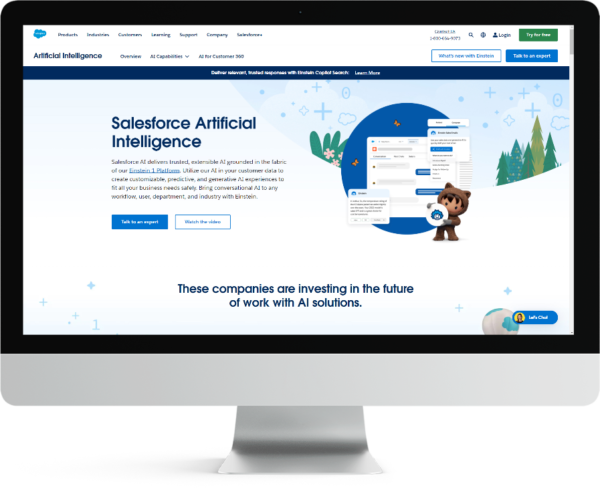
Advanced Analytics: AI can capture large volumes of CRM data to identify patterns and trends, enabling companies to make more informed decisions.

For example, Salesforce has created Einstein, an AI that uses advanced algorithms to analyze customer data and offer relevant solutions.

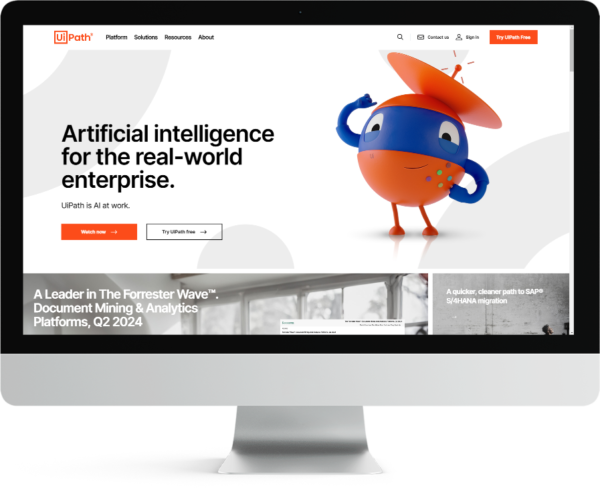
Task Automation: Automates complex tasks, such as customer segmentation and campaign personalization, improving efficiency and reducing response time.

An ideal AI for improving operational efficiency is UiPath. This tool provides solutions that optimize repetitive administrative tasks, such as data entry and inventory management.

02-Automatizacion-de-tareas-600x488

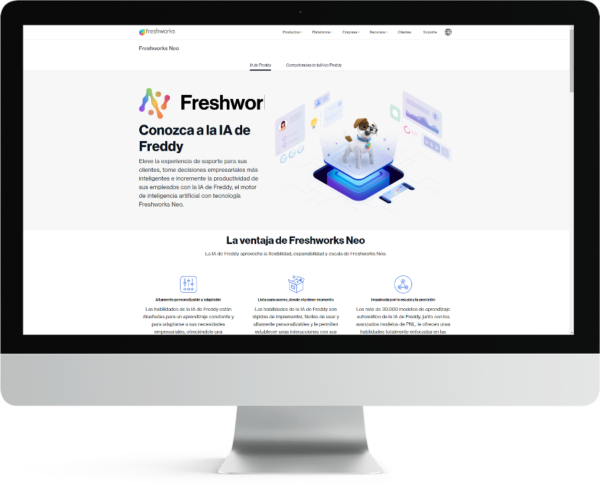
Behavior Prediction: Using advanced algorithms, AI can predict future customer behavior and needs. This helps companies anticipate and offer more relevant solutions.

For this, there are CRM platforms that already integrate their own AI to maximize their tool’s potential. An example is Freddy AI, the AI tool from Freshworks, designed to accompany the customer journey at each stage and provide business and user-adapted recommendations.

03-Prediccion-de-comportamiento-600x488

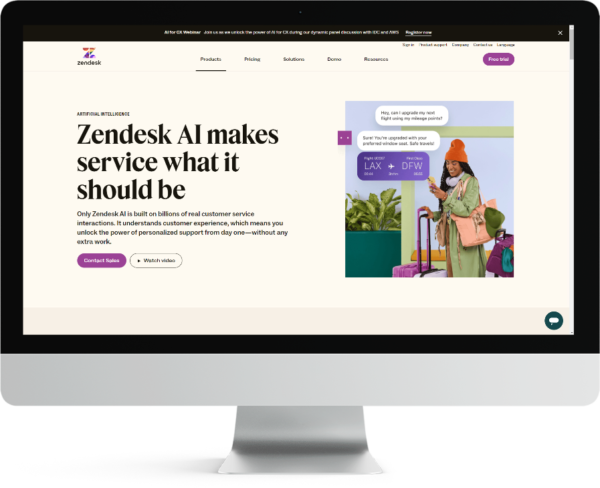
Improving Customer Experience: AI-powered chatbots and virtual assistants can offer faster and more efficient customer service, enhancing the overall user experience.

For this, you can use Zendesk, a platform that uses AI to improve customer service, offering automatic and efficient responses to common queries and directing requests to the sales team in real-time.

04-Mejora-de-la-experiencia-del-cliente-600x488
Blog-June-2024_Titular-04-EN-1

Now that you know the benefits AI offers, it’s time to integrate it into your CRM. Follow these simple steps to effectively adapt your company:

1. Evaluate Needs

Identify the specific challenges you want to address with AI, such as improving lead generation, customer service, or sales projections.

2. Choose the Right AI Tools

Select the AI tool that suits your needs or a CRM platform that is already AI-powered. You can now evaluate various AI solutions to customize your CRM and adapt it to what benefits you the most.

3. Organize Your Information

The accuracy of the results provided by AI depends on how you deliver your information and the quality of your databases. Without an adequate structure, AI cannot guarantee good execution

4. Adapt Your Platform to AI

Work with your IT team or your CRM provider to seamlessly integrate AI tools into your company’s system. You can also opt to acquire CRM software with built-in AI.

5. Prepare Your Team

Train your organization on using these AI tools so they can adapt them to their reports and, in turn, be the ones providing data to the AI.

6. Continuous Monitoring and Optimization

AI models are constantly improving. Monitor changes, updates, and new versions of AI and CRM platforms that optimize the results you seek.

Blog-June-2024_Titular-5-EN-1-600x235

We already know the great improvement opportunities that AI platforms offer for CRM and the ways to incorporate it for better customer personalization. However, we must not forget that it is an emerging technology and can make some errors that we must take into account:

Biased Data: The algorithm can produce inaccurate results if the data is biased or incomplete.

Lower Human Affinity: Responses can fail in interaction with customers and negatively impact their experiences.

Cybersecurity Risks: With AI tools, there is a risk of data breaches or cyberattacks, so it is important to handle it with caution.

Blog-June-2024_Titular-6-EN-600x237

CRM is essential for marketing success, as it allows companies to better understand their customers and offer a more personalized experience. When the power of CRM is combined with the capabilities of AI, companies can further optimize their marketing strategies and evolve their results to be more efficient, proactive, and with greater customer satisfaction and loyalty.

At Isource Marketing, we firmly believe that businesses should take the latest trends to make their marketing actions more effective and boost their processes. Please, feel free to contact us for advice or quotes on marketing solutions, and take the bold step to enhance your B2B/B2C strategies with us.

Is BANT Still Relevant in 2024? Alternative Frameworks

Is BANT Still Relevant in 2024? Alternative Frameworks

Share

AI

AR

Automation

B2B

blog

Content

Creativity

Customer

Design

Digital Marketing

Events

Hubspot

IA

Influencers

job

Lead Generation

marketing

Newsletter-en

PR

Sales

UI

Uncategorized

UX

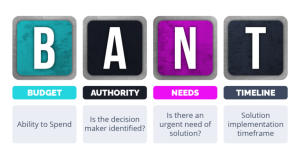
In today’s fast-paced world of business-to-business (B2B) technology sales, the methods we use to find and support potential customers are always changing. BANT, a tried-and-true approach, has long been a key tool. Created by IBM, BANT helps sales teams figure out if a potential customer has the Budget, Authority to make a purchase, a Need for the product, and a suitable Timing. This approach has been essential for sales teams to determine if a prospect is likely to become a customer.

However, it’s crucial to question whether BANT can still meet the demands of the current market. With new tech and changes in the way people buy, looking into new strategies is key to keeping up.

Blog-March-2024_Blog-2-EN-768x408

BANT and the Evolution of Lead Qualification

Checking if someone is likely to make a purchase (lead qualification) is crucial in sales, ensuring our efforts and resources are focused on potential customers who are actually interested. BANT has long served as an easy-to-follow guide for this purpose. However, BANT was created in a time when sellers had more influence over sales. Nowadays, with the internet, buyers do a lot of research and consider various options well before they speak to a salesperson.

This shift means it’s time to rethink old methods like BANT. Sales teams now must navigate a world where buyers are much more informed and have higher expectations. Buyers are looking for products that not only meet their immediate needs but also support their long-term goals.

Alternatives to BANT

Given that BANT doesn’t fully meet the needs of the modern B2B tech market, new strategies have come up. These new methods are designed to better understand and match today’s buying habits and what the market wants.

Blog-March-2024_Blog-3-EN-768x523

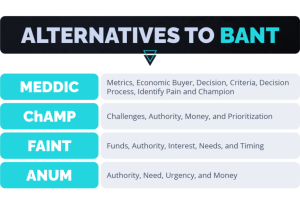
CHAMP

CHAMP stands for understanding the customer’s main CHALLENGES, who has the AUTHORITY to make decisions, how much MONEY they have, and what needs to be done first (PRIORITIZATION). This method focuses more on what the buyer needs than on selling. It helps sales teams make their pitches more relevant by showing how they can solve the buyer’s specific problems.

MEDDIC

MEDDIC is about getting to know the buyer’s business better. It stands for looking at METRICS (or measures of success), finding out who the ECONOMIC BUYER is (the person with the money), understanding the DECISION CRITERIA AND PROCESS, IDENTIFYING the main Pain points, and finding a CHAMPION (someone inside the company who supports your solution). This approach makes sure that sales efforts match up with how the buyer makes decisions and works internally. 

ANUM

ANUM redefines the traditional components of BANT by emphasizing AUTHORITY, NEED, URGENCY, and MONEY, highlighting the importance of the decision-maker’s power and the immediate need for a solution. By focusing on the urgency, ANUM equips sales teams to quickly identify and seize opportunities where prospects are ready to make fast decisions.

FAINT

FAINT, which stands for FUNDS, AUTHORITY, INTEREST, NEED, and TIMING, understands that not every potential customer will have a set budget for your product but could find the means if they see its value. This approach is especially useful in the startup world and innovative industries, where budgets are more adaptable.

Choosing the Right Framework Beyond BANT

Selecting the appropriate framework depends on various factors, including your industry, sales cycle length, and the nature of your product or service. While BANT offers a solid foundation, its alternatives can provide a more flexible and modern approach to understanding and engaging with today’s smart buyers.

When you use these methods in your sales plan, it’s important to find the right balance. You need to make sure the leads are really likely to buy, but also be flexible for each potential customer’s special situation. In addition, you should adapt your CRM (Customer Relationship Management) system to successfully implement the chosen framework and reach your goals.

If you want to learn more about sales and marketing, we recommend you to read: Lead generation: The key to success in sales

In Summary

Although BANT’s straightforward approach and emphasis on critical factors are still appreciated, newer frameworks are proving to be more flexible and thorough, better matching the needs of current buyers.

Adopting these new approaches allows sales teams to improve how they decide which leads to focus on, foster stronger connections with potential clients, and achieve greater success. The quest for improved sales techniques in today’s digital era is continuous, emphasizing the importance of staying updated and adaptable.

At Isource Marketing, we firmly believe that businesses should take the latest trends to make their marketing actions more effective and boost their processes. Please, feel free to contact us for advice or quotes on marketing solutions, and take the bold step to enhance your B2B/B2C strategies with us.

What is Advergaming? Benefits and Examples

What is Advergaming? Benefits and Examples

Share

AI

AR

Automation

B2B

blog

Content

Creativity

Customer

Design

Digital Marketing

Events

Hubspot

IA

Influencers

job

Lead Generation

marketing

Newsletter-en

PR

Sales

UI

Uncategorized

UX

In today’s digital world, where there’s a constant flood of information, businesses are always looking for new and exciting ways to stand out. That’s where advergaming comes into play. It’s all about using games to make your brand stronger.

If you’re searching for creative ways to boost your marketing, you’re in the right place. This article will explain what advergaming is, show you its advantages, and give you real examples to see how it can make your brand more noticeable in the market. Get ready to explore a fresh and effective way to make your brand stick in people’s minds. Let’s dive in and discover the power of advergaming!

What is Advergaming and how does it work?

Advergaming is a marketing strategy that combines advertising with gaming to promote a brand or product. It works by creating interactive games or experiences that incorporate elements of the brand, product, or message that a company wants to convey to its audience. Here’s how it works:

1. Game Development: First, a game or interactive experience is designed and developed. This can be a mobile app, a web-based game, a virtual reality experience, or even a simple online quiz.

2. Brand Integration: Within the game, elements of the brand or product are seamlessly integrated. This can include branded characters, logos, products, or messaging that players encounter as they engage with the game.

3. User Engagement: Players are drawn to the game because of its entertainment value. Advergames are designed to be enjoyable and engaging, encouraging players to spend time interacting with the brand.

4. Message Delivery: As players progress through the game, the brand’s message or product benefits are subtly or overtly communicated. This can be through in-game rewards, product placements, or interactive challenges related to the brand.

5. Call to Action: Advergames often include a call to action, encouraging players to take a specific action after playing, such as visiting the brand’s website, making a purchase, or sharing the game with friends.

6. Measurement and Analysis: Marketers track various metrics to measure the advergaming campaign’s success, including the number of game downloads, player engagement, click-through rates, and conversions.

Advergaming works by creating interactive games or experiences that incorporate elements of the brand.

Benefits of Advergaming for Brands

Advergaming offers brands an engaging way to connect with their audience by integrating their message into interactive games. It enhances brand awareness, targets specific demographics effectively, and encourages extended user engagement. Marketers can collect valuable data, and advergaming is cost-effective with global reach. It creates positive brand associations and enables storytelling, leaving a lasting and memorable impression on players.

Key Elements of Successful Advergaming

  • Successful advergames share several key elements that make them effective in achieving marketing goals. These elements include:

    • Clear Objectives: A successful advergame has clear objectives that guide players toward desired actions or interactions with the brand.
    • Incentives and Rewards: Rewarding players with in-game incentives, such as virtual currency or exclusive content, can motivate continued engagement.
    • User-Friendly Design: Advergames should be easy to understand and navigate, catering to a wide range of players, including those with limited gaming experience.
    • Social Sharing: Integration with social media platforms allows players to share their achievements and experiences, increasing the game’s viral potential.
    • Mobile Compatibility: With the prevalence of mobile gaming, advergames should be compatible with smartphones and tablets for broader accessibility.
    • Analytics and Tracking: Implementing tracking mechanisms enables marketers to gather data on player behavior, helping to refine the game and measure its success.
    • Call to Action: Advergames should include a clear call to action, guiding players toward desired post-game activities, such as visiting a website or making a purchase.

Examples of Impactful Advergames

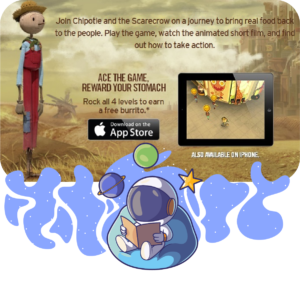
Chipotle Scarecrow

In 2013, Chipotle and Moonbot Studios collaborated to create an impactful marketing campaign called “Food with Integrity.” This campaign aimed to raise global awareness about the issues associated with processed food. As part of this initiative, they produced an animated film and a mobile game.

The animated film followed the journey of a scarecrow who worked to bring wholesome food back to people, aligning with the campaign’s message. The entire team’s dedication paid off significantly.

The film quickly gained traction, amassing 6.5 million views on YouTube in less than two weeks. Meanwhile, the mobile game became a sensation, ranking among the top 15 free iOS apps in the US app store. It garnered the interest of 250,000 users within just four days of its release.

The campaign received extensive media coverage, including mentions in renowned publications like the New York Times and Time Magazine. This widespread recognition contributed to the overall success of the project, effectively spreading the message of “Food with Integrity” to a broad audience.

Shrimp Attack – KFC

KFC Japan launched a gamified marketing campaign called “Shrimp Attack” to promote the addition of shrimp to its menu. The campaign included a video game where users could play to earn points and receive discount vouchers. The game involved protecting the KFC headquarters from attacking KFC shrimp sticks by swiping.

The campaign was successful, with over 800,000 players and 600 hours of playtime, leading KFC to halt the game mid-campaign due to high demand and product availability issues.

If you want to learn more about artificial intelligence and marketing, we recommend you to read: Learn how you can create a marketing campaign using AI

In summary

Advergaming represents a dynamic and innovative approach to marketing that continues to reshape the way brands connect with their audience. By embracing the power of play and interactivity, advergames create memorable experiences that leave a lasting impression. We hope this blog has inspired you to explore the exciting possibilities of advergaming and how it can drive engagement, enhance brand awareness, and deliver remarkable results. 

At Isource Marketing, we firmly believe that businesses should take the latest trends to make their marketing actions more effective and boost their processes. Please, feel free to contact us for advice or quotes on marketing solutions, and take the bold step to enhance your B2B/B2C strategies with us.