Responsive Menu
Add more content here...

How to write a good AI prompt to improve your work?

How to write a good AI prompt to improve your work?

Share

AI

AR

Automation

B2B

blog

Content

Creativity

Customer

Design

Digital Marketing

Events

Hubspot

IA

Influencers

job

Lead Generation

marketing

Newsletter-en

PR

Sales

UI

Uncategorized

UX

Imagine if you could have a conversation with artificial intelligence (AI) and guide it to generate exactly what you need. That’s the power of an AI prompt – a simple yet profound way to interact with advanced technology. 

In this blog, we’ll explore prompts and share some practical tips for making them work well. It’s not just about giving orders; it’s about connecting with AI in a clear and effective way.

1) What is an AI Prompt?

prompt in AI, especially in the context of conversational artificial intelligence like chatbots or AI writing tools, is like a starting point or a question that you give to the AI. It’s a bit like giving a hint or direction. 

When you provide a prompt, the AI uses it to understand what kind of response or information you’re looking for. Then, based on this prompt, the AI generates a reply or performs a task. It’s like telling the AI, “This is what I’m interested in,” and then the AI goes on to create something relevant based on your prompt.

2) What kind of results can you get with AI prompts?

An AI prompt can lead to various types of results, depending on what the AI is designed to do. Here are some common outcomes:

  1. Text Generation: The AI can create text based on the prompt. This could be anything from writing a story, generating a report, composing an email, or even creating poetry.

  2. Image Creation: Some AI systems can generate images from descriptive prompts. For example, you could ask for a picture of a “sunset over the ocean” and the AI would create it.

  3. Data Analysis: AI can analyze large sets of data in response to prompts. For instance, you might ask the AI to find patterns or trends within a dataset.

  4. Problem-Solving: You can use prompts to ask AI to solve mathematical problems, optimize processes, or come up with solutions to specific issues.

  5. Language Translation: AI can translate text from one language to another based on your prompt.

  6. Educational Assistance: It can provide explanations, definitions, or tutorials in response to educational prompts.

  7. Personalized Recommendations: Based on prompts, AI can suggest products, movies, books, etc., tailored to individual preferences.

  8. Interactive Conversations: AI can engage in dialogue, offering responses to questions, providing information, or even mimicking a natural conversation.

  9. Code generation: AI can generate code snippets or even entire programs based on coding prompts. This is especially helpful for developers and programmers.

  10. Video creation: Some AI systems can generate videos based on descriptive prompts. You can request videos on various topics or scenarios, and the AI will create them, which can be useful for content creators and marketers.

The specific results depend heavily on the AI’s capabilities and the nature of the prompt given.
3) How to Write Effective AI Prompts?

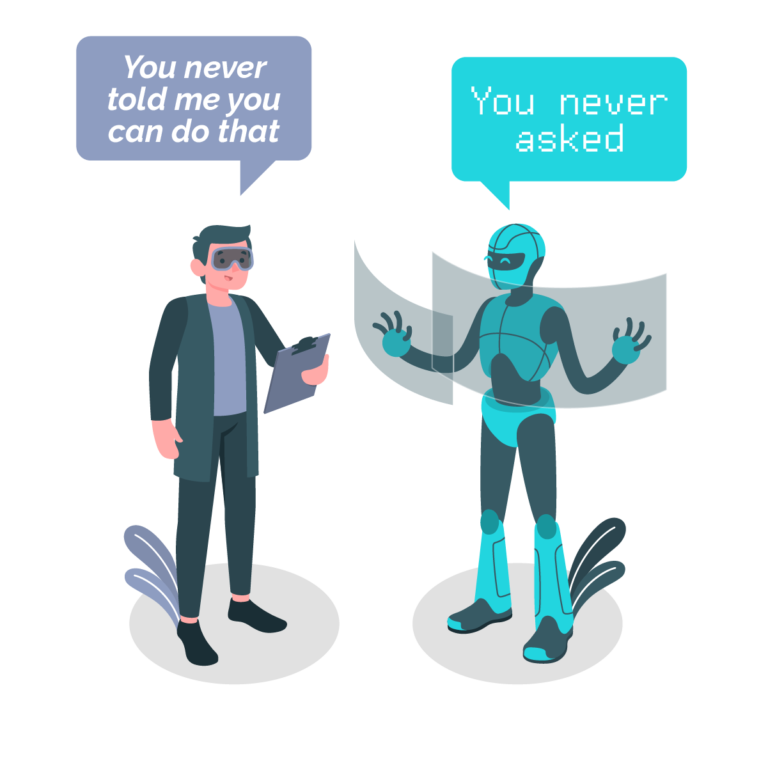
Writing effective AI prompts involves clarity, specificity, and understanding the capabilities of the AI system you’re working with. Here are some tips to guide you:

  • Be Clear and Specific: Vague prompts might lead to vague responses. If you need a specific type of output, make sure your prompt reflects that. Also, unnecessary length can confuse the AI.

  • Include Contextual Information: No matter how smart AI tools become, they can’t really get what you mean unless you give some extra details.

  • Keep Trying and Improve: AI might not give you the perfect answer the first time. Be ready to make your requests better as you see how AI responds.
  •  

H3: Is there any formula for writing a good AI prompt?

There’s no one-size-fits-all formula for writing a good prompt because it mostly depends on the situation and what you’re trying to achieve. However, we’ve found some approaches that have proven to work well. Here are some examples:


  • “Create a . . .” or “Write a . . .”

    These prompts are versatile and commonly used. You can initiate AI writing tasks by starting with “Create a” or “Write a” and then specifying what you need, such as “Create a TikTok video script using the side-eye trend” or “Write a love poem about flowers.”


  • “Act as a . . .”

    You can instruct AI to take on different roles or personas, like a marketer, lawyer, or even a cranky person. This can be especially helpful for tasks that require a specific perspective or tone.


  • “Mimic this style . . .”

    If you want AI to emulate a particular writing style, you can provide a sample text in that style and use the “Mimic this style . . .” prompt. It can help you get content that matches your preferred tone, whether it’s passionate, formal, or personal.


  • “Show this as a . . .”

    Some AI writing assistants can convert raw data into basic graphs or charts. Although these visuals may be rudimentary, they can serve as a foundation for creating more polished presentations.


  • “Compare . . .”

    If you want to analyze similarities and differences between two things, you can instruct AI to compare them. AI will typically outline what’s alike and what’s distinct, providing a helpful comparison.

If you want to learn more about artificial intelligence and marketing, we recommend you to read: Learn how you can create a marketing campaign using AI

In summary

When you provide a prompt, it’s like giving a hint to the AI about what you want. The AI then uses that hint to generate a response or perform a task, whether it’s writing a story, creating an image, analyzing data, or engaging in interactive conversations. While there’s no standard formula for writing prompts, we’ll share some approaches that work well, like “Create a . . .” or “Act as a . . .” prompts, to help you get the most out of your AI interactions.

At Isource Marketing, we firmly believe that businesses should take the latest trends as AI tools to make their marketing actions easier and boost their processes. Please, feel free to contact us for advice or quotes on marketing solutions, and take the bold step to enhance your B2B/B2C strategies with us.
The Future of Marketing: Predictions for 2024

The Future of Marketing: Predictions for 2024

Share

AI

AR

Automation

B2B

blog

Content

Creativity

Customer

Design

Digital Marketing

Events

Hubspot

IA

Influencers

job

Lead Generation

marketing

Newsletter-en

PR

Sales

UI

Uncategorized

UX

As we look ahead to 2024, it’s crucial to anticipate the changes in the marketing landscape. This blog is your guide to the major predictions for 2024, spotlighting the trends and innovations that are poised to reshape how we approach marketing.

From the integration of AI and human creativity to the rise of voice-driven strategies, we’re here to explore what these developments mean for the future of connecting with customers. Let’s journey into what 2024 has in store for the world of marketing!

1) The Big Debate Continues: AI Content vs. Human Content

One big discussion is about using AI (Artificial Intelligence) to create content versus content written by people. In 2024, we expect both to be important. AI can quickly analyze information and write basic stuff, but it can’t replace the unique touch humans bring.

Let’s break down the pros and cons of each one.

AI Content

  • Pros:
    Efficiency: AI can create content much faster than humans and at a lower cost. This means more content in less time, which is great for keeping up with the demand for fresh material.

  • Cons:
    Risk of Plagiarism and Impersonality: AI-generated content can sometimes accidentally copy existing material, leading to plagiarism issues. Also, it may lack a personal touch, feeling generic or less engaging.

Human Content

  • Pros:
    Creativity and Authentic Engagement: Human writers bring creativity and a personal touch that AI can’t match. This leads to content that resonates more deeply with audiences, fostering genuine engagement.

  • Cons:
    Time and Resource Intensive: Manual writing process takes longer and requires more resources (like skilled writers). This can mean higher costs and slower content production.

2) Voice Marketing

The use of voice-activated devices and voice assistants such as Amazon’s Alexa, Google Assistant, Apple’s Siri, and others to engage with users through spoken interactions is becoming increasingly popular every day.

In 2024, making your content easy to find and use through these technologies will be crucial. It’s about making it easier and more personal for customers to connect with your brand using their voice. If you are thinking to take actions, here are three ways to develop marketing strategies in audio:

  • Create Voice Ads: Develop ads specifically for voice assistants to reach consumers who use these devices. This method can tap into a growing segment of users who rely on voice commands for information and shopping.

  • Use Voice Assistants at Events: Incorporate voice assistants in events and conferences to engage with prospects. This could include interactive sessions where voice assistants provide information or facilitate activities, creating a memorable experience for attendees.

  • Content Creation: Dive into creating audio content such as podcasts or audiobooks. This format is ideal for in-depth discussions, interviews, or sharing insights about the tech industry, catering to an audience that prefers listening over reading.

3) Testing New Self-Service Ad Platforms Arriving in 2024

In recent years, self-service ad platforms have played a significant role in making online advertising accessible to businesses of all sizes, enabling them to effectively reach their target audiences while maintaining control over their advertising budgets.

On these platforms, advertisers can create their ads, select their desired audience, allocate their budget, and monitor real-time performance.

In 2024, significant developments are expected in this sector. The coming year is poised to witness the emergence of enhanced self-service ad platforms from major players such as Amazon, Microsoft, Disney, and LinkedIn. These companies are either upgrading their existing advertising services or launching new platforms, positioning themselves to challenge the dominance of Meta (formerly Facebook) and Google.

Key Developments:

  • Amazon and Microsoft: With their vast resources and data, these tech giants are expected to offer innovative advertising solutions, especially beneficial for technology and e-commerce sectors.

  • Disney: Known for its storytelling prowess, Disney’s entry into self-service advertising might offer unique branding and content-driven ad opportunities.

  • LinkedIn: As a professional networking giant, LinkedIn’s ad platform is particularly promising for B2B marketers, offering targeted access to professionals and businesses.

These developments promise to diversify the digital advertising landscape, potentially offering more specialized and effective marketing options for B2B technology companies.

4) First Party Data Is the New Standard

The way marketers collect and use data is changing significantly. With stricter privacy laws and the phasing out of third-party cookies (the tiny data files websites use to track visitors), there’s a growing emphasis on first-party data. This is the information that companies collect directly from their customers, like when someone signs up for a newsletter or makes a purchase.

Why First-Party Data Is Gaining Importance:

  • Trust and Privacy: Customers are more concerned about their privacy. They’re more likely to trust and share their information directly with brands they have a relationship with, rather than through third-party sources.

  • Accuracy and Reliability: Data collected directly from customers is generally more accurate and reliable. It gives a clearer picture of who the customers are and what they want.

  • Personalization and Experience: With first-party data, companies can tailor their marketing campaigns more precisely. This personalization can lead to better customer experiences, as messages and offers are more relevant to each individual.

  • Long-term Relationships: Using first-party data helps build deeper, direct relationships with customers. It’s about understanding and catering to their specific needs over time.

  • Navigating Privacy Regulations: As privacy laws become stricter, relying on first-party data is a safer bet. It helps companies stay compliant while still making informed marketing decisions.

This shift towards first-party data represents a move to more respectful and effective marketing, where customer privacy is prioritized, and marketing efforts are more targeted and meaningful.

5) Video Marketing Dominance

Video marketing is not just maintaining its relevance; it’s expected to grow even more powerful in 2024. Here’s how it’s evolving:

  • Brand Storytelling and Product Showcasing: Marketers are increasingly using video to tell engaging brand stories and showcase products. This method allows for a more dynamic and visually appealing way to communicate the values and specifics of tech products, making complex information more digestible and engaging.

  • Live Streaming: It offers real-time interaction, which is key for authenticity and engagement. Brands hosting live events, product launches, and behind-the-scenes looks can provide immersive and compelling content. This approach not only captivates audiences but also builds a sense of community and immediacy around the brand and its offerings.

  • Deeper Connections with the Audience: Through these video strategies, brands can forge deeper connections with their target audience. The interactive nature of live streaming, coupled with the storytelling power of video, creates a two-way conversation between brands and consumers. This is particularly important in the B2B technology sector, where establishing trust and understanding is crucial.

In summary

Looking towards 2024, marketing is evolving rapidly with AI and human creativity merging to create more impactful content. Also, voice marketing is on the rise, offering new ways to engage customers, and the debut of new ad platforms by tech giants is set to shake up the digital advertising world.

Meanwhile, the focus on first-party data is becoming crucial for tailored, privacy-conscious marketing. Video marketing, especially live streaming, is expected to continue growing, providing more interactive and authentic brand experiences. These trends indicate a shift towards more personalized, efficient, and engaging marketing practices.

At iSource Marketing, we firmly believe that businesses should take the lastest trends to build strong brand concepts and to develop marketing plans that turn clients into fans.  Please, feel free to contact us for advice or quotes on innovative solutions, and take the bold step to enhance your B2B/B2C strategies with us.
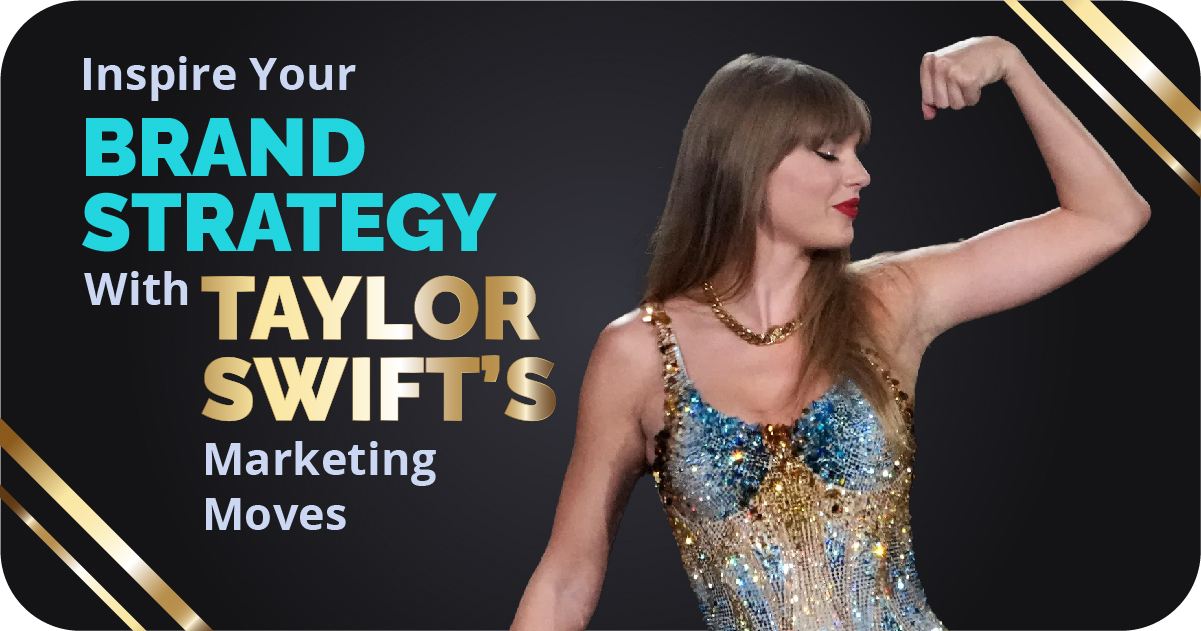
Inspire Your Brand Strategy with Taylor Swift’s Marketing Moves

Inspire Your Brand Strategy with Taylor Swift’s Marketing Moves

Share

AI

AR

Automation

B2B

blog

Content

Creativity

Customer

Design

Digital Marketing

Events

Hubspot

IA

Influencers

job

Lead Generation

marketing

Newsletter-en

PR

Sales

UI

Uncategorized

UX

In the dynamic world of marketing, drawing inspiration from diverse industries is crucial, even from those seemingly unrelated to our niche. Take, for instance, the world of pop music. There’s a goldmine of insights waiting to be tapped, especially when looking at Taylor Swift marketing.

As a marketing agency with a specialization in the technology sector, we often advise our clients to look beyond their industry boundaries. Taylor Swift might sing pop hits, but her marketing impact spreads across sectors, offering lessons in storytelling, adaptability, and immersive branding experiences. For that reason, we’ll explore three primary lessons tech companies can learn from her strategy.

3 Key Takeaways from Taylor Swift Marketing

1) Storytelling: A Key Element in Taylor Swift Marketing

For Taylor Swift, storytelling has been an integral part of her marketing and brand identity since the inception of her career. Beyond her music, she deepens the connection with her fans by sharing personal anecdotes, holding exclusive sessions, and sending personal messages, making them feel intertwined with her journey. 

Tech companies can take inspiration from her approach to effectively connect with their target audiences and boost sales. Here’s how:

  • Humanize the Brand: Just as Taylor uses personal narratives to connect with her fans, tech companies can share stories about their beginnings, challenges faced, or the people behind the product. This can help humanize a brand and make it more relatable.

  • Create a Narrative Around Products: Rather than just highlighting features, tech companies can share stories about how their products can transform users’ lives, solve real-world problems, or even the process behind its creation.

  • Engage Through Visual Content: Taylor’s music videos add a visual dimension to her songs. Similarly, tech companies can use video demos, tutorials, and customer testimonial videos to provide a visual narrative about their products or services, making them more engaging.

  • Build a Community: Taylor’s engagement with her fans fosters a strong sense of community. Tech companies can create dedicated forums, social media groups, or events to engage with their users, share stories, and build a community around their brand.

  • Offer Exclusive Insights: Just as Taylor has secret sessions for her fans, tech companies can offer sneak peeks, beta tests, or behind-the-scenes looks into their product development, making their users or audience feel special and valued.

  • Customer Success Stories: Just like fans resonate with Taylor’s personal experiences, potential customers resonate with stories of others who’ve benefited from a product. Sharing testimonials or case studies can help potential customers visualize their success with the product.

  • Content Strategy: Consistently produce content that tells a story, be it blog posts, podcasts, or webinars. The narrative can revolve around industry changes, innovations, or how technology is shaping the future.

2) Adapting to Industry Changes: The Evolutionary Side of Taylor Swift Marketing

From her transition from country to pop, to the way she’s handled streaming services, Swift has always had her finger on the pulse, adjusting her strategy based on the industry landscape and her audience’s preferences.

What lessons can tech companies learn about this?

  • Stay Agile: Like Swift’s approach to the shifting music scene, tech companies should remain flexible and ready to pivot their strategies based on industry trends and technological advancements.

  • Listen to the Audience: Swift’s adaptability is, in part, a result of her keen sense of her audience’s pulse. Tech companies can similarly employ feedback loops, user surveys, and beta testing to understand consumer needs and adapt accordingly.

  • Advocate for Industry Standards: Just as Swift stood up for artists’ rights, tech companies can take stances on issues pertinent to their industry, like data privacy or open-source standards. This can build trust and respect among consumers and peers.

  • Diversify Offerings: Much like Swift’s genre exploration, tech companies can look into diversifying their product or service line-ups. This could mean exploring new tech verticals or integrating complementary services to cater to a wider audience.

  • Strategic Partnerships: Swift’s collaborations with other artists and brands have expanded her reach. Tech companies can similarly forge strategic alliances or partnerships to tap into new markets or demographic segments.

3) Immersive Brand Experiences in Taylor Swift Marketing

Taylor Swift’s approach to her concerts exemplifies how an artist can transcend the traditional boundaries of a performance to create a multi-sensory and immersive brand experience. A prime example of this is The Eras Tour.

Every element, from the stage’s grand design to the themed custom cocktails, was crafted to engage the audience’s senses fully. For instance, during her performance of “Bad Blood”, the pyrotechnics were so vivid and powerful that attendees could physically feel their warmth.

Tech companies can draw inspiration from this approach to create captivating learning environments that resonate with their users. Some ideas include:


  • Interactive Tech Tools: Just as the RFID wristbands were used in Swift’s concert, tech companies can employ interactive tools or gadgets during product launches or expos. This ensures attendees are actively involved and not merely passive observers.

  • Engaging Environments: Creating an atmosphere that engages all senses—be it through visuals, sounds, or even tactile experiences—can help in better retention of information. For instance, when launching a new software or device, integrating stunning visuals or tactile experiences can make the learning curve more enjoyable for users.

  • Augmented and Virtual Reality: Leveraging AR and VR technologies can transport users to a multi-dimensional world, enhancing their understanding of a product’s features or the story behind a brand.

  • Multimedia Integration: Just as Swift’s LED stage showcased supporting content, tech companies can integrate video demos, infographics, and other multimedia content when presenting new information or training sessions, making them more engaging and easier to grasp.

  • Personalized Experience: Personalization can enhance user engagement. Whether it’s a user interface that adjusts based on preferences or a training module that evolves based on a learner’s pace and understanding, personalization can make learning more efficient and enjoyable

In summary

Taylor Swift’s marketing methods offer more than just insights for the music world; they’re a roadmap for any industry looking to deepen engagement. By tapping into storytelling, embracing change, and immersing audiences in unique experiences, she has set a gold standard in brand connection.

For tech companies, emulating these approaches can be transformative. By humanizing their brands, staying agile, and creating rich, sensory experiences, they can foster stronger bonds with their audience and drive greater success.

At iSource Marketing, we firmly believe that businesses should build strong brand concepts and develop marketing plans that turn clients into fans.  Please, feel free to contact us for advice or quotes on innovative solutions, and take the bold step to enhance your B2B/B2C strategies with us.

Viral Marketing: Strategy or luck?

Viral Marketing:
Strategy or luck?

Share

AI

AR

Automation

B2B

blog

Content

Creativity

Customer

Design

Digital Marketing

Events

Hubspot

IA

Influencers

job

Lead Generation

marketing

Newsletter-en

PR

Sales

UI

Uncategorized

UX

In the digital age where social media is king, going viral is like striking gold. This type of content supercharges your message, makes you more visible, and allows you to engage with a ton of people all at once. But is there a secret formula to “make” viral marketing campaigns? Is it something you can actually strategize for?

Nobody can guarantee that your next post will go viral on the internet, but you can absolutely stack the deck in your favor. That’s why we’ve assembled a set of tried-and-true strategies to help you knock your next campaign out of the park.

What makes a marketing campaign go viral on social media?

A marketing campaign goes viral when people feel compelled to share its content on their own social media platforms, adding their voice to a topic they believe is of broad interest. The goal is to turn the brand’s message into a public talking point, where a wide audience can form an opinion, find a sense of identity, or experience strong emotions.

In the marketing game, luck and timing can give you a boost, but let’s not overlook the power of smart planning. There are concrete guidelines you can follow to up your chances of hitting it big and getting your message in front of a whole lot of eyes. It’s not just about going viral; it’s about expanding your customer circle in a big way.

When you dissect some successful viral campaigns, certain guidelines show up again and again. Let’s unpack some of them:

  • Deliver originality: People are tired of feeling like they’re just a click away from a sales funnel. So, your content needs to feel genuine and not like another billboard on the digital highway.

  • Entertain, don’t just inform: We’re in an age where humor can make or break your campaign. Comedy doesn’t just rack up views; it keeps folks glued to their screens, making them more likely to share and comment.

  • Keep it simple: a punchy message can often be more impactful than a long, drawn-out one. Get to the point and make it memorable. People appreciate clarity and directness, especially in a world overloaded with information.

  • Don’t forget the feels: A campaign that triggers genuine emotions can send your content from average to unforgettable. Ask yourself, what can make my audience laugh, cry, or better yet, hit that share button?

  • Be valuable: Does it solve a problem? Offer a fresh perspective? Keep up with current trends? Your content should offer something that makes people think, “Wow, this is worth my time”.

Viral marketing: proven strategies for going viral

When it comes to navigating the fast-paced world of marketing, there are certain go-to approaches for turning your content or campaigns into viral sensations. Let’s dive into some of these industry favorites:

  • Share-for-Rewards: This marketing strategy encourages users to spread a message by offering them some sort of reward, such as discounts or freebies. By sharing the content or providing email addresses of their contacts, users get something valuable in return. At the same time, they significantly extend the reach of your campaign.

  • Buzz Building: This approach focuses on crafting messages or narratives that not only circulate on their own but also ignite rumors around the initial content. It’s about designing a message so gripping that it doesn’t just get shared—it becomes the topic of speculation and conversation.

  • “Share-It” Effect: Unlike some other strategies, the aim here is to create content specifically designed for sharing—no rewards or incentives needed. The key is to craft messages that resonate on a personal level, messages that pass the “share test” because they’re relatable, thought-provoking, or have social approval. When people identify with your message, they’ll naturally want to spread the word.

  • Stealth Tactics: The aim here is to captivate users so effectively that they share breaking news or shocking events, all while being completely unaware that they’re actually contributing to a well-orchestrated advertising plan.

Some examples of viral marketing

Case 1: Engage your audience

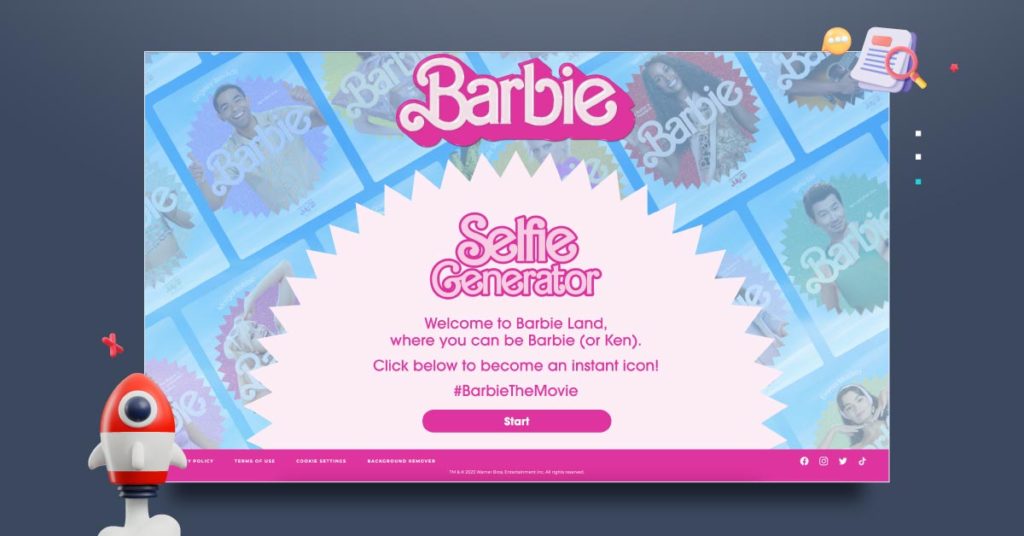
Campaign: Barbie selfie generator

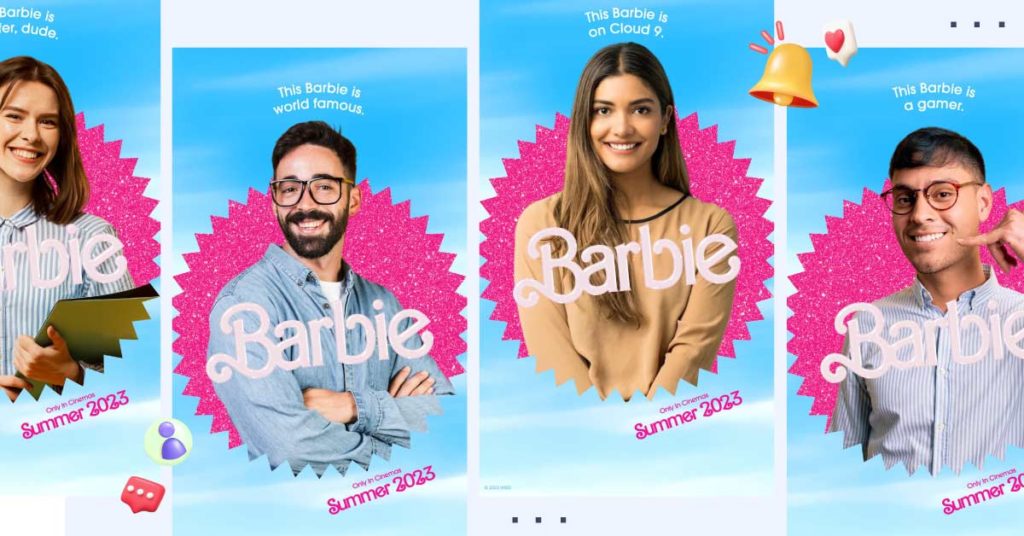
In the world of viral marketing, the Barbie movie’s Selfie Generator campaign is a textbook example of doing it right. Launched in early April 2023, the campaign featured a cutting-edge AI-driven website where users could transform their selfies into personalized movie posters, complete with customizable text.

As soon as it launched, this campaign exploded on social media, amplifying the pre-launch buzz that marketers were gunning for.

What really drove the campaign’s success were a couple of key elements we’ve touched on before: the irresistible urge to share, the social approval and the desire to be part of the group. On top of that, this was many users’ first foray into interacting with artificial intelligence, offered at no cost. The result? It became one of the most buzzed-about marketing campaigns of the entire year.

If you want to learn more about campaigns that have used XR technology in their favor, you can check out our case study: Augmented reality filters on Instagram – A key ally for a successful brand strategy.

Case 2: Put trends to work for you

Campaign: Heinz and Absolut Vodka’s pasta sauce launch

The curious thing about this case is no one expected this collaboration. After model Gigi Hadid shared her Penne Alla Vodka recipe on Instagram Stories in 2020, this particular combination between tomato paste and vodka was suddenly a viral trend on social media that year. This business opportunity led Heinz and Absolut Vodka executives to launch their own ready-to-use version in 2023.

Before Heinz x Absolut Tomato Vodka Pasta Sauce hit the shelves, it had a pre-launch campaign that covered OOH, PR, social media and influencers. In fact, influencer marketing played a key role in making the product launch a hit, particularly using micro and nano influencers. These opinion leaders stirred up buzz and enthusiasm for the new item on Instagram and TikTok.

This marketing campaign proves that incorporating unexpected or innovative elements into an internet buzz significantly boosts your odds of engaging with a larger audience.

In summary

Viral marketing strategies offer a clever and often cost-effective way to boost a brand or product’s visibility. Employing tactics ranging from rewards for sharing messages to the spreading of controlled rumors, these methods aim to stimulate public conversation and social sharing.

Certainly, we firmly believe in the transformative power of viral marketing to drive our clients towards their objectives. Feel free to reach out to Isource Marketing for consultations or quotes on cutting-edge solutions. Take the bold step to enhance your B2B/B2C strategies with our expertise in marketing and technology.

The growing reach of ChatGPT in Marketing

The growing reach of ChatGPT in Marketing

Share

AI

AR

Automation

B2B

blog

Content

Creativity

Customer

Design

Digital Marketing

Events

Hubspot

IA

Influencers

job

Lead Generation

marketing

Newsletter-en

PR

Sales

UI

Uncategorized

UX

ChatGPT is an amazing solution that helps businesses of all sizes optimize their marketing campaigns and make data-driven decisions.

According to an AI Index study, demand for AI-related skills is increasing in almost all industrial sectors in the United States. And indeed, the number of job postings related to AI increased on average from 1.7% in 2021 to 1.9% in 2022. The study also notes that in countries such as the United States, private investment led the way, allocating 47.4 billion dollars to AI, a figure that is 3.5 times more than that of China, second in the list. And attending to areas, the one with the highest private investment was the medical sector (6.100 million); followed by the cloud and data management and processing (5.900 million); and fintech (5.500 million).

Nevertheless, with the arrival of the fifth generation of Chat GPT from the White House, serious consideration is being given to drawing up a series of legal rules to establish control over this Artificial Intelligence. The legislation of governments has needed to adapt with the emergence of new technologies. Something that will continue to happen with Artificial Intelligence.

A tool on the rise

ChatGPT is a solution developed by OpenAl that has managed to exceed 100 million users in its short life. A recent UBS study has just confirmed that ChatGPT is the fastest growing consumption system in history. The research also highlights that the total potential market in which ChatGPT operates could reach a value of 1 trillion dollars.

But what makes this chat system so attractive? This tool is based on a conversational artificial intelligence model, which means it has been trained to hold coherent and accurate conversations with users, as the strategic implementation of this AI can bring a variety of benefits, including its potential to generate high-quality content, create personalized messages and generate potential customers for marketing, as ChatGPT is a reliable and accurate tool that can generate quick responses or automate tasks that usually take time.

In view of the above, let us see the 5 implementations of ChatGPT in marketing that are most favoring companies today:

1. Search engine optimization (SEO):

This conversational artificial intelligence tool is very useful for improving your content marketing and SEO. It can also help you identify relevant keywords, generate ideas, and optimize content to get greater visibility in search engines. If you use the tool properly, asking the right questions, you will not only reduce the amount of time it takes to conduct a keyword research, but also get more relevance, low cost and better results.

2. Content creation:

Companies can also use ChatGPT to create complete content, including blog posts, product descriptions, success stories, among others. In this case, the tool is provided with a brief description of the topic and the tool will generate a complete article. Companies can edit the generated content to ensure that it fits their brand style and objectives.

3. Customer Service:

In customer service ChatGPT can offer real-time assistance through a chat interface, enabling customers to interact with the system to ask questions and get immediate answers in a natural and fluid way. It can also automate responses to frequently asked questions and repetitive tasks, which helps reduce the workload of customer service agents and improve response times. Most striking is that it can analyze the sentiment behind customer interactions, allowing companies to identify and proactively address issues.

4. Data Analysis:

The tool can help companies analyze large amounts of data to identify patterns and trends. This can help companies make informed decisions about their customers, operations and products.

5. Market Research:

ChatGPT can be used to conduct market studies and surveys. This solution can help companies get information about their audience’s preferences and needs, which can significantly influence their marketing strategy.

As artificial intelligence continues to evolve, so will its applications in the marketing field. By working the benefits of Artificial Intelligence, companies will be able to better understand their target markets and create more effective and personalized marketing campaigns. In the near future, we can expect more and more companies to use ChatGPT to boost their marketing efforts, and the results will surely be effective.

We know the importance of positioning in your company, and we also know that a correct strategy is one of the first steps to achieve success. At Isource Marketing we have 2 regional offices and local presence in Miami, Florida-USA and throughout the main countries of Latin America, so we are always ready to help you create that strategy for your company no matter where you are.

PR & Media Coordinator
Passion: Arts, Nature

Why should TikTok be included in your B2B marketing plan?

Why should TikTok be included in your B2B marketing plan?

Share

AI

AR

Automation

B2B

blog

Content

Creativity

Customer

Design

Digital Marketing

Events

Hubspot

IA

Influencers

job

Lead Generation

marketing

Newsletter-en

PR

Sales

UI

Uncategorized

UX

TikTok’s popularity has grown rapidly in Latin America and in countries such as the United States, and it appears that the application’s growth will continue in the near future, as the way in which businesses use the application for everything related to B2B has become extremely relevant. According to data presented by ByteDance Ltd. in January of this year, TikTok is the fastest growing social network in recent years, with more than 105 million monthly active users over the age of 18 worldwide. In this context and given the growth of a valued social network among  50 and 75 billion dollars, the following concern arises: how can TikTok help companies develop an optimal B2B marketing plan? From Isource Marketing, as an agency specialized in B2B, we offer you 5 key recommendations so that companies decide to invest in this important social network that continues to be a trend in the market:

1.Human Centric Marketing

One of the new trends in marketing that continues to grow is theHuman Centric Marketing, which consists of not only treating the client only as a consumer, but also as a person. In this way, Tik tok is presented as an important resource that demonstrates this trend with more humane and informal actions. The most recent statistics of Data Reportal show that B2B Companies on TikTok have a higher engagement and ROI rate than other brands, and this has led 58% of B2B marketers to increase investment within this platform. Likewise, the same study indicates that the average engagement rate on TikTok isof the 5.96%; the highest of all social networks.

2.Creative participation

Since TikTok is an entertainment social network, the content must attract users in a natural and creative way. So it is very useful to use the new trending hashtags that are published every week, as long as they are related to your content or you know how to relate them to your marketing efforts. It is also essential to upload content regularly to your profile, that will make users enter more times to see if you have news. To reinforce that creativity there are numerous viral videos that can be used to your advantage with a little imagination. These audios can be songs or dialogues from reality shows, series or movies that have gone viral. According to “tiktokers”, recording over short and viral audios makes you have a better chance of appearing on the recommendations page. Another option is to upload videos showing the infrastructure of your company, or work team, create short tutorials about your products or services. Finally, you can take quizzes through Tik Tok to engage potential customers in your content.

3.Success stories

This is a good tool to attract potential customers without advertising directly to them. a good start to create this type of content is finding stories in your industry and bringing the benefits to your audience. For example, Adobe is renowned for effectively handling B2B marketing on TikTok, as the company regularly posts some pretty eye-catching how-to videos, giving its customers the knowledge to get the most out of its tools and actively supporting the community they serve they try to sell. Additionally, Adobe launched in 2022 a campaign that connected creators with small businesses, awarding $10,000 to the finalist.

4.Find influencers on tik tok

If you’re not sure how to start creating content for your B2B business on TikTok, we recommend looking for influencers in your niche to get you off to a good start. The influencers of this social network are very familiar with the platform, the audience and the algorithms that consume content onTikTok. Using this information, you can create creative and exciting content that gets a large audience. Therefore it is key to find an influencer who understands your B2B product or service and invest monthly to create content for your company page.

5.First Party

This social network solution will allow companies to share details and information about those products and services that may be attractive to your customers, since it allows your company to create fluid interactions to reach your audience, in order to convert them in potential customers. Likewise, the tool allows the creation of customizable messages applicable to multiple customer segments. Leads can be downloaded manually or can be integrated into your company’s CRM, as they can be activated immediately. For businesses using TikTok, the information from these forms is vital to making sure they are reaching their potential customers in an effective and prudent manner.

TikTok continues to support and empower companies on the platform with simple solutions that allow them to connect closely with their customers while maintaining the privacy and security of all platform users, allowing brands to tell their story safely while user data is protected and they can optimally attract new customers.

What are you waiting for to incorporate tik tok into your B2B strategy?

We know the importance of branding in your company, and we also know that a correct positioning strategy is one of the first steps to achieving success. At Isource Marketing we have 2 regional offices and a local presence in Miami, Florida-USA and in the rest of the main countries of Latin America, so we are always ready to help you create that B2B strategy in tiktok for your company regardless of the place in the one you meet.

PR & Media Coordinator
Passion: Arts, Nature

More science and less fiction: Artificial Intelligence applied to Marketing

More science and less fiction: Artificial Intelligence applied to Marketing

Share

AI

AR

Automation

B2B

blog

Content

Creativity

Customer

Design

Digital Marketing

Events

Hubspot

IA

Influencers

job

Lead Generation

marketing

Newsletter-en

PR

Sales

UI

Uncategorized

UX

Artificial Intelligence (AI) is the simulation of human intelligence by machines. It’s likely the first thing that comes to mind when you think about science fiction films like Terminator. What you probably didn’t realize is that this enthusiasm is grounded in reality: we live in an increasingly connected and intelligent world. Today, you can build an airplane, invest in stocks, and even connect your CRM to your inbox to prioritize the most important emails. And the numbers speak for themselves: According to SEM Rush, the projected annual growth rate of AI between 2020 and 2027 is 33.2%.

Its use in marketing is not far behind. AI utilizes its technology to gather data and information needed to make automated decisions. How?  Through the use of big data analytics, machine learning, and other processes to gain insights into target audiences.  

This is how, with AI, the Marketing department may gain a better understanding of its consumers’ behavior and, as a result, build strategies that maximize the return on investment (ROI). Mercado Libre, Amazon, and Spotify are just a few of the firms that have benefited the most from its use.

According to SEM Rush, the global Artificial Intelligence industry will take the lead in the following years, with a market size of 190.61 billion dollars expected in 2025.

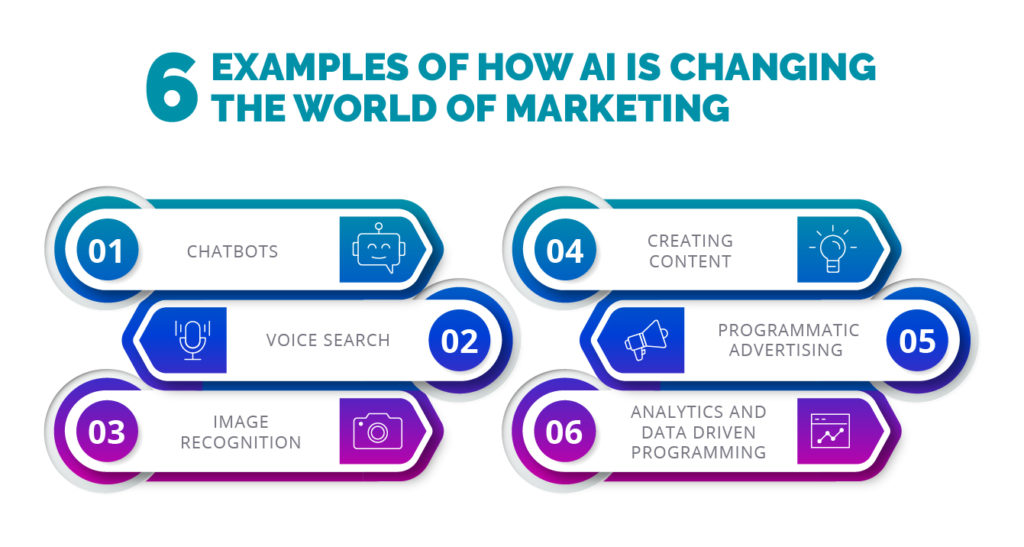
Here are six examples of how AIis changing the world of marketing:

1.Chatbots

Chatbots are applications that allow you to simulate a conversation with a real person by providing automatic responses to your most common doubts or questions. Companies have started using them as an alternate way of managing customer service while facilitating communication throughout the entire Customer Journey, particularly in Support areas

2. Voice search

The feature allows searches carried out by the human voice in systems that can understand it. Its use has expanded in accordance with the development of mobile devices and acts as an alternative to written searches. The advancement of technology in this sector has resulted in the introduction of several search assistants such as Cortana and Siri. These assistants can process and comprehend the user’s natural language and interact with it thanks to AI.

3. Image recognition

A process carried out by software that recognizes images from complex mathematical algorithms. AI is capable of identifying, analyzing, and comparing the arrays of bits that make up a digital image, in order to carry out some action based on the information obtained.

4. Creating Content

Creating content is difficult, and creating high-quality content is much more challenging! However, AI enables engines to produce personalized, appealing, and conversion-optimized content, providing users with unique experiences. This is due to the fact that AI is capable of learning the preferences of our key audiences and generating material based on their interests.

5. Programmatic Advertising

A smarter way to advertise online. Advertisers pay for their ads to be shown only to their target audiences, allowing brands and consumers to connect at the right time, place and in the right way, thereby detecting that a specific person has a real interest in receiving a certain advertisement. This is how programmatic advertising is growing very quickly in the media, and everything indicates that this trend will continue to rise.

6. Analytics and Data Driven Programming

AI is used in the analysis and measurement of results. This is completely necessary for ensuring the success of any strategy, because AI performs real-time tracking with contrasting information for local decision-making, assisting in the resolution of problems and proposing changes to the strategy to better suit the user.

According to SEM Rush, by 2022 companies are expected to have an average of 35 AI projects.

How can the Business to Business (B2B) and Business to Consumer (B2C) sectors benefit from AI?

The incorporation of AI in the B2C field has occurred more quickly and naturally than in the B2B world, which has been changing in recent times. This is primarily due to its ability to process enormous amounts of data that are very useful to improve the customer journey, lead generation, personalization of messages, and the offer of products and services in real-time, to name a few. This skill, which is nothing more than Big Data, has been the foundation of countless companies and their individual Digital Marketing plans for companies in both industries.

At Isource Marketing, we are continuously improving our knowledge and use of AI technologies, and we have a professional team that develops projects in the most efficient way, with services that improve our clients’ experiences. Contact us at https://old.web.isource.us/#contact for more details. We are happy to assist you with your digital transformation strategy!

Front End Developer
Passion: Videogames, Drawing

Design thinking: Think big to generate value for your business

Design thinking: Think big to generate value for your business

Share

AI

AR

Automation

B2B

blog

Content

Creativity

Customer

Design

Digital Marketing

Events

Hubspot

IA

Influencers

job

Lead Generation

marketing

Newsletter-en

PR

Sales

UI

Uncategorized

UX

Design thinking is an iterative process that utilizes a set of design techniques to generate, develop, and test new ideas in order to create products and services that are technologically possible and financially viable.

It is based on the generation of empathy, by understanding the problems, needs and desires of users, as well as teamwork, since it values the contribution of various collaborators who participate in the process. It also promotes the playful side, that is, enjoying the process itself and fostering the ease required for the process to be effective.

Why should you apply design thinking in your business?

More and more Business to Business (B2B) companies recognize the value of design thinking, and we are frequently asked by current and prospective clients how to incorporate this technique into their internal processes in order to better understand their clients’ needs and enhance sales.

According to some research, team members that utilize design thinking outperform those that use other innovative approaches, particularly in terms of relevance and viability, since it places the human being in the eye of the hurricane, which is critical for any business.

There are several techniques for design thinking. One of them, perhaps the most used, is SCAMPER, an acronym for Substitute, Combine, Adapt, Modify, Propose other uses, Eliminate and Reorganize. The Customer Journey also stands out, although it is not a creative technique, it appeals to the journey made by the consumer in the purchase cycle, which allows information about their habits to be obtained. . Lastly, there is the Mind Map, a visual technique that manages to stimulate neuronal connections, giving rise to innovative and surprising ideas. 

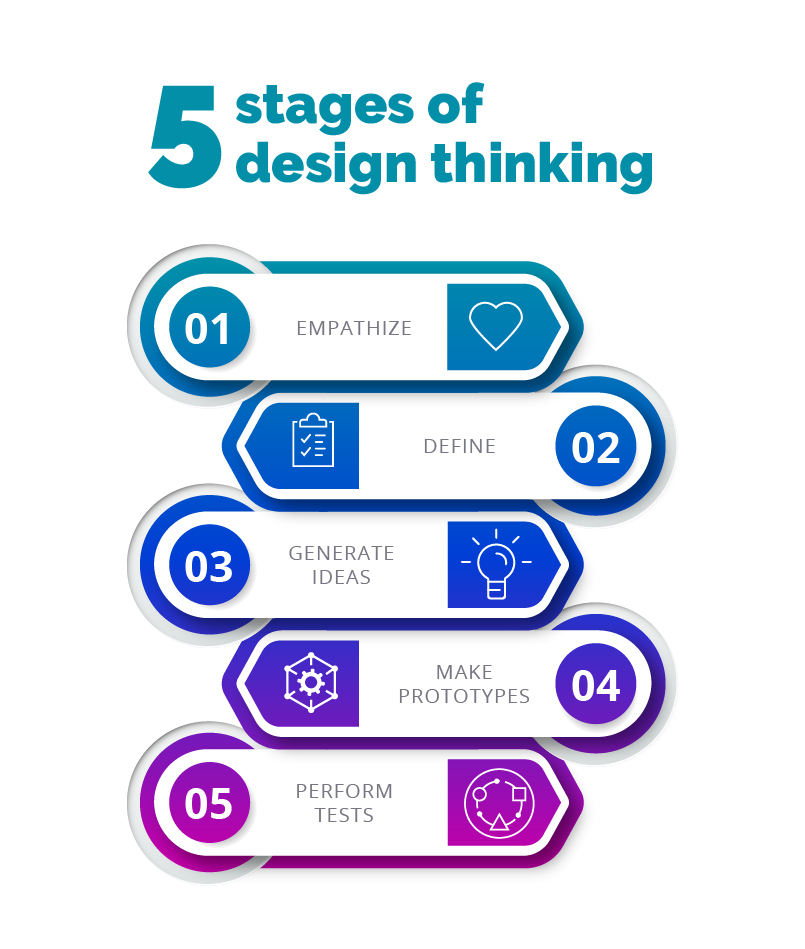
5 stages of design thinking:

1. Empathize: It is about understanding the problem that the client needs to solve. This phase usually begins with a user or consumer research.

2. Define: It consists of identifying and defining the needs and challenges that we face.

3. Generate ideas: Thinking outside the box is crucial at this stage, in order to seek alternative ways of looking at the problem and identify innovative solutions.

4. Make prototypes: We begin by determining the best solution for each challenge. We must build or design very primitive versions of the final solution.

5. Perform tests: The evaluators thoroughly test and review the proposed sketches or solutions. It will revert to previous stages if necessary to make modifications and improvements.

In what other processes does it help to implement design thinking?

1. It allows for the improvement and growth of other stages of the sales strategy. Because it encourages innovation and creativity and results in more relevant value propositions for customers.

2. The current digital dynamic encourages feedback and insight discovery. It is now feasible to communicate directly with customers through technical means, such as forms, email marketing campaigns, and social media.

3. Encourage teamwork. Involving individuals from all positions in the development of solutions boosts motivation.

4. Optimize costs. It allows low-cost implementations before making decisions and making larger investments.

As you can see from this blog, the design thinking process may assist you in developing successful solutions for your projects. And, as a communication and digital marketing agency, Isource Marketing is here to support you. Do not hesitate to contact us by clicking here: https://old.web.isource.us/#contact

Creative Director
Passion: Music

Digital Marketing Strategies for Tech Startups

Digital Marketing Strategies for Tech Startups

Share

AI

AR

Automation

B2B

blog

Content

Creativity

Customer

Design

Digital Marketing

Events

Hubspot

IA

Influencers

job

Lead Generation

marketing

Newsletter-en

PR

Sales

UI

Uncategorized

UX

Startups are a leading business model that drives innovation and economic growth worldwide. Each year, new types of products and services are created by startups. They serve as a great example of entrepreneurial creativity and ambition, as well as the emergence of ground-breaking concepts. Unfortunately, marketing is not one of their strong suits. And it’s understandable: most of them got their start not by writing case studies and sending emails but by building cutting-edge technology. Not to mention that traditionally, digital marketing was only available to large corporations in the B2B (business-to-business) and B2C (business-to-consumer) sectors. 

However, there is some good news. According to First Site Guide7.1% of the startups in the world operate in the fintech industry. Followed by life sciences and healthcare with 6.8%, artificial intelligence with 5.0%, gaming 4.7%, adtech 3.3%, and edtech with 2.8%. Modern startups are drawn to the internet and digital technology, despite the lack of precise industry distribution data. As a result, a strong online marketing plan is essential for every business hoping to achieve success. 

When it comes to digital marketing, Tech firms should put a lot of effort investing into many different aspects. Most importantly, this powerful tool is here to stay, and it can quickly enhance your Tech startup’s success. Today, web advertising is more inclusive than ever before: it knows no boundaries. For example, if you have a software company and you want to target customers in several countries, online marketing will help you achieve that. In this article, we will guide you through some ways to develop an effective digital marketing strategy for your Tech startup.

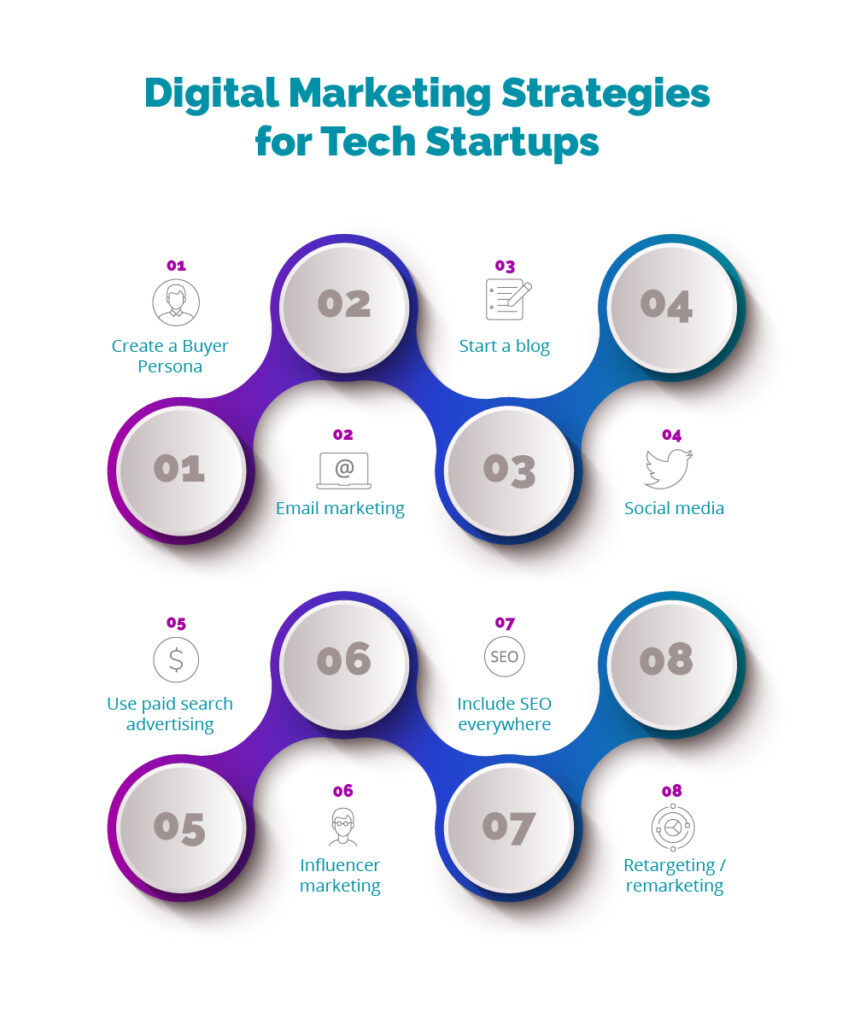
1. Create a Buyer Persona

Developing a buyer persona is the most critical step in digital marketing and that’s the reason we put it at the forefront. This includes gathering important details about your audience, such as age, name, location, income, job, their demands and how they search for products and services on the internet. Once you have successfully gathered this information, you can focus on building the right marketing strategy. There is enough evidence to suggest that the buyer persona is essential for every modern business. Even more so when it comes to a Tech startup, because many IT experts have already joined the initiative to offer their services to customers all over the world.

2. Email marketing

Did you know that email marketing continues to dominate the startup marketing world?  This tool allows you to connect with your target audience in ways that no other channel can. While it is a platform that has been around for many years, it is still one of the most effective startup channels, which is why marketing giants suggest relying on email newsletter solutions to harness the full potential of email marketing. 

Developing a buyer persona is the most critical step in digital marketing

3. Start a blog

​​Creating a blog is one of the most successful ways to begin increasing  traffic in the technology startup sector. Remember, you have great tech skills to capitalize on, so if writing isn’t your strong suit, hire a writer or content creator. It is one of the most effective methods to showcase your brand’s story and spread the word about your products and services. Blogging will help with SEO and increase your search rankings. Take advantage of all the ways you can benefit from your content efforts. A couple of ideas are to include relevant and reliable sources and links in your blog posts, link your website content to posts, and write guest blogs to improve brand awareness and get your name out there. Blogging also gives you a lot of versatility. You can decide the direction of your blog and the type of content you want to share. For example, you can write about anything from specialized technology topics to industry news.

4. Social media

While social media is a powerful networking platform, it has also evolved into a savvy marketing tool that businesses in a number of sectors use to broaden their reach. And because it’s a huge platform, crafting your startup’s social media marketing strategy can be overwhelming. You could start by determining the platform that fits your brand. Facebook, Twitter, Instagram, Tik Tok, Reddit, Pinterest and LinkedIn all have unique things to offer. All these platforms offer many ways to engage with audiences, from joining the discussion on a trending hashtag to publishing articles on LinkedIn and empowering employees to act on your company’s behalf. Participate in LinkedIn groups and answer questions on Quora. At the same time, seek out discussions that are relevant to the solution you offer and find a way to help out.

5. Use paid search advertising (SEM)

Paid search has become a very popular advertising channel for startups. It allows users to buy laser-targeted traffic on search engines such as Google and Bing, two of the leading paid search networks that offer the ability to target keywords on a cost-per-click (CPC) pricing model. Using either of these networks, you can create customized ads for your startup that appear in search results when someone searches for a keyword related to your business

SEO is the foundation of successful digital marketing

6. Influencer marketing

Prominent Tech leaders who have huge followings on social media have authority and influence within the IT industry and market. Influencer marketing can be very powerful in this sector when companies utilize these tech leaders. If they have the secret sauce, i.e. a large following in your industry, they likely have influence over your target market. Partnering with these content creators can help you drive brand awareness to your target audience. Once your target audience is aware of your startup, your goal is reached. 

7. Include SEO everywhere

Search engine optimization (SEO) is the foundation of promising digital marketing. Besides being the basis of organic marketing, it is a key determinant of long-term marketing success. In fact, most marketers and experts associate SEO with long-form content or as part of the best blogging practices. However, you can use relevant keywords in your social media posts, hashtags, product descriptions, etc.  We suggest you incorporate an SEO strategy into your blog posts, overall content curation and marketing strategy. In addition, including long-tail keywords in your topic selection and blog content is an effective way to attract traffic in the long term. 

8. Retargeting / Remarketing

Email marketing, social media advertising and display ads are great for retargeting strategies. Retargeting is basically a marketing campaign based on a user’s past behavior. For example, LinkedIn allows you to set ads for specific individuals based on what they have done on your website. Meaning, if someone visits your website, adds an item to a shopping cart but doesn’t complete the purchase, you can place an ad for that product on LinkedIn and/or send the user a personalized email reminding them to come back and complete their purchase.  While the terms “retargeting” and “remarketing” are sometimes used interchangeably, the main difference is that retargeting is primarily concerned with sending cookie-based ads to potential customers, whereas remarketing is typically email-based.

So, now you know. At Isource we have all the tools and resources you’ll need to make your startup marketing campaign go through the roof. From creating a buyer persona and social media strategy to developing a search and SEO campaign, you can count on us to provide the best support possible at https://old.web.isource.us/#contact Contact us!

Project Account Manager
Passion: Nature and well being

Agile Marketing: An optimization strategy for your business

Agile Marketing: An optimization strategy for your business

Share

AI

AR

Automation

B2B

blog

Content

Creativity

Customer

Design

Digital Marketing

Events

Hubspot

IA

Influencers

job

Lead Generation

marketing

Newsletter-en

PR

Sales

UI

Uncategorized

UX

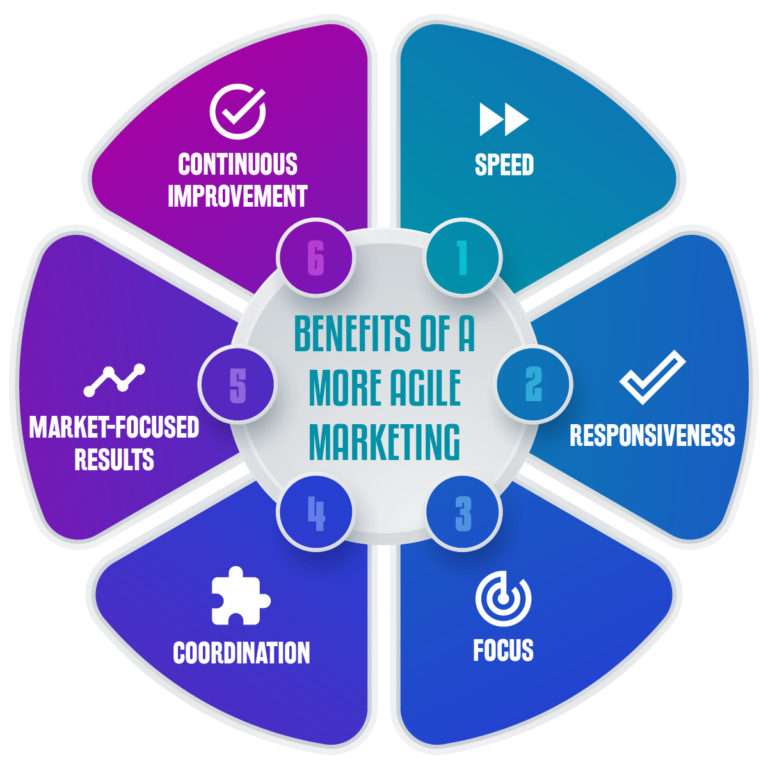
Adapting to changes, working collaboratively and learning from failure are some of the principles of Agile Marketing, a philosophy that started almost a decade ago and has recently become a necessity for companies with the arrival of COVID-19.

In our experience, in the marketing industry we have seen how some clients manage multiple campaigns at the same time and in an automated way, meaning that by having an agile methodology that improves speed, predictability, transparency and adaptability should be a priority.

According to the Agile Sherpas survey, 58% of marketers choose Agile Marketing because it increases team productivity. Statistics even indicate that the growth of this philosophy grew by 32% in 2019 and 42% in 2020.

Next, we list 7 ideas to take into account when adopting an agile look at the Marketing area:

1. Create a marketing war-room team

It consists of bringing together a small group of talented people who work quickly and have cross-functional skills. For example, if it is an email marketing campaign project, the room should include a copywriter, a UX designer, a programmer and a Marketing strategist. Your responsibilities include collaboratively running A/B testing to find the best creative and narrative path for the success of your email marketing campaigns.

2. Choose tools that enhance communication and team effectiveness

It is vital to have effective tools and processes that help strengthen communication and synergy among stakeholders in the area. Some of those tools can be Asana, Monday, BaseCamp, to name a few.

3. Prioritize hypotheses over opinions and conventions

Marketing is a purely intellectual and creative area, which makes it inherently complex and non-linear, therefore its execution must be carried out through a process of feedback of tactics and strategies that contemplates the implementation, measurement and continuous learning.

4. Customer-focused collaboration

It is not a secret that marketing must focus on the needs of the client, so the decision-making must always be focused on them, in an integral way -not isolated- or never from a hierarchical position.

5. Develop adaptive campaigns more like “mega-campaigns”

Thinking of small strategies and executing them quickly under a non-linear and adaptive scheme is highly convenient. For example, A/B testing provides valuable information for a real knowledge of customers and allows you to adjust the planning according to what really works.

6. Discover the customer without static predictions

Taking into account the adaptive focus, it is possible to know clients dynamically through their interactions.

7. Plan flexibly and continuously

There is nothing wrong with planning, when thinking about change. For example, when a project includes a high load of creativity in complex and changing environments, strict plans are speculative, and do not reflect reality, therefore they do not add value.

But, how did Agile methodology come about?

Agile methodology as we know it, dates back to 2001, in response to cascading approaches to project management, which are typically organized as a series of linear sequences. Consequently, a group of software developers wrote the Manifesto for Agile Software Development, with a novel approach to software development that includes four fundamental characteristics:

  • People and interactions before processes and tools.
  • The software in operation, before the exhaustive documentation.
  • Collaboration with the client before contractual negotiation.
  • The response to change rather than adherence to a plan.

Case Study: Latin American Bank adopts the agile methodology

A company in the financial sector in Ecuador decided to start its process of adopting agility with Isource Marketing, to improve its position in the financial sector.

The entity started with the incorporation of the methodologies in its innovation team, forming agile teams that generated new products and services to meet the needs of its customers more effectively. However, they encountered an internal bottleneck: response times and quality of Marketing deliverables -a key step for the project- were not as expected.

For this reason, they decided to hire our services with the aim of understanding and strategizing the current situation of the team by creating the ideal path in the adoption of agile marketing, which consisted of five phases: Identification and advice, solution, training to the Marketing area, adoption and evaluation/optimization.

At Isource Marketing we firmly believe in agility and, therefore, we are specialists in helping our clients adopt agile methodologies. If you want to know more about it or meet us, click here.