

Newsletter
September 2025
June 2025
May 2025
April 2025
March 2025
February 2025
January 2025
Categories
AI
- Why Reddit Should Be Part of Your B2B Marketing Strategy
- 3 Things You Must Change in B2B Marketing to Increase Sales in 2026
- 3 Things You Must Change in B2B Marketing to Increase Sales in 2026
- Loop Marketing: The key strategy for your success in 2026
- Ghost SEO: Don’t disappear in the era of AEO
- AI Agents: What they are, how they work, and why your Marketing Team needs one
- HubSpot in Action: Scale your B2B Marketing with CRM, AI, and Automation
- Is your marketing ROI stagnant? AI is the solution You’ve been looking for
- What Digital Advertising Will Bring in 2025: Trends and Tools You Need to Know
- Intelligent Creativity: How AI Influences UX/UI Design
- Step into Evolution: Enhance Your CRM with AI
- How to write a good AI prompt to improve your work?
- The growing reach of ChatGPT in Marketing
- Case Study: Augmented Reality Filters on INSTAGRAM: A key ally for a successful brand strategy
- Public Relations & Artificial Intelligence – A new Alliance
- More science and less fiction: Artificial Intelligence applied to Marketing
AR
- Case Study: Augmented Reality Filters on INSTAGRAM: A key ally for a successful brand strategy
- Augmented Reality in social media: the next step in your digital strategy
Automation
- 3 Things You Must Change in B2B Marketing to Increase Sales in 2026
- Loop Marketing: The key strategy for your success in 2026
- AI Agents: What they are, how they work, and why your Marketing Team needs one
- HubSpot in Action: Scale your B2B Marketing with CRM, AI, and Automation
- Is your marketing ROI stagnant? AI is the solution You’ve been looking for
- What Digital Advertising Will Bring in 2025: Trends and Tools You Need to Know
- Intelligent Creativity: How AI Influences UX/UI Design
- Step into Evolution: Enhance Your CRM with AI
- How to write a good AI prompt to improve your work?
- The growing reach of ChatGPT in Marketing
- Case Study: Augmented Reality Filters on INSTAGRAM: A key ally for a successful brand strategy
- Public Relations & Artificial Intelligence – A new Alliance
- More science and less fiction: Artificial Intelligence applied to Marketing
B2B
- Ghost SEO: Don’t disappear in the era of AEO
- Reimagining B2B Marketing: The new era of ISM and what’s next for your brand
- The evolution of content in the Customer Journey: From a linear funnel to a digital path
- The Secrets of LinkedIn’s Algorithm: Foolproof Tricks for Your Strategy
- Complete Guide to a Customer Experience-Based GTM Strategy
- Is BANT Still Relevant in 2024? Alternative Frameworks
- Why should TikTok be included in your B2B marketing plan?
- 7 tips to prospect clients in the B2B sector
- If your business wants to attract millennials, read this article. You may be surprised!
- Once upon a time… Storytelling in B2B
- Digital Marketing Strategies for Tech Startups
- 8 Ideas for B2B Lead Generation
blog
- Why Reddit Should Be Part of Your B2B Marketing Strategy
- 3 Things You Must Change in B2B Marketing to Increase Sales in 2026
- 3 Things You Must Change in B2B Marketing to Increase Sales in 2026
- Loop Marketing: The key strategy for your success in 2026
- Ghost SEO: Don’t disappear in the era of AEO
- Reimagining B2B Marketing: The new era of ISM and what’s next for your brand
- AI Agents: What they are, how they work, and why your Marketing Team needs one
- HubSpot in Action: Scale your B2B Marketing with CRM, AI, and Automation
- Is your marketing ROI stagnant? AI is the solution You’ve been looking for
- The evolution of content in the Customer Journey: From a linear funnel to a digital path
- Comprehensive Guide: Advanced Inbound Marketing Strategies for the Technology Sector
- Sales Funnel for Tech Companies: How to Capture Leads and Accelerate Your B2B Sales
- What Digital Advertising Will Bring in 2025: Trends and Tools You Need to Know
- The Secrets of LinkedIn’s Algorithm: Foolproof Tricks for Your Strategy
- Complete Guide to a Customer Experience-Based GTM Strategy
- Intelligent Creativity: How AI Influences UX/UI Design
- Step into Evolution: Enhance Your CRM with AI
- Is BANT Still Relevant in 2024? Alternative Frameworks
- What is Advergaming? Benefits and Examples
- How to write a good AI prompt to improve your work?
- The Future of Marketing: Predictions for 2024
- Inspire Your Brand Strategy with Taylor Swift’s Marketing Moves
- Tips and ideas to plan your end-of-year celebrations for work
- Viral Marketing: Strategy or luck?
- Micro-influencers and UGC content generators: Key elements in the marketing strategy
- The growing reach of ChatGPT in Marketing
- Why should TikTok be included in your B2B marketing plan?
- Case Study: Augmented Reality Filters on INSTAGRAM: A key ally for a successful brand strategy
- MQL and SQL: The Key to Increase Your Sales in 2022
- Public Relations & Artificial Intelligence – A new Alliance
- 7 tips to prospect clients in the B2B sector
- UX Writing: Creating Human-Centered Content
- More science and less fiction: Artificial Intelligence applied to Marketing
- Augmented Reality in social media: the next step in your digital strategy
- Design thinking: Think big to generate value for your business
- If your business wants to attract millennials, read this article. You may be surprised!
- Once upon a time… Storytelling in B2B
- Digital Marketing Strategies for Tech Startups
- The importance of a good influencer marketing strategy
- Learn why your company’s website should be Mobile-First!
- New UX Design Trends
- Agile Marketing: An optimization strategy for your business
- 8 Ideas for B2B Lead Generation
Content
- The Future of Marketing: Predictions for 2024
- Inspire Your Brand Strategy with Taylor Swift’s Marketing Moves
- Viral Marketing: Strategy or luck?
- UX Writing: Creating Human-Centered Content
- Augmented Reality in social media: the next step in your digital strategy
- If your business wants to attract millennials, read this article. You may be surprised!
- Once upon a time… Storytelling in B2B
Creativity
- The Future of Marketing: Predictions for 2024
- Inspire Your Brand Strategy with Taylor Swift’s Marketing Moves
- Viral Marketing: Strategy or luck?
- Why should TikTok be included in your B2B marketing plan?
- UX Writing: Creating Human-Centered Content
- Augmented Reality in social media: the next step in your digital strategy
- If your business wants to attract millennials, read this article. You may be surprised!
- Once upon a time… Storytelling in B2B
Customer
- The evolution of content in the Customer Journey: From a linear funnel to a digital path
- Complete Guide to a Customer Experience-Based GTM Strategy
- Learn why your company’s website should be Mobile-First!
Design
- UX Writing: Creating Human-Centered Content
- Learn why your company’s website should be Mobile-First!
- New UX Design Trends
Digital Marketing
- 3 Things You Must Change in B2B Marketing to Increase Sales in 2026
- Loop Marketing: The key strategy for your success in 2026
- AI Agents: What they are, how they work, and why your Marketing Team needs one
- Is your marketing ROI stagnant? AI is the solution You’ve been looking for
- Comprehensive Guide: Advanced Inbound Marketing Strategies for the Technology Sector
- What Digital Advertising Will Bring in 2025: Trends and Tools You Need to Know
- The Secrets of LinkedIn’s Algorithm: Foolproof Tricks for Your Strategy
- Step into Evolution: Enhance Your CRM with AI
- Is BANT Still Relevant in 2024? Alternative Frameworks
- What is Advergaming? Benefits and Examples
- How to write a good AI prompt to improve your work?
- The Future of Marketing: Predictions for 2024
- Inspire Your Brand Strategy with Taylor Swift’s Marketing Moves
- Viral Marketing: Strategy or luck?
- The growing reach of ChatGPT in Marketing
- Why should TikTok be included in your B2B marketing plan?
- More science and less fiction: Artificial Intelligence applied to Marketing
- Design thinking: Think big to generate value for your business
- Digital Marketing Strategies for Tech Startups
- Agile Marketing: An optimization strategy for your business
Events
Hubspot
IA
- 3 Things You Must Change in B2B Marketing to Increase Sales in 2026
- Loop Marketing: The key strategy for your success in 2026
- Ghost SEO: Don’t disappear in the era of AEO
- Reimagining B2B Marketing: The new era of ISM and what’s next for your brand
Influencers
job
Lead Generation
- Comprehensive Guide: Advanced Inbound Marketing Strategies for the Technology Sector
- Sales Funnel for Tech Companies: How to Capture Leads and Accelerate Your B2B Sales
- MQL and SQL: The Key to Increase Your Sales in 2022
- 7 tips to prospect clients in the B2B sector
- 8 Ideas for B2B Lead Generation
marketing
- Why Reddit Should Be Part of Your B2B Marketing Strategy
- 3 Things You Must Change in B2B Marketing to Increase Sales in 2026
- Ghost SEO: Don’t disappear in the era of AEO
Newsletter-en
- Newsletter September 2025
- Newsletter June 2025
- Newsletter May 2025
- Newsletter April 2025
- Newsletter March 2025
- Newsletter February 2025
- Newsletter January 2025
PR
- Micro-influencers and UGC content generators: Key elements in the marketing strategy
- Public Relations & Artificial Intelligence – A new Alliance
Sales
- Sales Funnel for Tech Companies: How to Capture Leads and Accelerate Your B2B Sales
- What is Advergaming? Benefits and Examples
- Tips and ideas to plan your end-of-year celebrations for work
- MQL and SQL: The Key to Increase Your Sales in 2022
- Design thinking: Think big to generate value for your business
- Agile Marketing: An optimization strategy for your business
UI
Uncategorized
UX
Archive
- Why Reddit Should Be Part of Your B2B Marketing Strategy
- 3 Things You Must Change in B2B Marketing to Increase Sales in 2026
- 3 Things You Must Change in B2B Marketing to Increase Sales in 2026
- Loop Marketing: The key strategy for your success in 2026
- Ghost SEO: Don’t disappear in the era of AEO
- Reimagining B2B Marketing: The new era of ISM and what’s next for your brand
- AI Agents: What they are, how they work, and why your Marketing Team needs one
- HubSpot in Action: Scale your B2B Marketing with CRM, AI, and Automation
- Is your marketing ROI stagnant? AI is the solution You’ve been looking for
- The evolution of content in the Customer Journey: From a linear funnel to a digital path
- Comprehensive Guide: Advanced Inbound Marketing Strategies for the Technology Sector
- Sales Funnel for Tech Companies: How to Capture Leads and Accelerate Your B2B Sales
- What Digital Advertising Will Bring in 2025: Trends and Tools You Need to Know
- The Secrets of LinkedIn’s Algorithm: Foolproof Tricks for Your Strategy
- Complete Guide to a Customer Experience-Based GTM Strategy
- Intelligent Creativity: How AI Influences UX/UI Design
- Step into Evolution: Enhance Your CRM with AI
- Is BANT Still Relevant in 2024? Alternative Frameworks
- What is Advergaming? Benefits and Examples
- How to write a good AI prompt to improve your work?
- The Future of Marketing: Predictions for 2024
- Inspire Your Brand Strategy with Taylor Swift’s Marketing Moves
- Tips and ideas to plan your end-of-year celebrations for work
- Viral Marketing: Strategy or luck?
- Micro-influencers and UGC content generators: Key elements in the marketing strategy
- The growing reach of ChatGPT in Marketing
- Why should TikTok be included in your B2B marketing plan?
- Case Study: Augmented Reality Filters on INSTAGRAM: A key ally for a successful brand strategy
- MQL and SQL: The Key to Increase Your Sales in 2022
- Public Relations & Artificial Intelligence – A new Alliance
- 7 tips to prospect clients in the B2B sector
- UX Writing: Creating Human-Centered Content
- More science and less fiction: Artificial Intelligence applied to Marketing
- Augmented Reality in social media: the next step in your digital strategy
- Design thinking: Think big to generate value for your business
- If your business wants to attract millennials, read this article. You may be surprised!
- Once upon a time… Storytelling in B2B
- Digital Marketing Strategies for Tech Startups
- The importance of a good influencer marketing strategy
- Learn why your company’s website should be Mobile-First!
- New UX Design Trends
- Agile Marketing: An optimization strategy for your business
- 8 Ideas for B2B Lead Generation
2026
2025
2024
2023
2022
2021
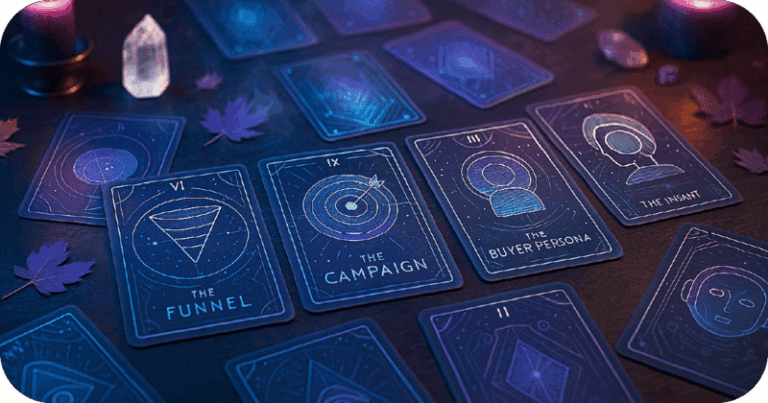
2026 will be the year when brands that want to stay competitive must adopt smarter strategies powered by data, AI, automation, and a real customer-first mindset.
If you thought automation and AI were just “trends,” 2026 will prove they are now requirements for consistent, measurable growth with strategic vision, adaptation, and continuous implementation.
In this blog, we share our predictions for B2B tech marketing in 2026, along with practical strategies to help your brand not only survive but lead. #NoBS
Operational and Governed AI: From hype to a real Growth Engine
We can describe 2025 as the “baby boom” of generative AI: plenty of experimentation, some wins, and a whole lot of testing. In 2026, everything changes. AI stops being a pilot initiative and becomes critical infrastructure within the B2B Go-to-Market (GTM) ecosystem.
Companies that already adopted AI in their processes are reporting real improvements in efficiency, reduced repetitive work, and higher productivity. But with great power comes great responsibility. Analysts warn that unmanaged AI could cost B2B companies billions in 2026 if quality, ethics, and human oversight policies are not implemented.
What to do now
- Apply a “governed AI” approach: define quality controls, human review steps, and clear guidelines for sensitive data.
- Measure ROI from day one: set clear KPIs such as time saved, conversion rates, and operational efficiency to justify investment and adjust as needed.
How ISM helps you: We evaluate your current stack, identify relevant use cases, design your AI architecture powered by data, and configure automated workflows ready to scale.
AEO + GEO + SEO + Data First = Reinvented Visibility
Since 2025, it’s been clear that traditional SEO is no longer enough. With chatbots, answer engines, and conversational tools, the new standard is AEO (Answer Engine Optimization), an evolution of SEO that blends intent, data, context, and algorithms.

On top of that, a new layer has emerged: GEO (Generative Engine Optimization), focused on how generative models like ChatGPT, Gemini, or Perplexity create content, recommend brands, and structure information. It’s no longer just about showing up; it’s about how AI interprets you, describes you, and includes you in its answers.
What’s changing?
- B2B users want answers, not pages: they expect instant clarity, expert content, and useful data.
- Generative engines no longer “read” your website. They reinterpret it, generate summaries, compare solutions, and recommend providers.
- The semantic quality of your content (conceptual clarity and technical accuracy) determines whether AI considers you a reliable source.
- First-party data is no longer optional. Without it, you lose personalization, attribution, and efficiency.
What should your 2026 strategy look like?
- Prioritize answer-driven content: clear guides, technical FAQs, use cases, and actionable documentation.
- Create “AI-ready” content: organize your text with a clear structure, use concrete concepts like technology or product names, provide brief definitions for technical terms, and maintain precision in your data. This helps AI models understand your content and use it as a reference.
- Optimize for generative engines (GEO): publish verifiable data, benchmarks, definitions, and technical content that AI can draw from.
- Activate your own data: centralize and automate your CRM, strengthen your consent management to protect personal data, and review each customer’s history and interaction signals. Real personalization comes from your own data, not from third parties.
How ISM Helps You: Through Digital Machine, we audit your content architecture and data, lead the redesign and content strategies for AEO/GEO/SEO, and define an implementation plan built on data-first and privacy-first principles.
RevOps, Dynamic ABM, and unified processes: The new commercial muscle

2026 demands fully aligned teams. Marketing, sales, service, and product can no longer operate in silos. RevOps (Revenue Operations) becomes essential for orchestrating data, processes, and technology in one unified flow.
What We’ll See
- Teams aligned on objectives, tools, and data: MQLs, SQLs, pipeline, and opportunities all in one place.
- ABM (Account-Based Marketing) powered by real intent data, automation, and large-scale personalization for key accounts.
- Nonlinear buyer journeys that reflect real B2B behavior, with many touchpoints such as content, demos, events, AI agents, and support interactions.
How to Implement It
- Establish a “single source of truth”: one CRM, one shared dashboard, and aligned processes.
- Prioritize accounts with real signals (intent, behavior, fit). Activate ABM campaigns with personalized outreach and continuous nurture.
- Implement workflows that connect marketing, sales, and customer service from end to end.
How ISM Helps You: Through Pipeline Factory, we define your RevOps structure, design your tech stack (CRM, automation, tracking), and create playbooks that strengthen nurturing and retention.
Human first in an AI-First world: Experience, Trust, and Community

Even though AI dominates the technology landscape, the human factor will be more valuable than ever in 2026. B2B buyers want trust, transparency, and real relationships. That is why leading brands will combine AI with human touch through community, events, experiences, and authentic content.
How to Make It Happen
- Create authentic content: real case studies, testimonials, research, and deep technical insights. No more generic marketing.
- Organize events, webinars, and live conversations because AI can automate, but trust is built by people.
- Support buyers with valuable educational content such as white papers, guides, and tools, while keeping processes transparent.
How ISM Helps You: Through Brand Experience, we develop events that blend technical content with community-building moments, combining AI to streamline production with human expertise to ensure relevant and memorable experiences.
Conclusion

2026 will reward brands that dare to evolve: those that combine technology with authenticity, data with empathy, and automation with real human experiences.
Growth will come to companies that understand that AI does not replace brands; it amplifies their impact.
Continuous innovation and adaptation will be the key for your business to fully leverage B2B marketing in 2026. At Isource, we help you turn these predictions into a real, actionable, and measurable plan.
We want your brand to find the perfect balance between technology that accelerates, strategies that connect, and execution that delivers results. Only #NoBS marketing.