Responsive Menu
Add more content here...

Is your marketing ROI stagnant? AI is the solution You’ve been looking for

Is your marketing ROI stagnant? AI is the solution You’ve been looking for

Share

AI

AR

Automation

B2B

blog

Content

Creativity

Customer

Design

Digital Marketing

Events

Hubspot

IA

Influencers

job

Lead Generation

marketing

Newsletter-en

PR

Sales

UI

Uncategorized

UX

If your marketing team is investing in digital strategies but your return on investment (ROI) isn’t growing at the expected pace, you’re not alone. Many tech companies face this challenge—even with paid campaigns, automation, and optimized content in place.

The reason is simple: traditional marketing is no longer enough. Personalization, real-time responsiveness, and the ability to process large volumes of data are now essential to drive profitability.

This is where artificial intelligence (AI) comes into play. In this blog, we’ll explore how AI is boosting marketing ROI, the key trends shaping the future, and the steps you can take to implement it effectively in your strategy.

Artificial Intelligence in Marketing: The Key to Higher ROI

Artificial intelligence in digital marketing is transforming how tech companies design, execute, and optimize their strategies. With its ability to automate workflows, analyze data in real time, and personalize every customer touchpoint, AI has become a critical ally for driving acquisition, conversion, and long-term loyalty.

By 2025, AI’s impact is no longer a futuristic projection—it’s a measurable and proven reality. This is backed by HubSpot’s recent report Is AI Really Driving ROI for Marketing Teams in 2025?, based on a survey of 700 marketing professionals across Latin America and Spain.

The numbers speak for themselves:

Say AI has improved their marketing ROI.

0 %

Report a direct increase in revenue due to AI implementation.

0 %

Have reduced operational costs through more efficient processes.

0 %

Have improved both content quality and team productivity.

0 %

For tech companies and startups, this represents a unique opportunity to accelerate execution and make smarter, data-driven decisions in real time. AI is no longer optional—it’s the new standard for scaling marketing results with intelligence.

How Is AI Impacting Digital Marketing?

Tech companies are leveraging AI across three key areas to boost profitability and optimize their marketing strategies.

1. AI for Automation and Operational Efficiency

AI-driven marketing automation is one of the fastest-growing areas. In fact, 49.2% of marketers already use chatbots and virtual assistants to enhance user experience and accelerate lead conversion.


Many platforms have integrated AI into their CRM systems to streamline processes such as:


  • Automated audience segmentation for more precise targeting.

  • Email and workflow automation to improve conversion rates.

  • Virtual assistants that handle real-time inquiries and qualify prospects.


With tools like HubSpot Content Assistant and ChatSpot, marketing teams can generate SEO-optimized content, manage customer interactions, and launch campaigns—without manual intervention.

2. AI for Predictive Analysis and Campaign Optimization

In 2025, digital advertising is no longer about simply launching ads—it’s about analyzing real-time data to maximize ROI.

47.5% of marketers already use AI to predict customer behavior and adjust their campaigns across platforms like Google Ads, Meta, and LinkedIn.

With solutions like HubSpot Customer Journey Analytics, companies can:

  • Forecast buying trends and tailor their strategies accordingly.

  • Optimize ad spend in real time, maximizing every marketing dollar.

  • Eliminate underperforming audiences to cut campaign costs.

The result? Greater efficiency, higher-quality leads, and stronger conversions.

3. AI-Powered Content Personalization in Digital Marketing

AI-generated content is another major trend gaining traction. 41.3% of marketers are already using AI tools to create tailored content for different audience segments.

But it’s not just about producing more—it’s about creating highly personalized content based on user behavior. With AI, you can:


  • Generate SEO-optimized blog posts to drive organic traffic.

  • Automate personalized ad copy and email sequences.

  • Create AI-powered visual content, cutting down design and production costs.


Platforms like HubSpot AI Content Generator empower marketing teams to deliver high-impact content without sacrificing quality or strategy.

Challenges and Opportunities of AI in Marketing

While AI in marketing is having a positive impact on ROI, many companies still face implementation challenges.

According to HubSpot’s report:

  • 50% of marketers are not leveraging AI’s full potential due to lack of training.

  • 46.2% cite a shortage of technical knowledge as a barrier.

  • 38.3% experience internal resistance to change.


Despite these challenges, the outlook is promising:
80.3% of marketing professionals plan to increase their use of AI in 2025.

So, what’s on the horizon?

  • Real-time conversion optimization

  • Hyper-segmented personalization at scale

  • Advanced automation powered by AI agents


The strategic adoption of these technologies won’t just improve results—it will determine who leads and who gets left behind in the tech-driven market.

Integrating AI into your marketing strategy goes beyond task automation—it’s about delivering measurable, sustainable results. To achieve that, you must focus on tracking impact and optimizing in real time.

Define Your Key Metrics

Start by identifying clear indicators that help evaluate the ROI of your AI-driven initiatives:

  • Conversion rate

  • Customer acquisition cost (CAC)

  • Customer lifetime value (CLTV)

These metrics reveal how effective your personalized and automated campaigns truly are.

Optimize Continuously

AI enables real-time optimization throughout your campaigns:

  • Reallocate budgets toward high-performing channels.

  • Personalize messages based on user behavior and intent.

Enhance segmentation using up-to-date and predictive data.

How to Implement AI in Your Strategy to Drive ROI

Companies Already Seeing Results

Linkedin

Increased conversions with AI-personalized ad campaigns.

Deloitte

Achieved a 74% boost in customer satisfaction.

Amazon

Scaled sales through dynamic recommendations and pricing.

Implementing AI strategically doesn’t have to be complex—with the right tools and a data-driven approach, it’s entirely achievable.

Key Takeaways

AI is no longer just a trend—it’s a strategic tool, unlocking new opportunities to improve marketing ROI.
Teams that implement AI effectively are seeing higher conversion rates, lower operational costs, and highly personalized campaigns. If your ROI is stagnant, now you know how to reignite it through AI. This is the moment to evolve your strategy.
At Isource, as certified HubSpot partners, we help tech companies integrate AI into their marketing with tools that enable faster, smarter, and data-driven decision-making.

Contact us today and discover how to build an AI-powered marketing strategy that maximizes your ROI.

Is BANT Still Relevant in 2024? Alternative Frameworks

Is BANT Still Relevant in 2024? Alternative Frameworks

Share

AI

AR

Automation

B2B

blog

Content

Creativity

Customer

Design

Digital Marketing

Events

Hubspot

IA

Influencers

job

Lead Generation

marketing

Newsletter-en

PR

Sales

UI

Uncategorized

UX

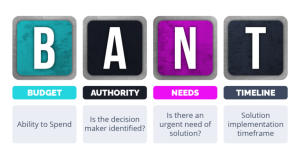
In today’s fast-paced world of business-to-business (B2B) technology sales, the methods we use to find and support potential customers are always changing. BANT, a tried-and-true approach, has long been a key tool. Created by IBM, BANT helps sales teams figure out if a potential customer has the Budget, Authority to make a purchase, a Need for the product, and a suitable Timing. This approach has been essential for sales teams to determine if a prospect is likely to become a customer.

However, it’s crucial to question whether BANT can still meet the demands of the current market. With new tech and changes in the way people buy, looking into new strategies is key to keeping up.

Blog-March-2024_Blog-2-EN-768x408

BANT and the Evolution of Lead Qualification

Checking if someone is likely to make a purchase (lead qualification) is crucial in sales, ensuring our efforts and resources are focused on potential customers who are actually interested. BANT has long served as an easy-to-follow guide for this purpose. However, BANT was created in a time when sellers had more influence over sales. Nowadays, with the internet, buyers do a lot of research and consider various options well before they speak to a salesperson.

This shift means it’s time to rethink old methods like BANT. Sales teams now must navigate a world where buyers are much more informed and have higher expectations. Buyers are looking for products that not only meet their immediate needs but also support their long-term goals.

Alternatives to BANT

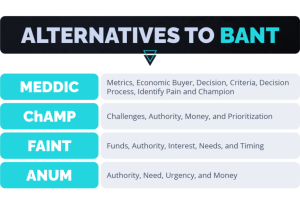
Given that BANT doesn’t fully meet the needs of the modern B2B tech market, new strategies have come up. These new methods are designed to better understand and match today’s buying habits and what the market wants.

Blog-March-2024_Blog-3-EN-768x523

CHAMP

CHAMP stands for understanding the customer’s main CHALLENGES, who has the AUTHORITY to make decisions, how much MONEY they have, and what needs to be done first (PRIORITIZATION). This method focuses more on what the buyer needs than on selling. It helps sales teams make their pitches more relevant by showing how they can solve the buyer’s specific problems.

MEDDIC

MEDDIC is about getting to know the buyer’s business better. It stands for looking at METRICS (or measures of success), finding out who the ECONOMIC BUYER is (the person with the money), understanding the DECISION CRITERIA AND PROCESS, IDENTIFYING the main Pain points, and finding a CHAMPION (someone inside the company who supports your solution). This approach makes sure that sales efforts match up with how the buyer makes decisions and works internally. 

ANUM

ANUM redefines the traditional components of BANT by emphasizing AUTHORITY, NEED, URGENCY, and MONEY, highlighting the importance of the decision-maker’s power and the immediate need for a solution. By focusing on the urgency, ANUM equips sales teams to quickly identify and seize opportunities where prospects are ready to make fast decisions.

FAINT

FAINT, which stands for FUNDS, AUTHORITY, INTEREST, NEED, and TIMING, understands that not every potential customer will have a set budget for your product but could find the means if they see its value. This approach is especially useful in the startup world and innovative industries, where budgets are more adaptable.

Choosing the Right Framework Beyond BANT

Selecting the appropriate framework depends on various factors, including your industry, sales cycle length, and the nature of your product or service. While BANT offers a solid foundation, its alternatives can provide a more flexible and modern approach to understanding and engaging with today’s smart buyers.

When you use these methods in your sales plan, it’s important to find the right balance. You need to make sure the leads are really likely to buy, but also be flexible for each potential customer’s special situation. In addition, you should adapt your CRM (Customer Relationship Management) system to successfully implement the chosen framework and reach your goals.

If you want to learn more about sales and marketing, we recommend you to read: Lead generation: The key to success in sales

In Summary

Although BANT’s straightforward approach and emphasis on critical factors are still appreciated, newer frameworks are proving to be more flexible and thorough, better matching the needs of current buyers.

Adopting these new approaches allows sales teams to improve how they decide which leads to focus on, foster stronger connections with potential clients, and achieve greater success. The quest for improved sales techniques in today’s digital era is continuous, emphasizing the importance of staying updated and adaptable.

At Isource Marketing, we firmly believe that businesses should take the latest trends to make their marketing actions more effective and boost their processes. Please, feel free to contact us for advice or quotes on marketing solutions, and take the bold step to enhance your B2B/B2C strategies with us.

Micro-influencers and UGC content generators: Key elements in the marketing strategy

Micro-influencers and UGC content generators: Key elements in the marketing strategy

Share

AI

AR

Automation

B2B

blog

Content

Creativity

Customer

Design

Digital Marketing

Events

Hubspot

IA

Influencers

job

Lead Generation

marketing

Newsletter-en

PR

Sales

UI

Uncategorized

UX

In recent years, the advancement of technology has offered new possibilities for digital marketing, and it is undeniable that digital nano and micro influencers have been gaining more and more space in the market. Micro-influencers are profiles that have between 10 and 100 thousand followers and subscribers on their channels or social networks. Generally, these profiles have a higher engagement rate than the big influencers, who have millions of followers.

This growth has to do with the relevance they have in consumer purchasing decisions. But you may wonder: why can an influencer with fewer followers have an impact on the work of another with millions of followers? And the answer is this: the lack of fame of nano and micro influencers is their biggest advantage, since it makes them more accessible than influencers with millions of followers. In other words, when these characters recommend any product or service on Instagram, their words seem as true as a friend’s advice.

What other advantages do these kinds of influencers have? Higher engagement rates compared to macro influencers. Their rates are cheaper, and they tend to accept products in exchange for their disclosure, they also have a greater commitment to their followers. But this doesn’t mean that big influencers aren’t worth investing in, as brands choose to hire mega-influencers and celebrities when the main goal of the campaign is to reach a broader audience and build brand awareness.

UGC (User Generated Content) are the comments, articles, opinions and reviews made by consumers. It is all content generated by the user of a brand, and not by the company, suppliers, partners or influencers. Other types of media are also considered UGC, such as photos, videos, and reviews. What characterizes this type of content is the spontaneity that the user has to expose their experience with a product or service of a certain brand.

However, as simple as it sounds, this is a whole new topic for businesses in the digital age as they want to explore this more and more. Thanks to the Internet, each consumer is also a creator and distributor; so no matter the scale, Internet users always influence the minds of friends, family, and followers. This is an immense power that companies quickly identified as an opportunity, because it stems from two big habits customers have online: they like to share the experiences they love, and they like to be the first to bring news to their circles of influence. Everyone wants to be cool and fashionable. When companies associate these experiences with their brands, they start to see people willing to produce content related to them. It’s an organic way to enter their lives while promoting a product or service.

From this perspective, micro influencers and UGC have similar roles in a digital marketing strategy: influencing potential consumers of a brand as if they were the best of friends.

A recent Hootsuite study revealed that 58% of Instagram users say they like it more when brands share spontaneous and natural content. And it makes sense, since potential customers know that in the case of ads, these are personalized to attract and engage. When we want to know about a product, we look for reviews and opinions, we ask people we trust. By having a user-generated content strategy by constantly feeding this type of material, you will create authority and value in the marketplace.

By generating content, users also provide insights into their buying process and experience. Also, they are engaged and likely to answer more questions. Therefore, it is essential to use user-generated content to better understand the audience and their expectations. From there, Business Intelligence can be used to modify and adapt all aspects of a great content marketing strategy.

And what are the advantages of joining UGC with paid media?

A great and efficient strategy that we are seeing in the market lately is to use content generated by users or micro influencers in the form of paid digital advertising. This type of social engagement will be crucial so that your advertising is not ignored as another distant advertisement.

User-generated content and nano-influencer content have a lot of benefits for your paid media strategy, let’s look at the 5 most relevant advantages below:

1. More profitable ads

Facebook uses a tool called relevance score, which basically ensures that the most compelling ads are shown to the most relevant people. This means that if your ad receives a high amount of interaction, it’s more likely to serve other people. It may even reduce the amount you pay because Facebook would rather offer relevant content at a lower price than irrelevant content at a higher price.

2. Better ROI

Your ads will appear more authentic and believable to potential buyers by using relevant content from real customers. This way you can increase your ROI by reaching the people who are most interested in what you offer, as opposed to those who would have clicked on an irrelevant ad just out of curiosity.

3. High Results

User-generated content can achieve great results. We are facing short videos and posts with a high viralization power throughout the Internet, therefore, it is to be expected that UGC can move mountains. And it works well when it is organic, can you imagine investing money in this same content?

4. Valuable social test

By showing how others have benefited from your product or service, potential customers are more likely to trust your brand and take action. For one, UGC can help drive potential customers to your website or brand. When people see how satisfied existing customers are with a product or service, it encourages them to take action and buy the product or use a service themselves.

5. Content Reach

Sharing user-generated content with ads on social media tends to reach more people. If you’re segmenting your audiences, you need to leverage user-generated content to satisfy the prospect’s desire. This can help you reach a broader audience, as people are more likely to engage with your content if it comes from real people who have found success using your product or service.

UGC and actions with nano / micro influencers generate great returns, compared to low investment actions. This can be adopted as a strategy in all the pillars of digital marketing, from branding to content production. Therefore, it is key to implement strategies that show the consumer of the brand that you are open to knowing their opinion and show the public that your content is very valuable.

Including the presence of influencers in marketing campaigns will help your brand generate engagement with your target audience, create closer and more natural content, and generate conversion. Like any action, it must be done based on a perfectly defined strategy. At Isource Marketing we can find support and expert advice on this matter. We work with influencers of all sizes so that you can develop the best strategy for your market.
PR & Media Analyst
Passion: Cook, Reading

The growing reach of ChatGPT in Marketing

The growing reach of ChatGPT in Marketing

Share

AI

AR

Automation

B2B

blog

Content

Creativity

Customer

Design

Digital Marketing

Events

Hubspot

IA

Influencers

job

Lead Generation

marketing

Newsletter-en

PR

Sales

UI

Uncategorized

UX

ChatGPT is an amazing solution that helps businesses of all sizes optimize their marketing campaigns and make data-driven decisions.

According to an AI Index study, demand for AI-related skills is increasing in almost all industrial sectors in the United States. And indeed, the number of job postings related to AI increased on average from 1.7% in 2021 to 1.9% in 2022. The study also notes that in countries such as the United States, private investment led the way, allocating 47.4 billion dollars to AI, a figure that is 3.5 times more than that of China, second in the list. And attending to areas, the one with the highest private investment was the medical sector (6.100 million); followed by the cloud and data management and processing (5.900 million); and fintech (5.500 million).

Nevertheless, with the arrival of the fifth generation of Chat GPT from the White House, serious consideration is being given to drawing up a series of legal rules to establish control over this Artificial Intelligence. The legislation of governments has needed to adapt with the emergence of new technologies. Something that will continue to happen with Artificial Intelligence.

A tool on the rise

ChatGPT is a solution developed by OpenAl that has managed to exceed 100 million users in its short life. A recent UBS study has just confirmed that ChatGPT is the fastest growing consumption system in history. The research also highlights that the total potential market in which ChatGPT operates could reach a value of 1 trillion dollars.

But what makes this chat system so attractive? This tool is based on a conversational artificial intelligence model, which means it has been trained to hold coherent and accurate conversations with users, as the strategic implementation of this AI can bring a variety of benefits, including its potential to generate high-quality content, create personalized messages and generate potential customers for marketing, as ChatGPT is a reliable and accurate tool that can generate quick responses or automate tasks that usually take time.

In view of the above, let us see the 5 implementations of ChatGPT in marketing that are most favoring companies today:

1. Search engine optimization (SEO):

This conversational artificial intelligence tool is very useful for improving your content marketing and SEO. It can also help you identify relevant keywords, generate ideas, and optimize content to get greater visibility in search engines. If you use the tool properly, asking the right questions, you will not only reduce the amount of time it takes to conduct a keyword research, but also get more relevance, low cost and better results.

2. Content creation:

Companies can also use ChatGPT to create complete content, including blog posts, product descriptions, success stories, among others. In this case, the tool is provided with a brief description of the topic and the tool will generate a complete article. Companies can edit the generated content to ensure that it fits their brand style and objectives.

3. Customer Service:

In customer service ChatGPT can offer real-time assistance through a chat interface, enabling customers to interact with the system to ask questions and get immediate answers in a natural and fluid way. It can also automate responses to frequently asked questions and repetitive tasks, which helps reduce the workload of customer service agents and improve response times. Most striking is that it can analyze the sentiment behind customer interactions, allowing companies to identify and proactively address issues.

4. Data Analysis:

The tool can help companies analyze large amounts of data to identify patterns and trends. This can help companies make informed decisions about their customers, operations and products.

5. Market Research:

ChatGPT can be used to conduct market studies and surveys. This solution can help companies get information about their audience’s preferences and needs, which can significantly influence their marketing strategy.
As artificial intelligence continues to evolve, so will its applications in the marketing field. By working the benefits of Artificial Intelligence, companies will be able to better understand their target markets and create more effective and personalized marketing campaigns. In the near future, we can expect more and more companies to use ChatGPT to boost their marketing efforts, and the results will surely be effective.

We know the importance of positioning in your company, and we also know that a correct strategy is one of the first steps to achieve success. At Isource Marketing we have 2 regional offices and local presence in Miami, Florida-USA and throughout the main countries of Latin America, so we are always ready to help you create that strategy for your company no matter where you are.

PR & Media Coordinator
Passion: Arts, Nature

Why should TikTok be included in your B2B marketing plan?

Why should TikTok be included in your B2B marketing plan?

Share

AI

AR

Automation

B2B

blog

Content

Creativity

Customer

Design

Digital Marketing

Events

Hubspot

IA

Influencers

job

Lead Generation

marketing

Newsletter-en

PR

Sales

UI

Uncategorized

UX

TikTok’s popularity has grown rapidly in Latin America and in countries such as the United States, and it appears that the application’s growth will continue in the near future, as the way in which businesses use the application for everything related to B2B has become extremely relevant. According to data presented by ByteDance Ltd. in January of this year, TikTok is the fastest growing social network in recent years, with more than 105 million monthly active users over the age of 18 worldwide. In this context and given the growth of a valued social network among  50 and 75 billion dollars, the following concern arises: how can TikTok help companies develop an optimal B2B marketing plan? From Isource Marketing, as an agency specialized in B2B, we offer you 5 key recommendations so that companies decide to invest in this important social network that continues to be a trend in the market:

1.Human Centric Marketing

One of the new trends in marketing that continues to grow is theHuman Centric Marketing, which consists of not only treating the client only as a consumer, but also as a person. In this way, Tik tok is presented as an important resource that demonstrates this trend with more humane and informal actions. The most recent statistics of Data Reportal show that B2B Companies on TikTok have a higher engagement and ROI rate than other brands, and this has led 58% of B2B marketers to increase investment within this platform. Likewise, the same study indicates that the average engagement rate on TikTok isof the 5.96%; the highest of all social networks.

2.Creative participation

Since TikTok is an entertainment social network, the content must attract users in a natural and creative way. So it is very useful to use the new trending hashtags that are published every week, as long as they are related to your content or you know how to relate them to your marketing efforts. It is also essential to upload content regularly to your profile, that will make users enter more times to see if you have news. To reinforce that creativity there are numerous viral videos that can be used to your advantage with a little imagination. These audios can be songs or dialogues from reality shows, series or movies that have gone viral. According to “tiktokers”, recording over short and viral audios makes you have a better chance of appearing on the recommendations page. Another option is to upload videos showing the infrastructure of your company, or work team, create short tutorials about your products or services. Finally, you can take quizzes through Tik Tok to engage potential customers in your content.

3.Success stories

This is a good tool to attract potential customers without advertising directly to them. a good start to create this type of content is finding stories in your industry and bringing the benefits to your audience. For example, Adobe is renowned for effectively handling B2B marketing on TikTok, as the company regularly posts some pretty eye-catching how-to videos, giving its customers the knowledge to get the most out of its tools and actively supporting the community they serve they try to sell. Additionally, Adobe launched in 2022 a campaign that connected creators with small businesses, awarding $10,000 to the finalist.

4.Find influencers on tik tok

If you’re not sure how to start creating content for your B2B business on TikTok, we recommend looking for influencers in your niche to get you off to a good start. The influencers of this social network are very familiar with the platform, the audience and the algorithms that consume content onTikTok. Using this information, you can create creative and exciting content that gets a large audience. Therefore it is key to find an influencer who understands your B2B product or service and invest monthly to create content for your company page.

5.First Party

This social network solution will allow companies to share details and information about those products and services that may be attractive to your customers, since it allows your company to create fluid interactions to reach your audience, in order to convert them in potential customers. Likewise, the tool allows the creation of customizable messages applicable to multiple customer segments. Leads can be downloaded manually or can be integrated into your company’s CRM, as they can be activated immediately. For businesses using TikTok, the information from these forms is vital to making sure they are reaching their potential customers in an effective and prudent manner.

TikTok continues to support and empower companies on the platform with simple solutions that allow them to connect closely with their customers while maintaining the privacy and security of all platform users, allowing brands to tell their story safely while user data is protected and they can optimally attract new customers.

What are you waiting for to incorporate tik tok into your B2B strategy?

We know the importance of branding in your company, and we also know that a correct positioning strategy is one of the first steps to achieving success. At Isource Marketing we have 2 regional offices and a local presence in Miami, Florida-USA and in the rest of the main countries of Latin America, so we are always ready to help you create that B2B strategy in tiktok for your company regardless of the place in the one you meet.

PR & Media Coordinator
Passion: Arts, Nature

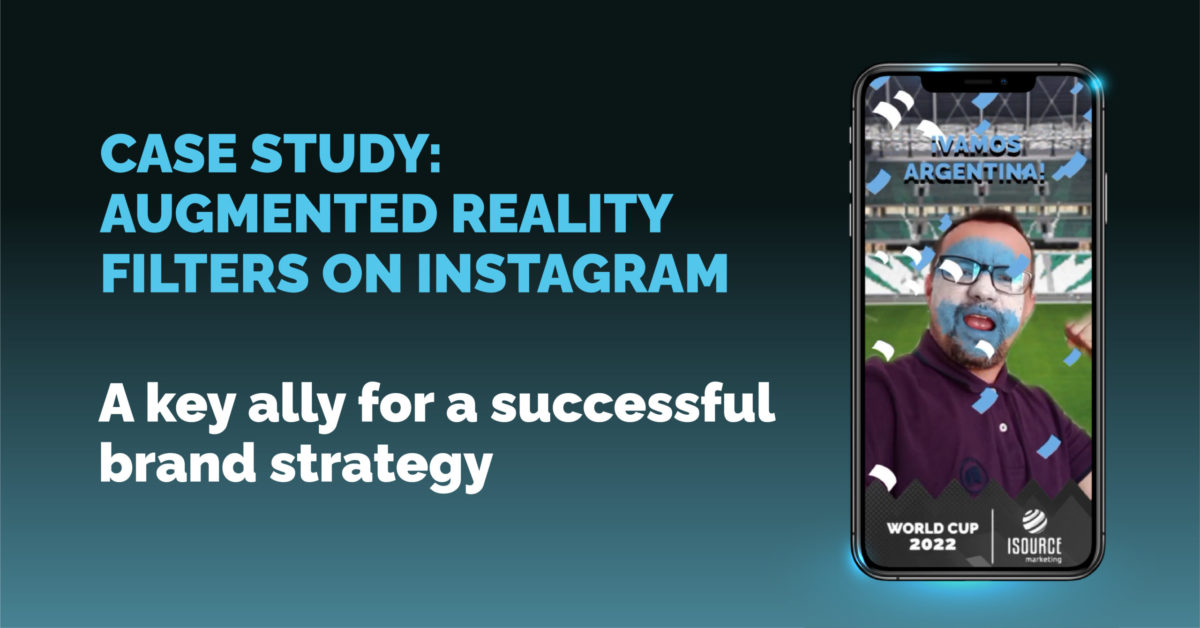
Case Study: Augmented Reality Filters on INSTAGRAM: A key ally for a successful brand strategy

Case Study: Augmented Reality Filters on INSTAGRAM: A key ally for a successful brand strategy

Share

AI

AR

Automation

B2B

blog

Content

Creativity

Customer

Design

Digital Marketing

Events

Hubspot

IA

Influencers

job

Lead Generation

marketing

Newsletter-en

PR

Sales

UI

Uncategorized

UX

Nowadays, technology has advanced since the first uses of this type of experience, since the filters developed in social networks currently allow to recognize not only human faces, but also other parts of the body such as hands, or even be used by several people at the same time. In this way, the creative possibilities provided by the use of Augmented Reality filters are increasing, and it is positioning itself as one of the preferred and essential complements for users in their Instagram stories. Thinking about it, Isource Marketing implemented a filter on the Instagram social network, given the need to see how Extended Reality is a technology in the market that is gaining strength in the world of digital marketing, where both brands and users have managed to get a greater reach. This the most recent Instagram filter developed by Isource marketing, strengthened its experience in the creation of type of tools that the agency has been developing for more than 5 years, carrying out projects for clients and providing greater recognition to the daily use of experiences of Augmented Reality, by developing a filter for -renowned sporting event world that allowed for a greater geographical reach and general interest. 


The main challenge of the project focused on the large number of filters created and published on Instagram, however, the objective was to provide a complete, customizable, interactive, differential and current experience with individual or group use to generate greater engagement among users taking advantage of the great reception of the recent sporting event. The first drawbacks when starting to develop the tool on Instagram were of technical origin, since the restrictions that Instagram has, influenced factors such as the weight of the files, the proper use of graphic elements and the textures in the environment or face of the person, the definition of the trigger and the audio. These factors were limiting factors that had to be adequately worked on based on trial/error testing, correcting the development with an internal testing group, which provided feedback to the creative and programming team of the agency, in order to arrive at the correct execution. of the filter, taking into account the technical limitations and weight of the social network mentioned above.

For all these reasons, Isource Marketing relied on the design and implementation of the filter that allowed the optimization of the agency’s engagement and the obtaining of recognition of the company in a faster and more precise way, in addition to providing a fun tool for all users allowing users to share the filter and access it permanently. Despite the great competition in today’s market, for Isource Marketing the development of a good segmentation when developing the project has always been a key element.

Proposed Solution

The initial solution was the implementation of a tool in social networks that would support the need to strengthen the commercial brand positioning tools for the agency, and that were implemented in social networks such as Facebook Ads and Google Ads, to boost the filter of the Qatar 2022 World Cup, obtaining a reach of 55% higher than the average that has been handled in campaigns related to filters and results that were reflected in the use of the same.

Lines of Action

  • Responsibilities and resources: Assign responsibilities and resources, specifying the collaboration framework between the agency’s creative and programming team, well as setting a calendar for the development of the project.

  • The Assuring quality.: objective of this phase was to determine if the development of the filter was of optimum quality, to cover all the requirements defined in its functional analysis for the target audienceFor each metric and analysis dimension defined for use on Instagram, the restrictions were determined, as well as the degree of availability and adequacy of the elements for the development of the filter. The result of these two phases allowed the optimal execution of the tool on the social network and its visibility through reach, use, and interaction with the public.

  • Pilot test: After the validation of the quality of the tools, the implementation of the tool began, but with a sample of significant data based on trial/error.

  • Put into production: After the validation of the pilot test,take the filter was formally implemented on Instagram, in order to advantage of and offer unique experiences and generate greater engagement with digital communities.

  • Final data evaluation: This phase allowed Isource Marketing to determine the metrics of the filter, evaluating factors such as the number of Impressions, how many times it was opened, how many captures it obtained and its reach and the number of times shared. In general, an analysis of the performance of the filter was carried out, as well as the type of public it reached. These figures helped the agency to understand what its community is looking for, but also to improve its next project in the development of filters.

Successful Result

Thanks to excellent teamwork from Isource Marketing, the filter developed by the agency allowed users to interact and get to know the agency by offering a current format linked to the brand. Likewise , it allowed the company to reach a larger audience and new audiences, increasing the scope of the actions, placing Isource Marketing at the forefront in the creation of interesting content and aware of the latest news with the constant use of new narratives and formulas that will distinguish the agency from the rest of its competitors.

PR & Media Coordinator
Passion: Arts, Nature

MQL and SQL: The Key to Increase Your Sales in 2022

MQL and SQL: The Key to Increase Your Sales in 2022

Share

AI

AR

Automation

B2B

blog

Content

Creativity

Customer

Design

Digital Marketing

Events

Hubspot

IA

Influencers

job

Lead Generation

marketing

Newsletter-en

PR

Sales

UI

Uncategorized

UX

Lead generation is the basis of inbound marketing strategies (a commercial methodology that seeks to attract customers by creating valuable content.) However, not all leads are the same, and the path between the moment a user shares their data with us for the first time and the point at which they are ready to exercise the purchase action. For lead generation to work, it is essential to identify two stages in the process: Marketing Qualified Lead (MQL) and Sales Qualified Lead (SQL).

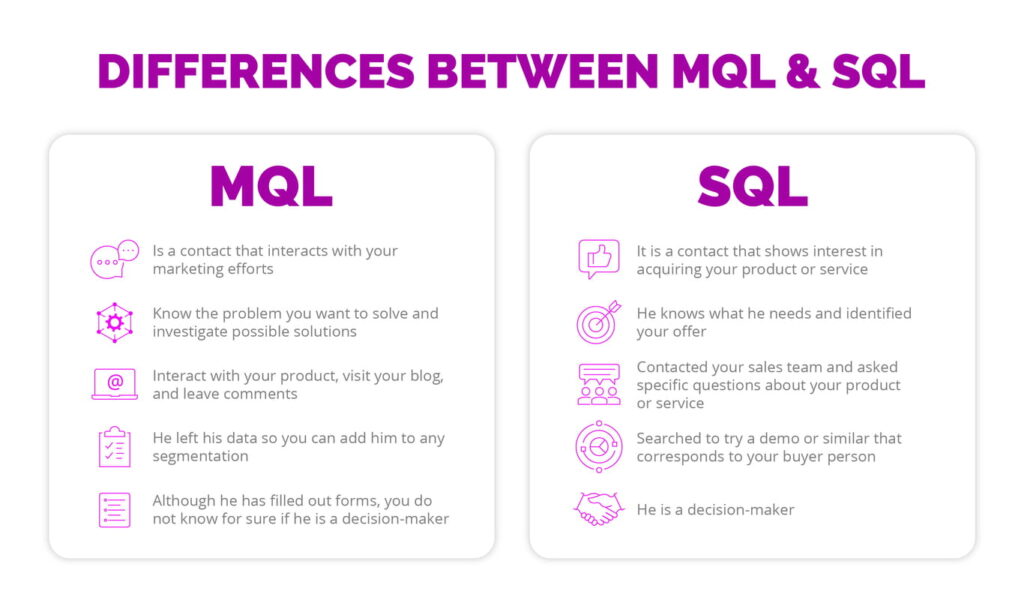
The MQL (Marketing Qualified Lead) is the potential customer qualified by marketing, a person who knows exactly what they are looking for from a brand or company. They have explored the web and downloaded some free material in exchange for entering their data. With this information, the company can track their interactions.

The process of generating MQL is a fundamental challenge for marketing professionals, and it has been shown that having this indicator exponentially increases sales and the success of companies.

The MQL (Marketing Qualified Lead) is the potential customer qualified by marketing

However, it is important to note that if a lead is an MQL, it does not mean that they are ready to buy the product or contract the service; it may be a curious person, in the research phase, who may have been content with just downloading the free material and who in the future may buy the product or service.

To classify a lead as MQL you must:

  • Know in depth the profile of your ideal client.
  • Apply smarketing, a term in English to designate the strategy that aligns the sales and marketing teams, creating a synergy of techniques or tactics between them.
  • Carry out lead scoring, which consists of classifying your leads using criteria and scores.
  • Use tools and solutions that help you accurately control where your potential customer is in the funnel.

The SQL (Sales Qualified Lead)

The SQL (Sales Qualified Lead) is the potential customer most likely to buy. They have gone through the entire funnel, interacted on the website, and perhaps have asked about a product or service that they consider the solution to a problem or the answer to a need. The MQL becomes an SQL thanks to strategic work that is possible if:

  • It matches the requirements of the ideal customer.
  • It has the necessary means to pay.
  • It is a decision-maker (for example, of legal age).
  • It has shown an interest in buying, not just browsing the web out of curiosity.

The SQL (Sales Qualified Lead) is the potential customer most likely to buy

Once we have the MQL, we establish an exchange of information that strengthens its link with the brand and this can encourage it to evolve to SQL, through the completion of the sale. This process of correctly qualifying the lead significantly increases the probability of closing a deal.

Using a CRM (Customer Relationship Management) during this process of converting MQL leads into SQL helps improve team productivity, enhancing actions for each prospect.

Let’s remember that the CRM stores information on current and potential clients – name, address, telephone, etc –, and their activities and points of contact with the company, including visits to sites, telephone calls, and e-mails, among other interactions.

The platform gathers and integrates valuable data to prepare and update teams with personal customer information, purchase history and preferences, which allows the prospect’s history and the actions that have been developed with the MQL to be concentrated in one space and the SQLs.

A CRM organizes and automates accounts and contacts in an accessible way, in real-time, accelerating and simplifying the sales process, this avoids depending on reminders in sticky notes and spreadsheet analysis. Instead, leads are sent to the sales team, who always have access to up-to-date information.

What did you think of this blog? At Isource Marketing we have the experience to advise you and create a tailored marketing campaign that captivates your ideal client and increases the sales of your product or service, allowing you to achieve success. Contact us: https://old.web.isource.us/#contact

Knowing MQL and SQL fundamentals can help you grow your sales in 2022. Companies like Dynatrace, Imperva, and IBM base their marketing and sales strategies on correctly dealing with MQL and SQL, and we at Isource Marketing are happy to help you along the way. Need more information? Visit https://old.web.isource.us/#services for more information.

Business Development Manager
Passion: Movies

Public Relations & Artificial Intelligence – A new Alliance

Public Relations & Artificial Intelligence – A new Alliance

Share

AI

AR

Automation

B2B

blog

Content

Creativity

Customer

Design

Digital Marketing

Events

Hubspot

IA

Influencers

job

Lead Generation

marketing

Newsletter-en

PR

Sales

UI

Uncategorized

UX

As digital transformation advances, many companies are turning to Artificial Intelligence (AI) to streamline repetitive processes and become more efficient. Public relations (PR) does not avoid this reality, since more efficient and successful public relations campaigns may be created by making clever use of AI. According to a study by the CIPR (Chartered Institute of Public Relations), the use of this technology in PR will triple in the next five years.

Thanks to AI, companies can quickly search for information available on digital platforms and take the content of interest to their customers by programming a search bot. It’s also used to monitor media coverage of products and services of competitors. It then provides PR professionals with better access to the data required for a clear understanding of the performance of a press release and identifies any necessary adjustments. Relying on an AI system to seek out specifically defined information and present it in an easy-to-read format, dramatically accelerates the process of analyzing and interpreting data from multiple, concurrent channels, allowing for a more complete overview delivered in less time. For example, a quick evaluation of a particular article or social media post offers a greater insight into the target audience’s preferences and reveals the performance updates used to measure the outcomes.

According to a New Vantage study, it is estimated that 99% of organizations are investing in AI or Big Data

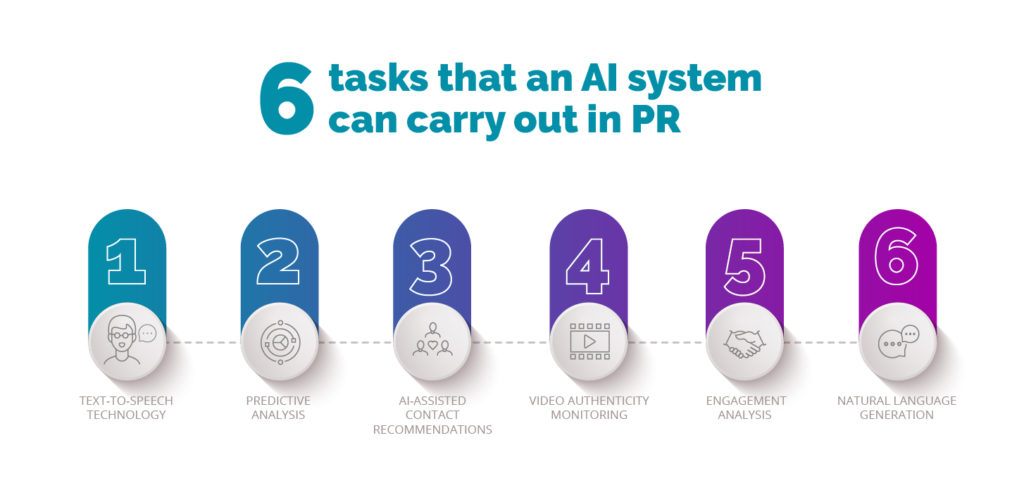
Here are some examples of tasks that an AI system can perform in PR:

1- Text-to-Speech (TTS) technology:

AI offers more and more diverse ways to make life easier. Today, for example, TTS solutions are used for a variety of purposes: whether to optimize schedules, automate processes, or stand out from the competition, this technology improves your customer service experience by detecting voices and converting them to text. This is useful for transcriptions of media interviews and searching for podcasts or press conferences.

2- Predictive analysis:

This type of analysis offers tools that help personalize reporting angles for journalists based on interests, past coverage, personalities, and trends, and predicting the likelihood of news information being covered.

3- AI-assisted contact recommendations:

While not yet perfected, there are tools that can help you proactively discover reporters writing about the IT industry, allowing you to target the outlets most likely to publish your news rather than manually compiling traditional media lists based on category and keyword searches.

4- Video Authenticity Monitoring:

There are even tools that can be used to monitor “fake” videos that could negatively affect brand reputations.

5- Engagement analysis:

Tools for performing advanced sentiment analysis on social media are also being developed.

6- Natural language generation:

Using this technology, machines can produce information and convert it into different languages for wider distribution.

Challenges of AI in PR

As organizations accelerate their digital transformation, the issues in PR service management concentrate on rebuilding businesses while minimizing downtime. This year’s major challenge is on applying AI to more and more day-to-day tasks. However, at Isource Marketing, we identify two additional challenges: monitoring accuracy and data security. 

As the volume of digital content increases, so does the challenge of accurately monitoring and measuring it. Media monitoring companies play an essential role in the information supply chain, capturing vast amounts of content, data, and metadata daily. Historically, media monitoring organizations depended on manual human labor to gather and evaluate this data; now, AI and machine learning are becoming increasingly essential. Similarly, privacy and security are the main factors that influence the availability of data and resources for a public relations officer, and it becomes another challenge because these data are generated from millions of users around the world (personal data of journalists, influencers, IT companies, etc), and there is a possibility that vulnerabilities exist and are taken advantage. Some companies have already begun working creatively to overcome these obstacles.

With an increasing need for AI, what is the function of the communicator or public relations professional?

To avoid being stuck with PR tools from the past, PR professionals must go further into achieving goals with companies in a disruptive and inventive way, with the help of new technology. Machines do not capture knowledge from the outside as the human brain does, and they do not have feelings or experiences, or even perceive what is happening in their environment as easily. These tools are based on information previously directed by people.

Regardless of technology, it is important to consistently keep a human value in the relationship of PR work

When developing a communication strategy, a brand may be unwilling to communicate with a robot or computer because it is a strictly “relational” activity. As a result, regardless of technology, it is important to consistently keep a human value in the relationship of PR work and to always be in direct and personal contact with the client. AI and technology, in general, should be viewed as a professional’s partner in public relations. This is how the interpretation of the AI’s results and the subsequent action plan should be personally supervised and endorsed.


Isource Marketing we see AI as a tool to embrace and provide advantages in data collection to focus on metrics and creativity in the marketing industry. Our strength is technology, but we also understand and adhere to the principles of a sense of belonging and closeness to our customers, because most of the critical responsibilities of public relations professionals demand a high degree of personal approach.  For this, we are guided by four capabilities in our PR area: the development of creative strategies, the establishment of client trust, the creation of original content and narratives, and the empowerment and development of new business relationships. If you need advice on this subject, contact us! We will be happy to help you:: https://old.web.isource.us/#services

PR & Media Coordinator
Passion: Arts, Nature

7 tips to prospect clients in the B2B sector

7 tips to prospect clients in the B2B sector

Share

AI

AR

Automation

B2B

blog

Content

Creativity

Customer

Design

Digital Marketing

Events

Hubspot

IA

Influencers

job

Lead Generation

marketing

Newsletter-en

PR

Sales

UI

Uncategorized

UX

Customer prospecting is of the utmost importance for any business. In the case of companies in the Business to Business (B2B) sector, the rationale is that their target audiences are more rational, specialized, and informed compared to those in the Business to Consumer (B2C) market, which requires a methodical, analytical, and a very orderly segmentation process. This comment is especially relevant after understanding that, according to HubSpot Researchmore than 40% of company salespeople think that prospecting is the most difficult part of the sales process, followed by closing (36%) and qualification ( 22%).

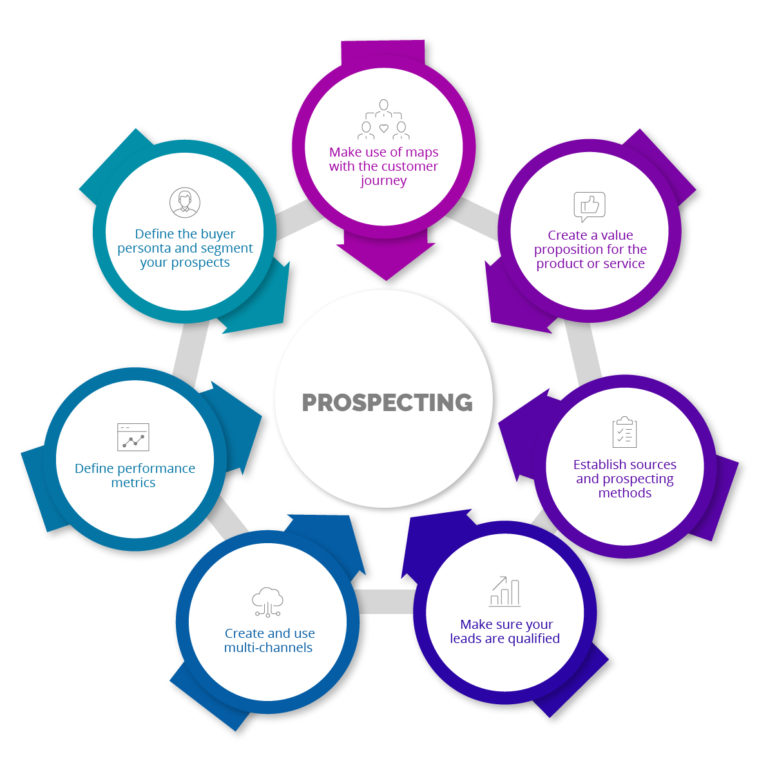
We at Isource Marketing aim to provide you with tips on how to prospect successfully. Therefore, we’ve compiled a list of seven things to consider when segmenting clients in the B2B sector.

1. Define the buyer persona and segment your prospects.

A buyer persona is a generalized depiction of your ideal customer. It is obtained through the use of qualitative and quantitative data derived from market research, competitor knowledge, and existing customer profiles. In terms of prospecting, varying factors, such as geographic and demographic, must be considered.

According to HubSpot Research, over 40% of company salespeople think prospecting is the hardest part of the sales process, followed by closing (36%) and qualifying (22%)

2. Make use of customer journey maps

Observing your potential customers’ real web behavior will help you discover who they are and what they want. The customer journey map is the ideal tool for accomplishing this. It is a process that individuals go through from the minute they show interest in your product or service until they become actual customers.

3. Create a value proposition for the product or service

The information that the marketing and sales teams will communicate in their work is critical, which is why the value proposition must be included in your prospecting plan; it includes market research with the goal of identifying client demands for the success of your product and services.

4. Establish prospecting sources and methods

When developing a prospecting strategy, you must have a technologically advanced and powerful data platform that can provide analysis and intelligence services capable of finding new clients amid large volumes of data. Prospecting via social networks, such as LinkedIn, is essential in the B2B industry, in addition to internal databases and phone calls.

5. Verify that your leads are qualified.

In the B2B sector, qualified leads are companies that are interested in your product and, in the best case, will become customers. To do this, you must ask the appropriate questions in order to determine whether or not they are qualified for the sales process. Click here to learn more about how to generate leads in the B2B sector on our blog.

To reach your target audience more effectively, you must develop a multi-channel communication plan.

6. Create and use multi-channels

To effectively target your audience segments, you must establish a multi-channel communication plan based on your buyer persona. There are certain B2B companies that are more effective than others. LinkedIn, as previously mentioned, is among the most significant, as are email marketing, advertisements, content marketing, and paid advertising through Google AdWords.

7. Define performance metrics

High-quality B2B sales and marketing areas continually assess the effectiveness of their efforts. They can achieve better performance and productivity on their goals by tracking and taking action to improve important metrics.

Are you ready to begin your prospecting strategy?

We understand the importance of sales management in your company, and we also recognize that a proper prospecting strategy is one of the first steps toward success. At Isource Marketing, we are happy to help you effectively segment your target audiences. We have a highly qualified team and more than 15 years of experience as a strategic partner. Contact us! https://old.web.isource.us/#contact

Project Account Manager
Passion: Nature and well being

UX Writing: Creating Human-Centered Content

UX Writing: Creating Human-Centered Content

Share

AI

AR

Automation

B2B

blog

Content

Creativity

Customer

Design

Digital Marketing

Events

Hubspot

IA

Influencers

job

Lead Generation

marketing

Newsletter-en

PR

Sales

UI

Uncategorized

UX

One of the biggest challenges when writing on digital platforms is making the texts clear, concise, and useful. There is a powerful tool for this known as UX Writing (User Experience Writing), which is nothing more than writing based on the user’s experience, interaction, and emotions during the process. 

Many people believe that this technique is new, however, it is not. People have been writing for interfaces for as long as they have existed. UX Writing adds value by formalizing the practice with advanced guidelines. Furthermore, its demand is constantly increasing, and it is closely related to UX Design (User Experience Design), a process that seeks to create digital products that generate relevant and significant experiences for users through design, usability, and more.  

Read the blog New UX Design Trends

Writing based on the user’s experience, engagement, and emotions throughout the process is UX writing.

Although the difference between UX Writing and Copywriting is very subtle, the first aims to guide and help, while the second informs, persuades or sells.  Do not confuse UX Writing with Micro Copywriting, which aims to synthesize concepts through short texts in order to make browsing and usability more humane and simple.

What qualities should an attractive UX Writing have?

Clarity.

A clear text, with simple and direct language, is the best way to help the user understand and process the communication.

Consistency.

Consistency in the texts is key to generating trust in the user. For example, in an online course sales app, if the user purchases course “X”, that name (or text) must be the same throughout the purchase process. 

Precision.

The instructions must be specific, that is, they must explain exactly what must be done in each instance.  

Conversational.

Texts that point to a discussion are more appealing, warm, and pleasant; surely, with the appropriate tone of voice.

What Are the Advantages of UX Writing? Quite a few! At Isource Marketing, we highlight the 5 most significant advantages:

  1. Helps empathize with users. UX Writing determines the tone of communication with users. It is key to creating a connection of empathy and trust between the product and the users.

  2. Humanizes the product. The UX writers are in charge of developing the language for the product-user interactions, therefore their goal is to humanize the products by establishing a relationship between them.

  3. Increases conversion rates and user engagement. A good UX Writing strategy is CTA ( Call to Action)which helps improve conversion goals. The idea is to create texts that lead to action and make communication effective.
     
  4. Create smoother interactions. Understanding how to use a digital product can be very difficult, so good UX Writing is responsible for providing all the necessary information for the user and improving their experience.

  5. Reduce the amount of time users spend on apps. Having all of the steps clear ensures that users utilize the app for the necessary amount of time, avoiding frustrations and increasing the likelihood that they will use or recommend the app again.

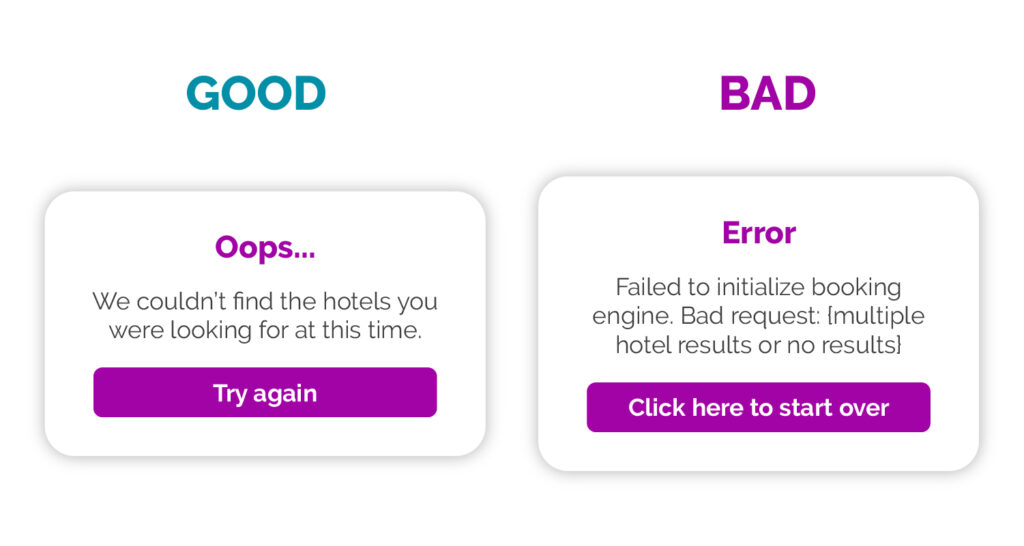
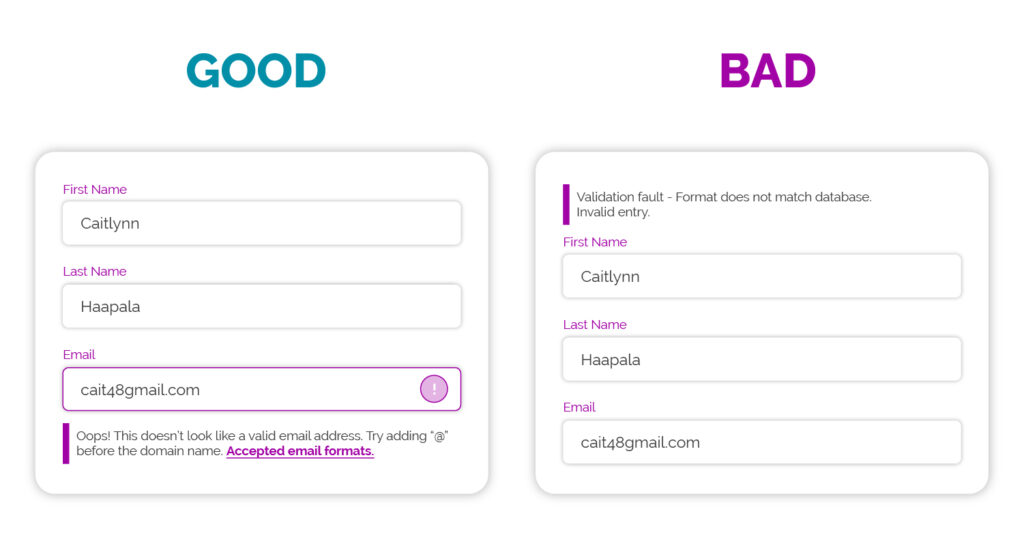
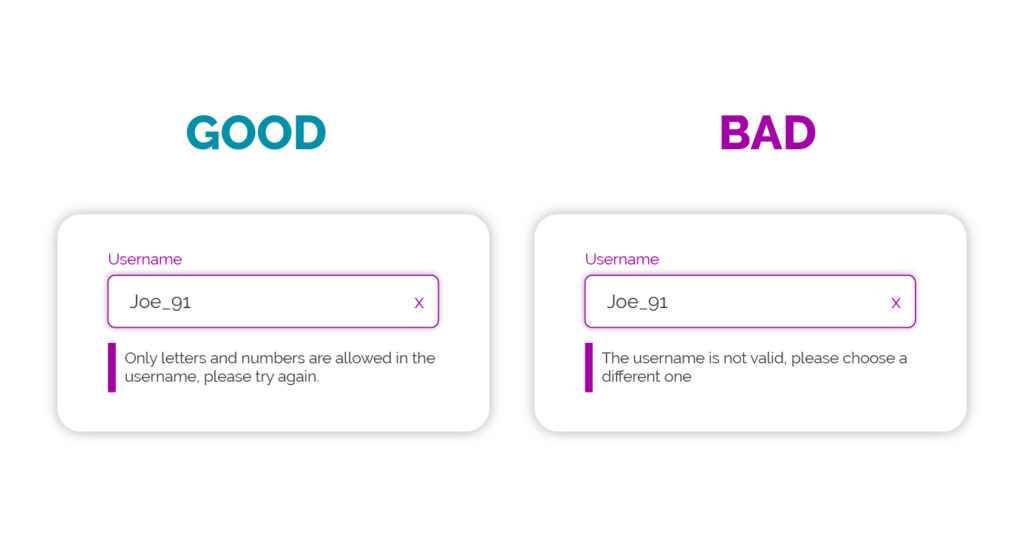
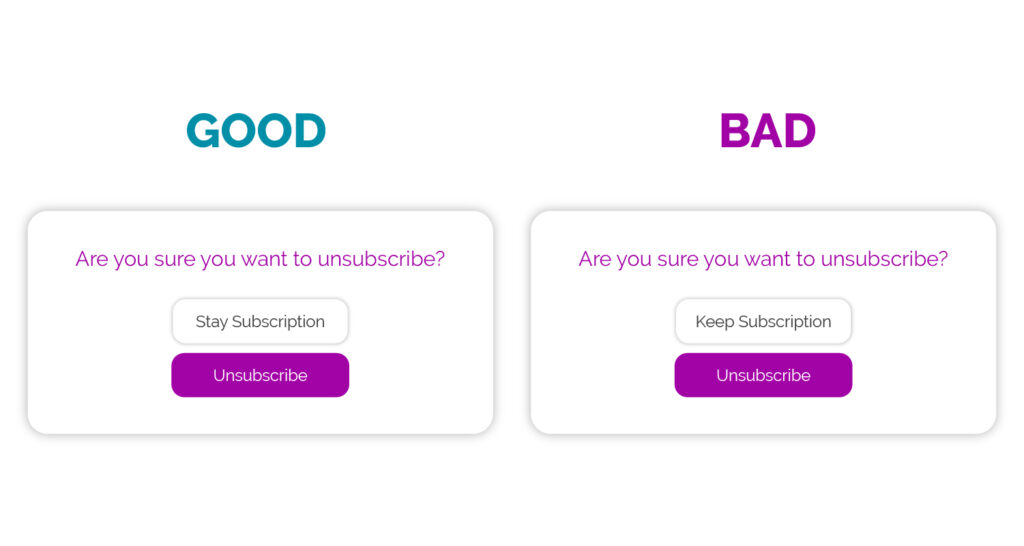
Then there are 4 comparative examples with texts, one using UX Writing and the others not.

The UX Writer

The UX Writer must be capable of creating content that offers the digital platform logic, coherence, and order. Furthermore, it determines how the company’s voice should be expressed and simplifies the customer experience. To structure an optimal interface, you must be familiar with UX Design and work closely with designers.

The UX Writer must be capable of creating content that offers the digital platform logic, coherence, and order.

As we could see in this blog post, users want the experience on websites and applications to be clear, concise, and useful. UX Writing is one of the tools for doing so. At Isource Marketing we have writers specialized in this area, as well as a group of designers 100% focused on UX Design. Contact us for your next digital project! https://old.web.isource.us/#contact

UI/UX Creative Artist
Passion: Digital Art